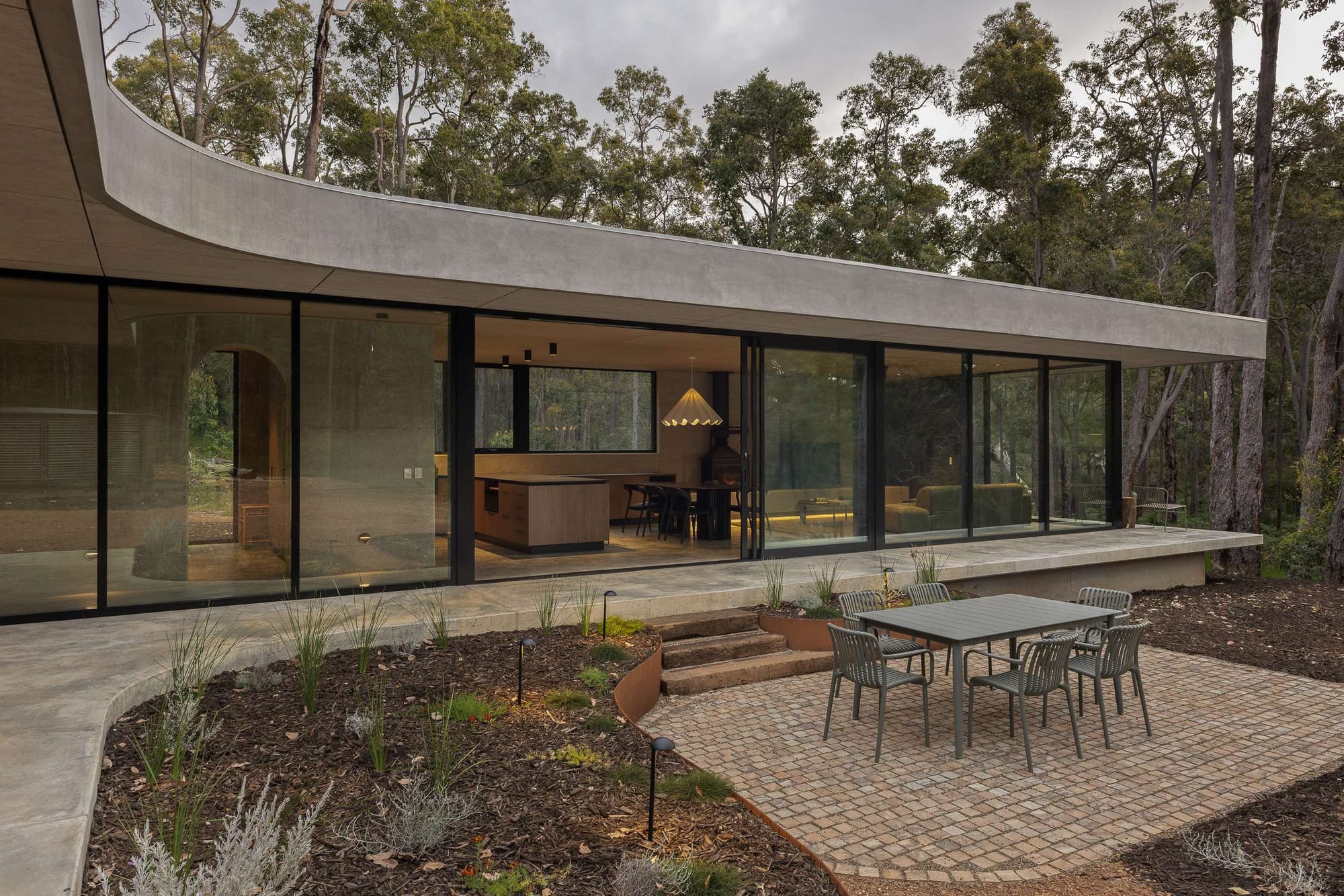
There is a particular quality of light that happens in Australian homes when a rear wall opens completely — when the boundary between the kitchen table and the garden dissolves and the two spaces breathe as one. It is not merely an aesthetic achievement. It is, for many homeowners, the single most transformative thing a renovation can do to the way a home actually feels to live in.
Indoor-outdoor connection is not a new idea in Australian architecture, but the ambition behind it has sharpened considerably. Where previous generations might have added a sliding door and called it done, contemporary projects treat the threshold between inside and outside as an active design problem: one that involves structure, materials, levels, climate, sightlines, and the way people actually move through space. Getting it right requires more than choosing the right door system. It requires understanding the house as a whole.
This guide walks through the key decisions involved, from the structural interventions that make genuine connection possible, to the material and detailing choices that determine whether the result feels resolved or awkward.
Know what you're working with before you renovate
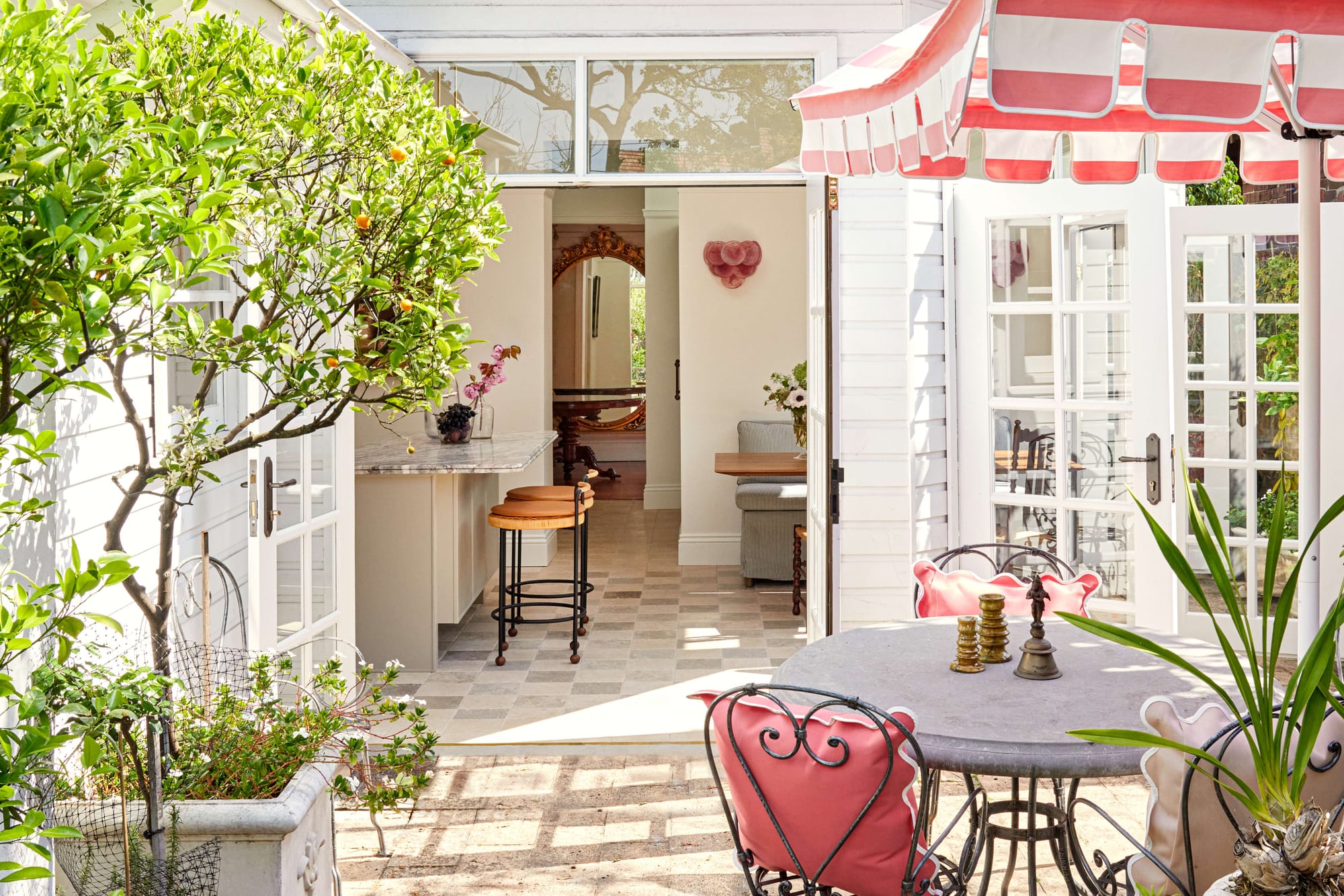
The most common mistake in indoor-outdoor projects is approaching them as a renovation rather than as a design exercise. Homeowners often begin with the door system, a stacked slider, a bifold, a pivot, and work outward from there. In most cases, this gets the sequence wrong.
The structural question comes first: what is it going to take to open this wall? In many Australian homes, particularly those built before the 1980s, rear walls carry load. Removing or significantly modifying them requires an engineer's assessment and, depending on the extent of the work, a building permit. The Australian Building Codes Board sets the national framework for structural adequacy requirements, and each state authority applies those requirements through its own permit system.
A structural engineer's involvement is not an optional extra. It is what determines whether the opening you want is achievable, and at what cost. The span of the opening, the position of existing posts, the roof load above, and the depth of any existing footing will all influence the design outcome. In some cases, a heavier steel beam will be required to carry the load; in others, a post mid-opening may be unavoidable. An architect or building designer who understands structure will work with these constraints as part of the design rather than around them.
Create a seamless floor from inside to outside
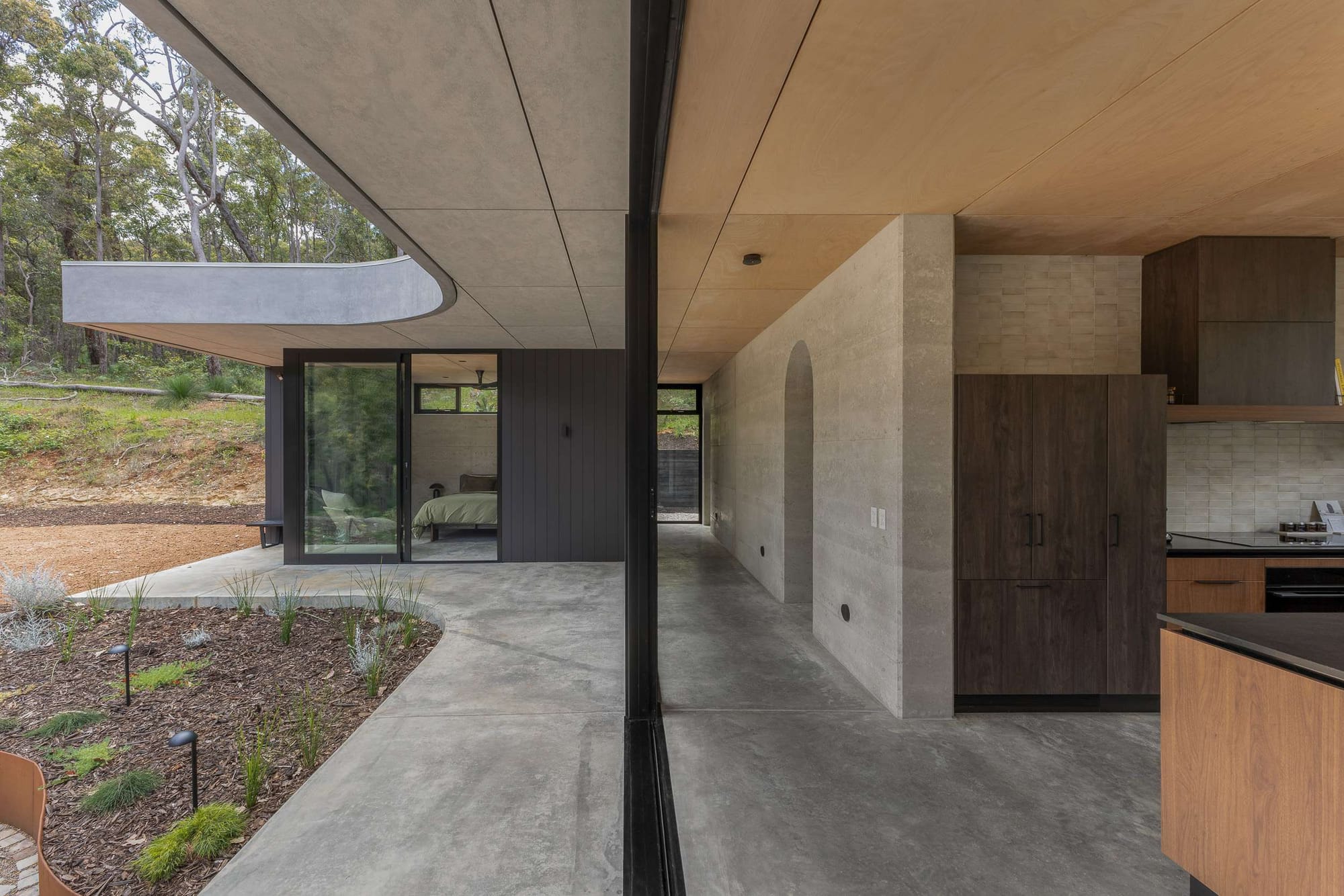
One of the most consequential decisions in any indoor-outdoor project is how to handle the transition between floor levels. In older Australian homes, there is typically a step down from inside to outside, a legacy of timber floor construction elevated above the subfloor, combined with the practical need to keep water out of the interior. That step creates a psychological and physical threshold that works against the feeling of genuine connection.
Flush floor transitions, where interior and exterior surfaces meet at the same level, are achievable in most situations, but they require careful planning around drainage. The Australian Standards for wet area drainage and waterproofing, particularly AS 3740, set out the requirements that must be met when an interior floor is brought to the same level as an outdoor paving surface. Getting this wrong is expensive to fix; getting it right from the outset requires a builder with genuine experience in this type of work.
Where a flush transition is not feasible, often in older homes with deep subfloor voids, the step can be designed rather than simply tolerated. A single wide step that runs the full width of the opening, constructed in a material that appears in both the interior and exterior palette, can become a feature of the space rather than an obstacle. Some of the best examples use this transition deliberately: the step becomes a bench seat, a plinth for planting, or a place to sit informally on the boundary between inside and out.
Choose the right doors for your space
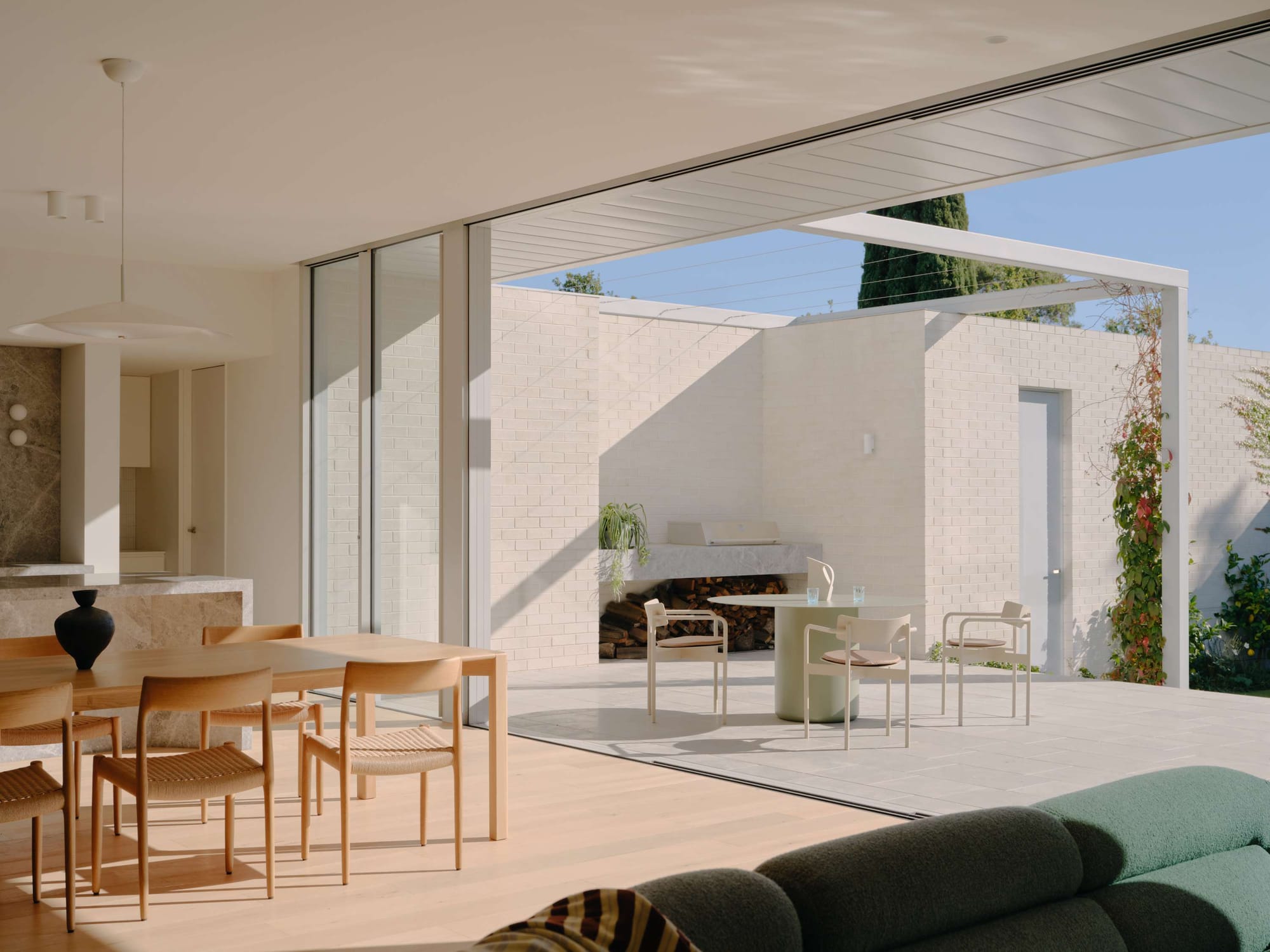
The door system is where many homeowners focus their attention first, and it is worth understanding the landscape clearly. The main options in the Australian market each carry meaningful trade-offs.
Stacking sliding door systems, where panels slide and stack behind each other in a track, offer the largest clear opening for their price point. Contemporary systems can span several metres with minimal frame visibility when open, and the track profiles have improved significantly. The limitation is that panels stack to one side, so the opening is not symmetrical and some portion of the wall always remains filled.
Bifold door systems fold and stack similarly but typically move the stack to one end of the opening more completely. They suit wider openings where a fully clear aperture on one side is the goal. The hardware and weatherproofing requirements for bifolds are demanding; specifying a system without understanding the quality differential between manufacturers has caught many homeowners out.
Pivot and hinged systems, large single or double doors on pivot hardware, have become more common in higher end residential work. They suit situations where a bold, single gesture is more appropriate than a fully open wall: a dining room that opens to a courtyard, for instance, rather than a living room that dissolves into a garden. The weight of large pivot doors requires careful structural provision at the head and threshold.
The glazing specification within any of these systems matters as much as the system itself. In Australia's climate zones, from the cool temperate south to the subtropical north, thermal performance requirements vary significantly. The Your Home guide, published by the Australian Government, provides clear guidance on passive design principles including glazing selection for different climate zones. In most Australian capitals, double glazed units with a low emissivity coating will be appropriate; in hotter climates, external shading will often do more work than glazing specification alone.
Use the same materials inside and out
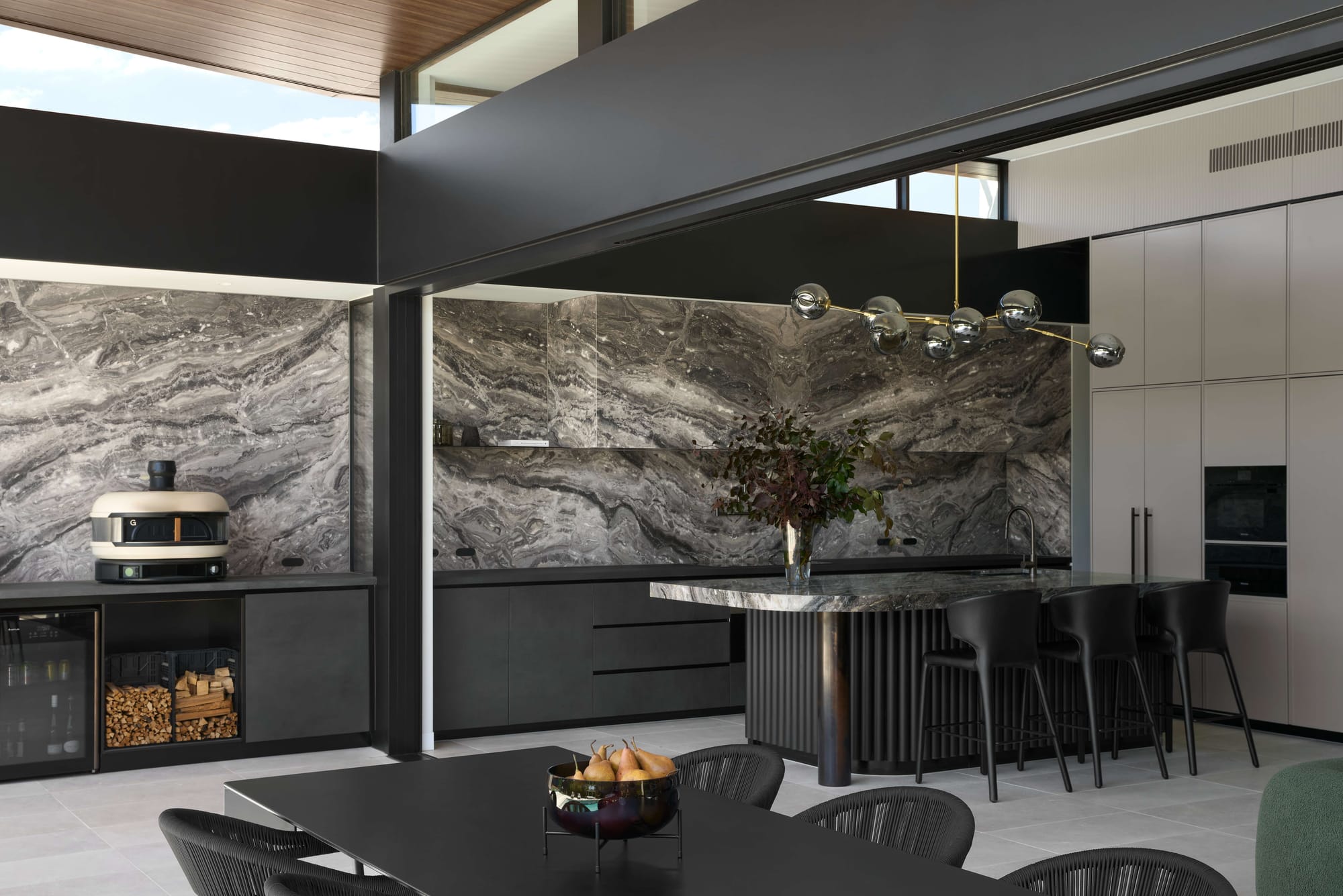
The visual and tactile quality of the connection between inside and outside depends heavily on how materials are handled across the threshold. Spaces that feel genuinely continuous are almost always spaces where at least one key material runs from inside to outside without interruption, or where the exterior material is chosen in deliberate dialogue with the interior.
Concrete and large format porcelain tiles are the most straightforward to use this way: both are appropriate for interior and exterior application when correctly specified, and both read as a single surface when the grout lines align across the threshold. Timber requires more care. Interior grade timbers cannot be used outside, and even exterior grade timbers will move and weather differently to an interior floor. The key is to acknowledge this movement rather than fight it, and to detail the transition accordingly.
Natural stone, bluestone, travertine, sandstone, has a long history in Australian outdoor spaces and handles the inside to outside transition well where the scale of the project supports it. The cost is significant and the specification requires attention: stone for exterior use needs appropriate slip resistance ratings, and not all stones that work beautifully inside are appropriate for outdoor conditions.
Beyond floors, consider how wall and ceiling materials contribute to the reading of a single continuous space. A ceiling that runs from inside to outside, whether in timber lining boards, a painted render finish, or a deep soffit, does more to create a sense of connection than almost any door system.
Add shade and shelter to your outdoor area
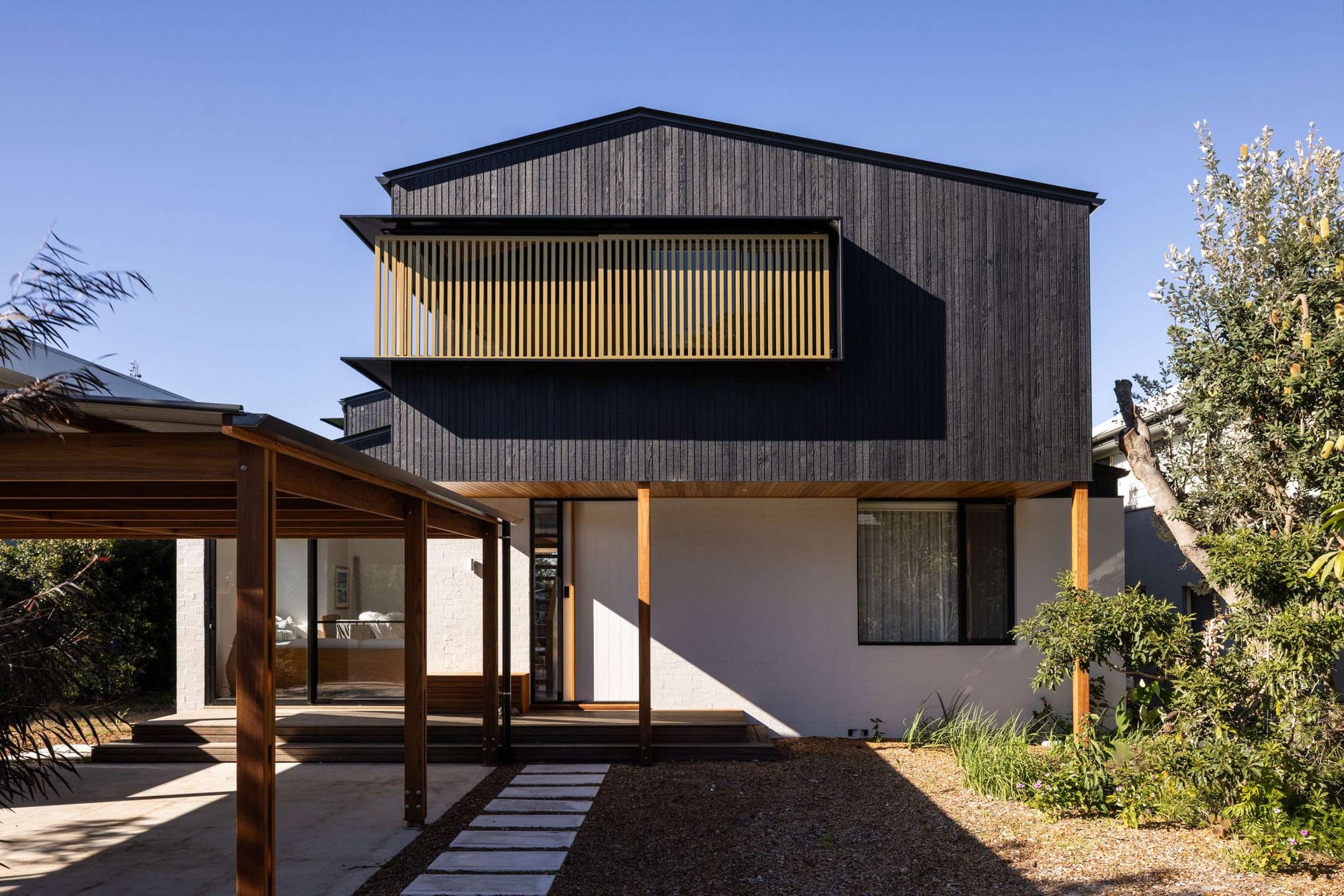
Australian outdoor living is not a year round proposition in most climates without giving some thought to shade and shelter. An unshaded north facing deck in Sydney or Melbourne will be unusable on summer afternoons regardless of how well designed the interior connection is. A covered outdoor space that can be used in light rain extends the effective living area of a home in a way that an uncovered space simply cannot.
The structural options for covering an outdoor area range from a simple pergola, which can be built with relatively straightforward council approval in most jurisdictions, through to a full extension of the roofline, which will require a building permit and in most cases planning approval. The NSW Department of Planning, the Victorian Department of Transport and Planning, and equivalent agencies in other states publish permitted development thresholds that indicate what can be built without a full planning application. These thresholds vary by state, zone, and lot size, and change periodically. It is always worth checking the current rules with a local building designer or directly with the relevant authority before committing to a design.
Louvred roof systems have become a popular option for covered outdoor areas in recent years. Adjustable aluminium louvres allow the space to be open to sky when conditions are good and closed against rain when needed. The engineering and waterproofing requirements for these systems are more demanding than for a simple pergola, and the quality differential between systems is significant. Specifying a louvred roof through an architect or building designer who has used the products before will produce a better outcome than purchasing directly through a manufacturer's sales process.
Ceiling fans, radiant heaters, and misting systems all extend the usability of covered outdoor spaces in different climate conditions. The electrical and plumbing requirements for these installations should be factored into the project scope from the outset rather than added as afterthoughts.
Treat your garden like a room
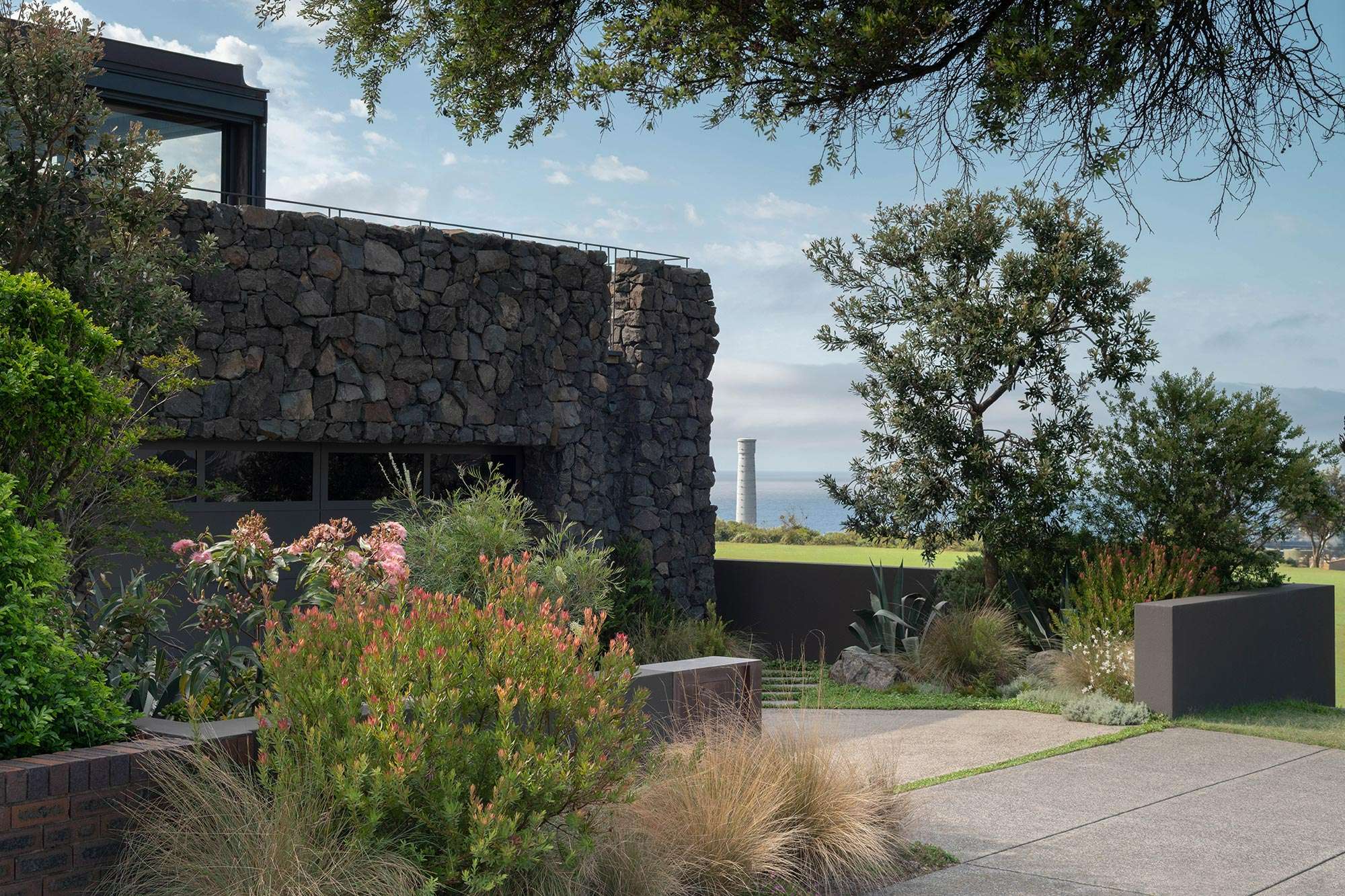
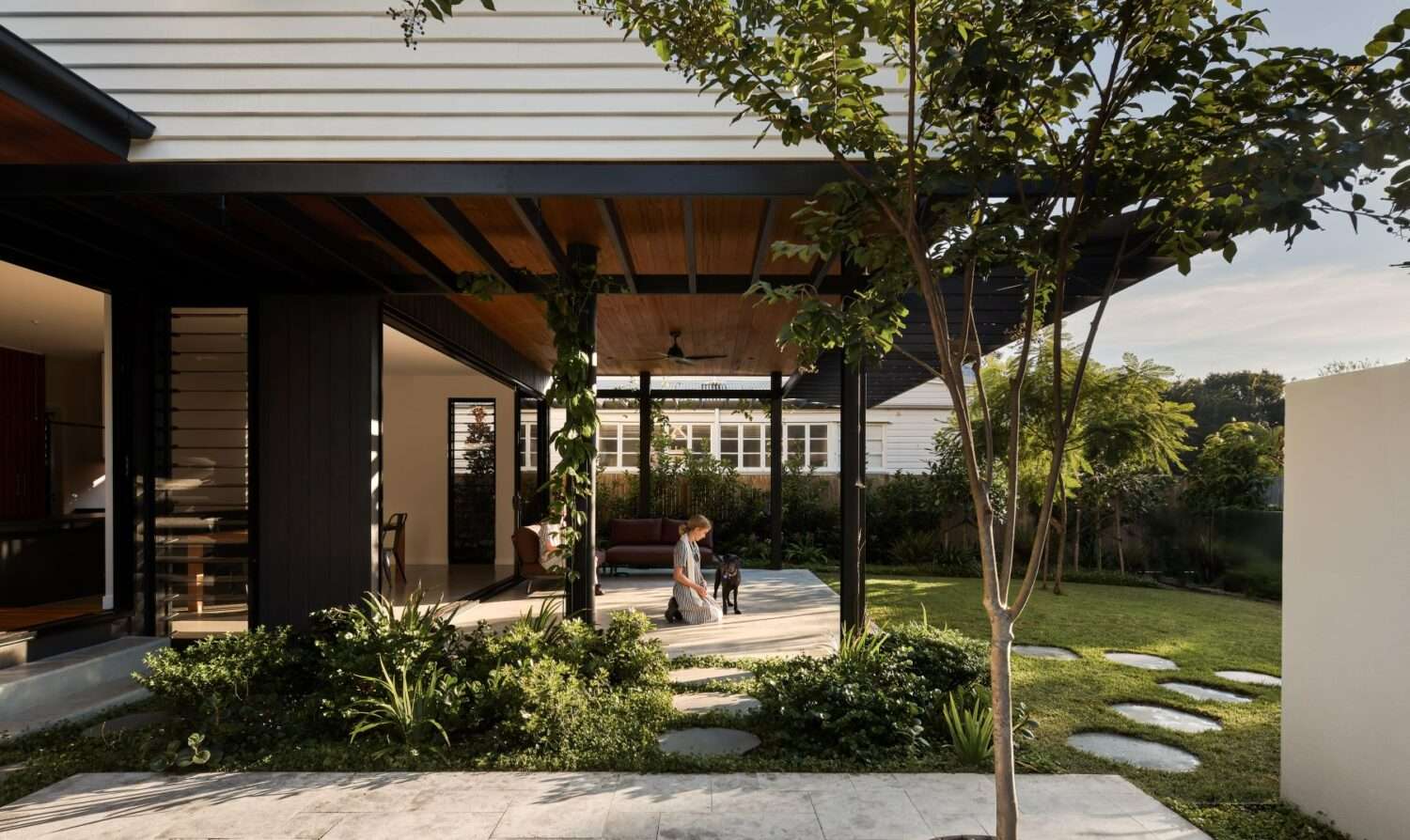
The outdoor area itself deserves as much design attention as the interior connection. A beautifully resolved door system opening onto an undesigned backyard is a missed opportunity. The most successful indoor-outdoor projects treat the garden or courtyard as a room, with defined edges, considered planting, and a clear relationship to the interior spaces it adjoins.
This does not mean the outdoor space needs to be formal or heavily planted. Some of the most effective outdoor rooms in Australian homes are almost entirely hard paved, with planting used as a framing device rather than a dominant element. What matters is that there is a considered intention behind the layout, that the outdoor space has its own logic, not just the remnant ground left over after the house was built.
The Australian Institute of Landscape Architects can assist in finding a landscape architect for larger projects where the garden design is a significant component of the brief. For smaller projects, a building designer or architect who works regularly on residential renovations will often have the skills to design the hard landscape as part of the broader project.
When to bring in an architect or building designer
Indoor-outdoor connection projects span a wide range of complexity, from straightforward door replacements through to significant structural works that reshape the relationship between a house and its site. The appropriate level of professional involvement scales with the complexity of the work.
For projects involving structural modifications, changes to drainage or waterproofing, or the creation of new covered outdoor structures, engaging an architect or building designer from the outset will save both time and money. A professional who understands the full scope of the work, structural, regulatory, material, and spatial, can design a solution that resolves all of these elements together, rather than discovering conflicts between them during construction.
Qualified building designers, whose services are often well suited to the scale of residential renovation work. Both provide a degree of consumer protection through professional membership standards and continuing education requirements.
Building permits, where required, will be assessed against the National Construction Code and state specific planning instruments. In most states, a registered building surveyor or private certifier can assist in determining what approvals are needed before work begins. Starting work without the required approvals creates legal and insurance exposure that is difficult and costly to resolve after the fact.
Frequently asked questions
Do I need council approval to open up my back wall?
It depends on the extent of the work. In most Australian states, minor works such as replacing an existing door or window do not require a building permit. However, enlarging an opening, removing a load bearing wall, or building a covered outdoor structure above a certain size will typically require approval. The threshold varies by state and local council. Checking with a building designer or your local council before committing to a design is always worthwhile.
What is the best door system for indoor-outdoor connection?
There is no single best system. The right choice depends on the width of the opening, the structural conditions, the budget, and the climate. Stacking sliders offer the most flexibility for wide openings at a moderate price point. Bifolds suit situations where a fully clear opening on one side is the goal. Pivot and hinged systems work well for more architecturally deliberate statements. A building designer or architect can advise on which system is appropriate for a specific situation.
How do I get a flush floor between inside and outside?
A flush transition requires careful management of drainage and waterproofing at the threshold. The interior floor level needs to be brought down to meet the exterior, and the junction between the two surfaces must be designed to prevent water ingress under all weather conditions. This is most straightforward in new construction or significant renovations; retrofitting a flush transition into an older home with a deep subfloor void is possible but more technically demanding. An experienced builder and a detailed design drawing are both essential.
What materials work best for indoor-outdoor floors?
Large format porcelain tiles and concrete are the most straightforward to use across the indoor-outdoor threshold, as they are appropriate for both interior and exterior use when correctly specified. Timber can work but requires careful selection. Exterior grade decking timbers will weather and move differently to interior floors. Stone is excellent where the budget supports it. Whatever material is chosen for the exterior, it must meet the slip resistance requirements under Australian Standards.
How much does it cost to improve indoor-outdoor connection in Australia?
Costs vary significantly depending on scope. A straightforward sliding door replacement in an existing opening might cost between $5,000 and $15,000 including installation. A project involving structural modifications, a new covered outdoor area, and associated landscaping could range from $60,000 to well over $150,000 depending on scale, materials, and location. Getting a detailed scope and budget early in the process, before committing to a design, is the most reliable way to avoid cost surprises.
Do I need a building permit to add a pergola or alfresco in Australia?
Most Australian states have permitted development provisions that allow certain pergolas or patios to be built without a full building permit, subject to size, height, and setback limits. These thresholds vary by state and local government area. In Western Australia, for example, the R-Codes and local planning schemes set out what is permissible as of right; in Victoria, the planning scheme and the building regulations apply different tests. Checking with your local council or a registered building designer before proceeding is the most reliable approach.