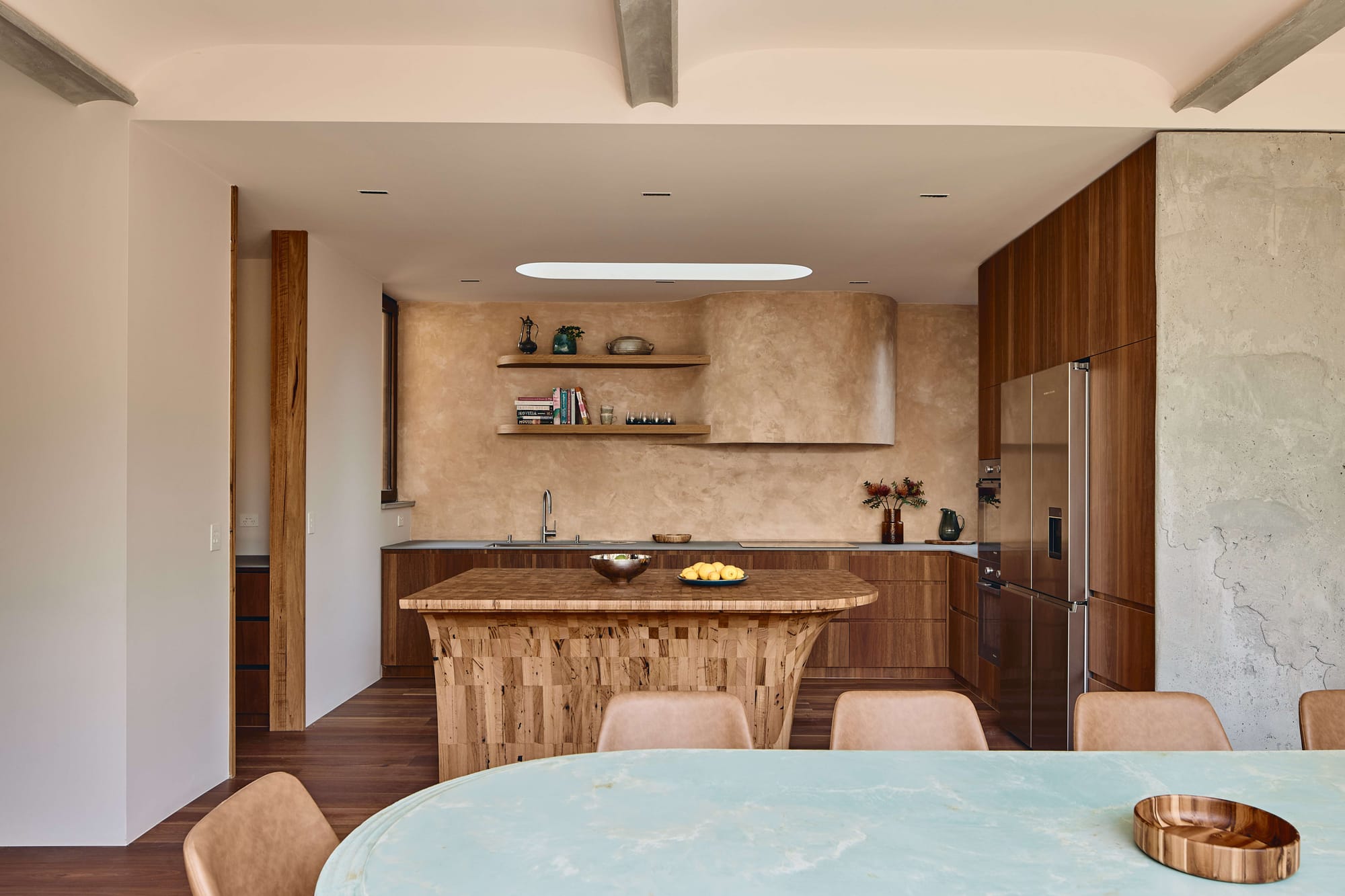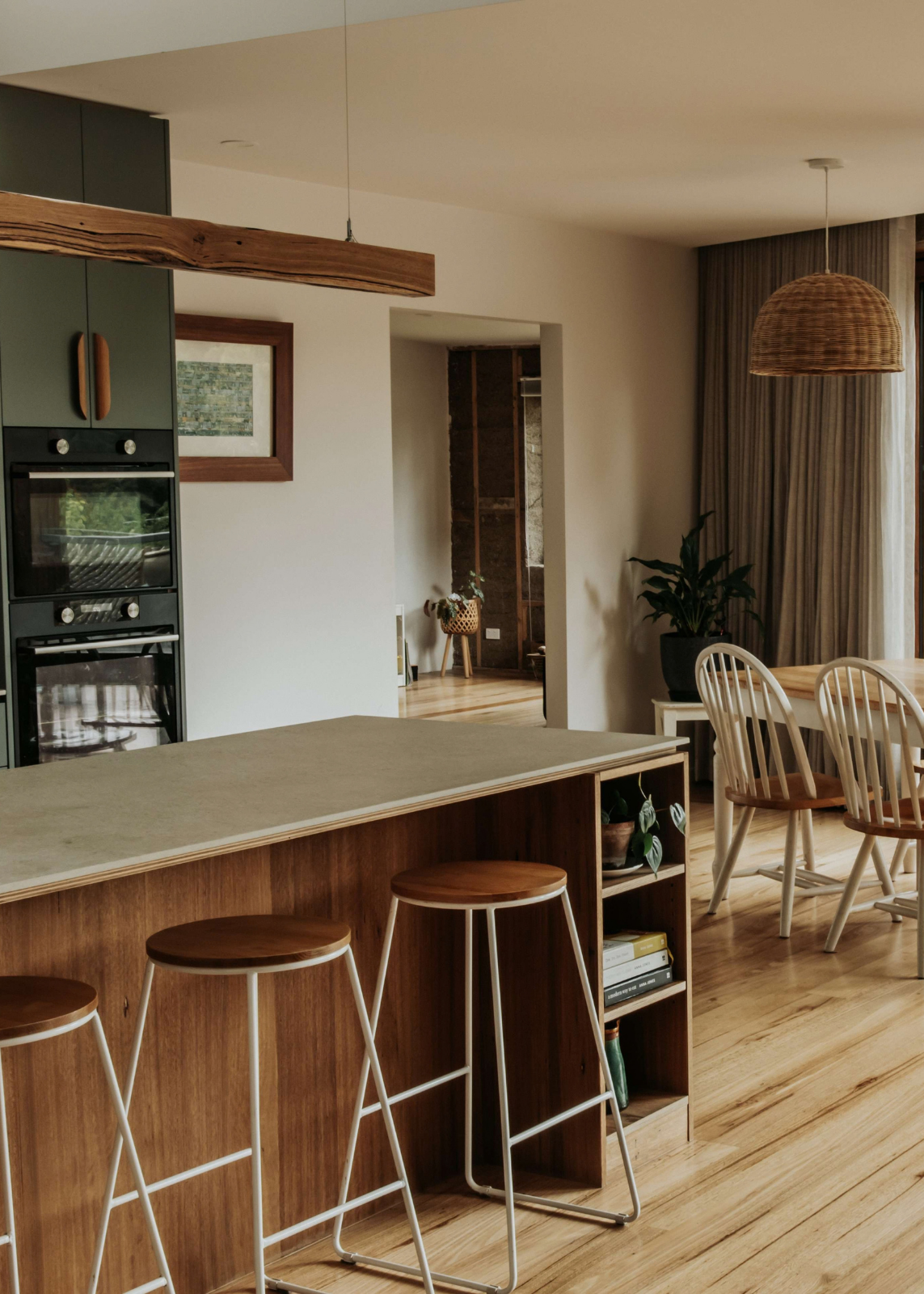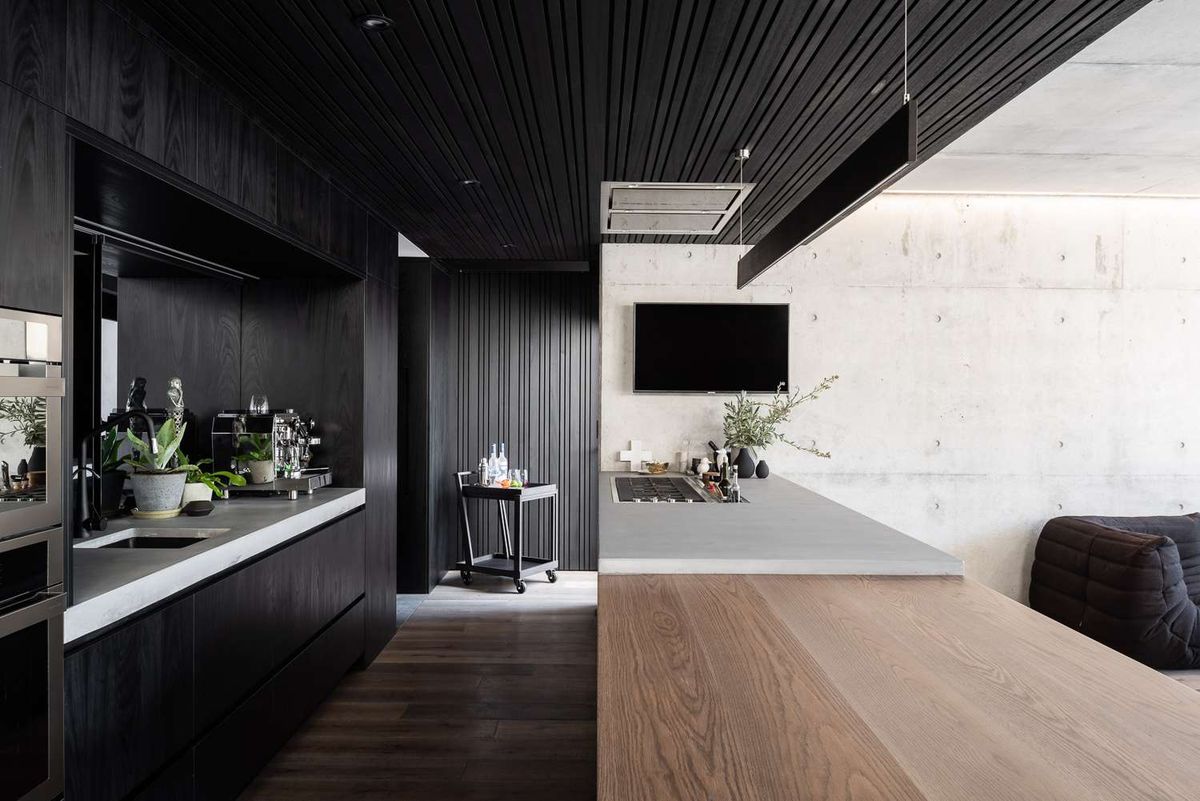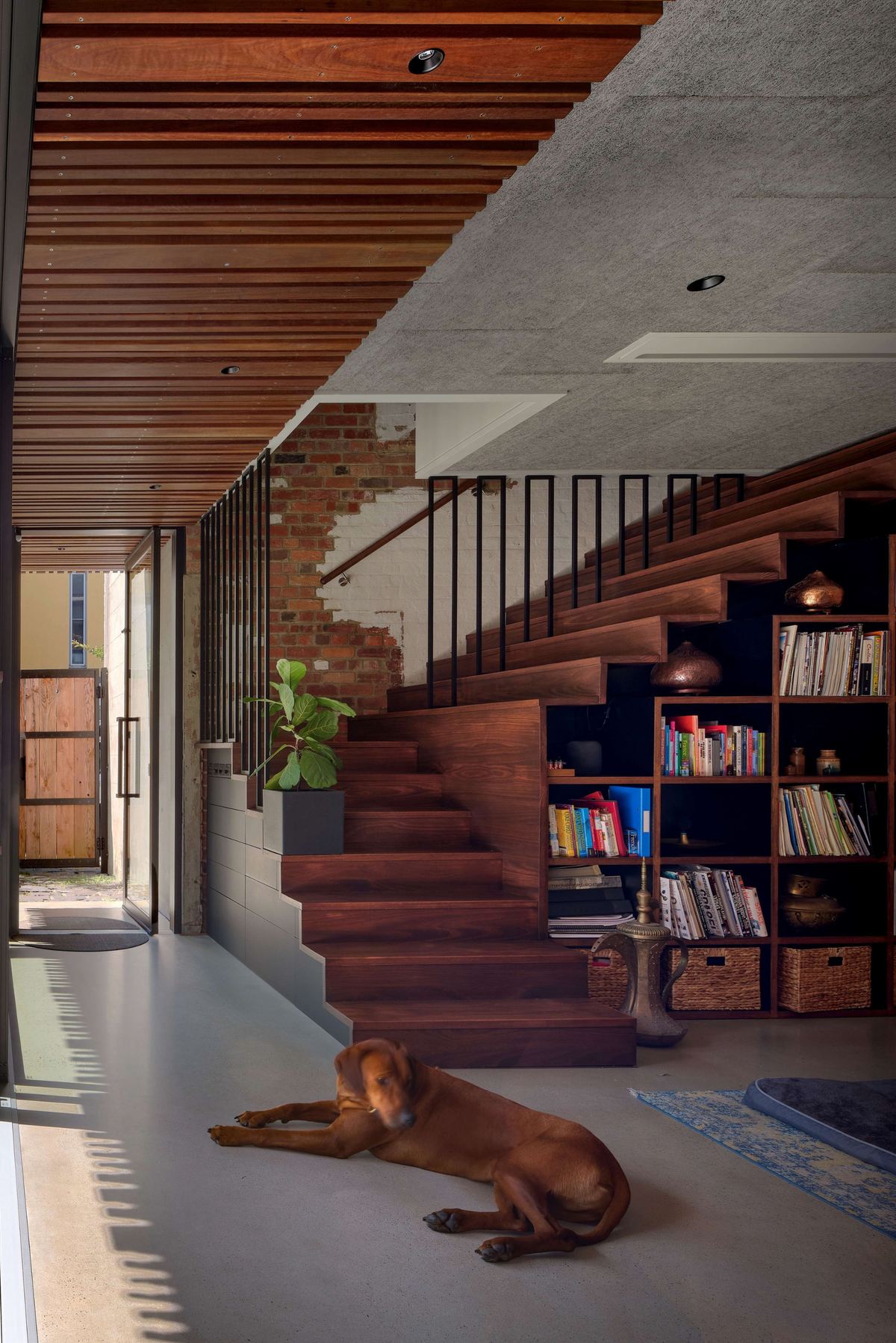
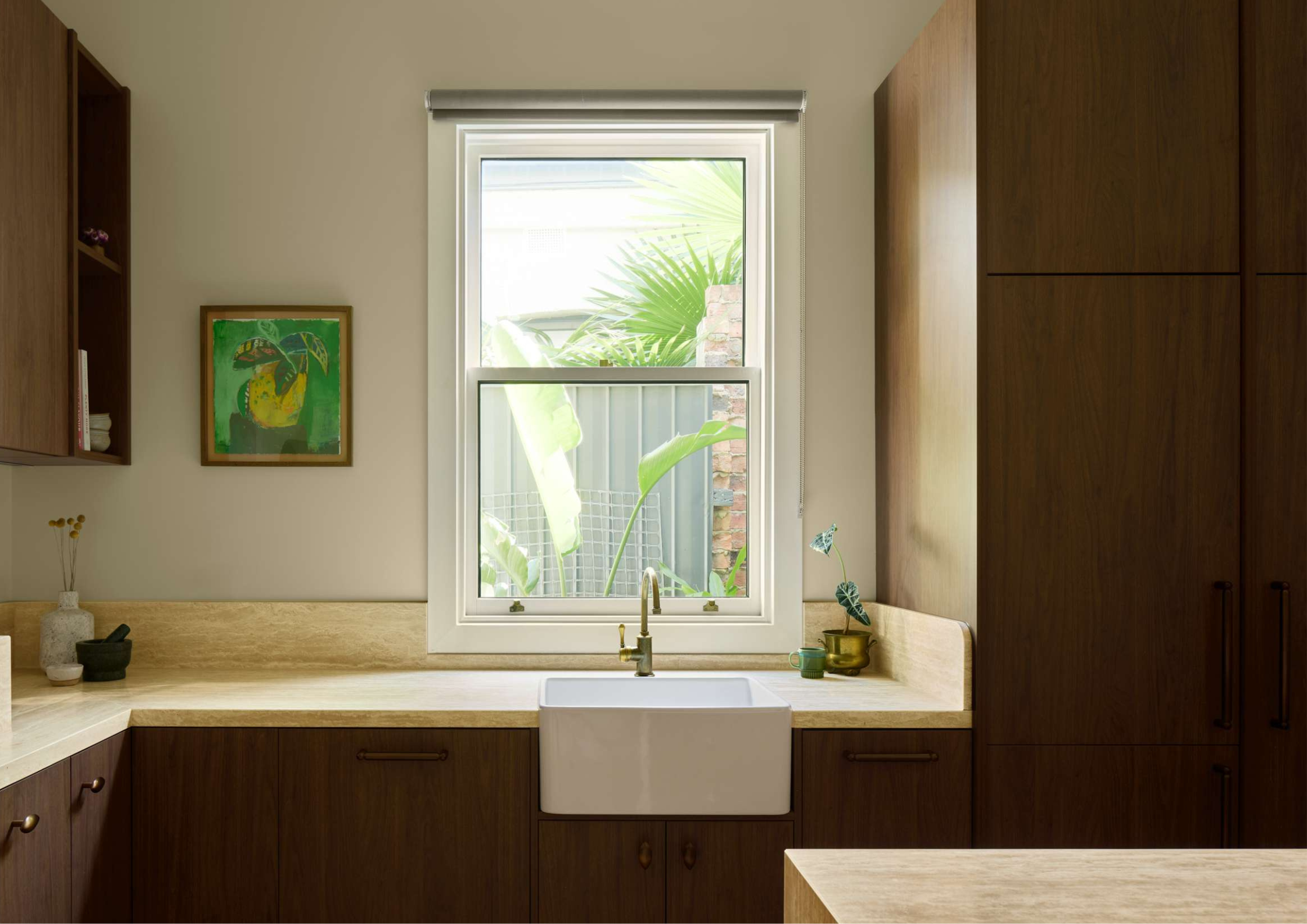
A kitchen renovation in Australia costs a median of $35,000 according to the HIA Kitchens and Bathrooms Report 2025, but the full range runs from around $10,000 for a cosmetic refresh to well over $100,000 for a bespoke architectural kitchen. Where you land depends on five things: the scope of work, your state, your choice of materials, whether you move walls, and who you hire to manage the project. This guide breaks down every cost category, every state variation, and every hidden expense so you can plan with confidence.
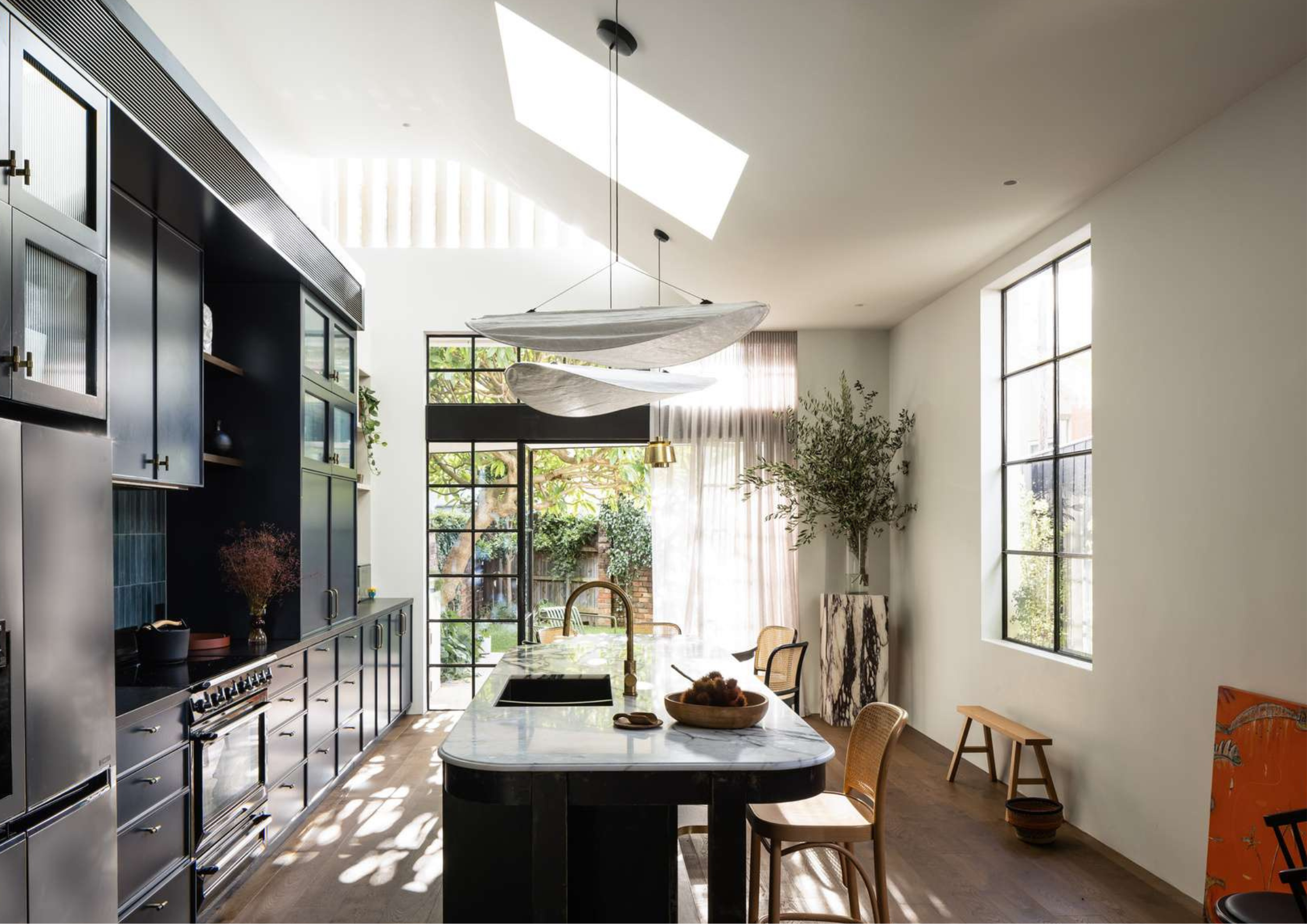
The Five Scopes of a Kitchen Renovation
Understanding scope is the single most useful thing you can do before you call a builder or cabinet-maker. The five scopes below cover the full market. Use them as a starting point, not a firm quote.
| Scope | Description | Typical Cost Range |
|---|---|---|
| Cosmetic refresh | New paint, hardware, tapware, and appliances only; cabinets and layout stay | $8,000 to $20,000 |
| Mid-range update | New cabinetry, benchtop, splashback, and appliances; layout unchanged | $25,000 to $45,000 |
| Full renovation | Everything new, layout changes possible, some structural work | $45,000 to $80,000 |
| Premium renovation | High-end materials, custom cabinetry, architect involvement | $80,000 to $130,000 |
| Full custom | Bespoke everything, structural changes, imported appliances, architect-led design | $130,000 and above |
The median of $35,000 sits in the mid-range update category, which is where most Australian homeowners renovating an existing home land. It typically covers a 15 to 20 square metre kitchen with flatpack or semi-custom cabinetry, a new benchtop, fresh splashback, a new stove and rangehood, and a plumber and electrician visit.
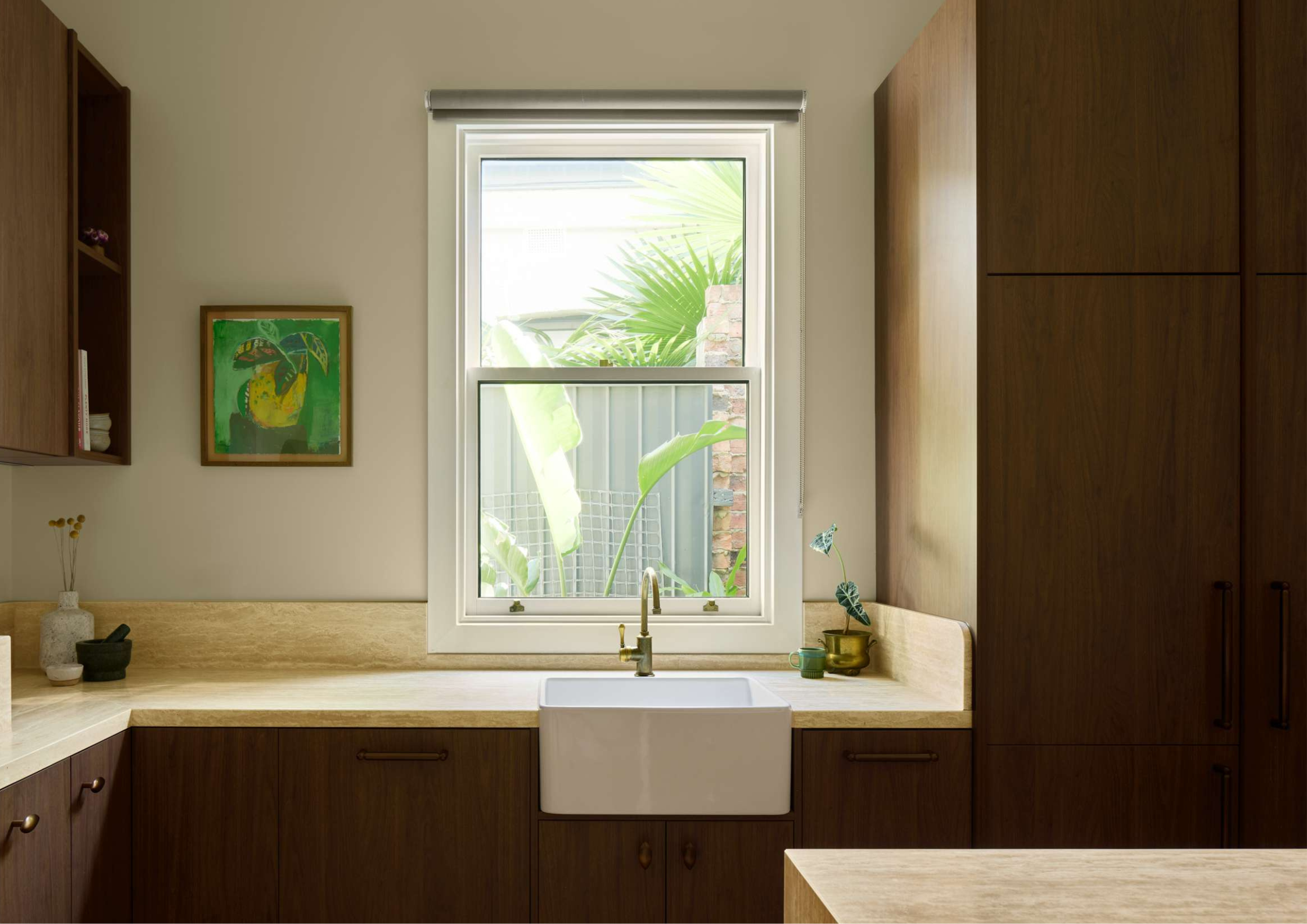
Budget Level Breakdown with Specific Brands
Cosmetic Refresh: $8,000 to $20,000
A cosmetic refresh assumes the cabinet carcasses are structurally sound and the layout stays exactly as it is. You replace doors and drawer fronts, swap out handles, update tapware, fit a new sink, and install new appliances. For paint-grade doors, Kaboodle from Bunnings is the dominant flatpack option at this price point. IKEA SEKTION door replacements are also widely used in this scope. Tapware brands such as Methven and Oliveri sit at the accessible end of the market.
This scope suits kitchens less than ten years old where the bones are good but the aesthetics are dated. It will not resolve a poor layout, fix inadequate storage, or address old plumbing needing rerouting.
Mid-Range Update: $25,000 to $45,000
The mid-range update is the most popular scope in Australia. Cabinetry is typically flatpack from Kaboodle, IKEA SEKTION, or Polytec flat-pack supplied through a local cabinet-maker. Semi-custom cabinetry from suppliers such as Laminex-finished MDF units ordered through a joiner is common at the higher end of this bracket.
Benchtops at this level include laminate (Laminex Surround or Formica), compact laminate, and natural stone such as granite or marble. Post the engineered stone ban that took effect 1 July 2024, porcelain slabs and Dekton have become mainstream at the $20,000 to $45,000 range. Appliances are typically Fisher and Paykel, Bosch, Westinghouse, or Smeg at the entry level. A 900mm Smeg freestanding cooker and a Bosch Series 6 dishwasher are common pairings in this bracket.
Full Renovation: $45,000 to $80,000
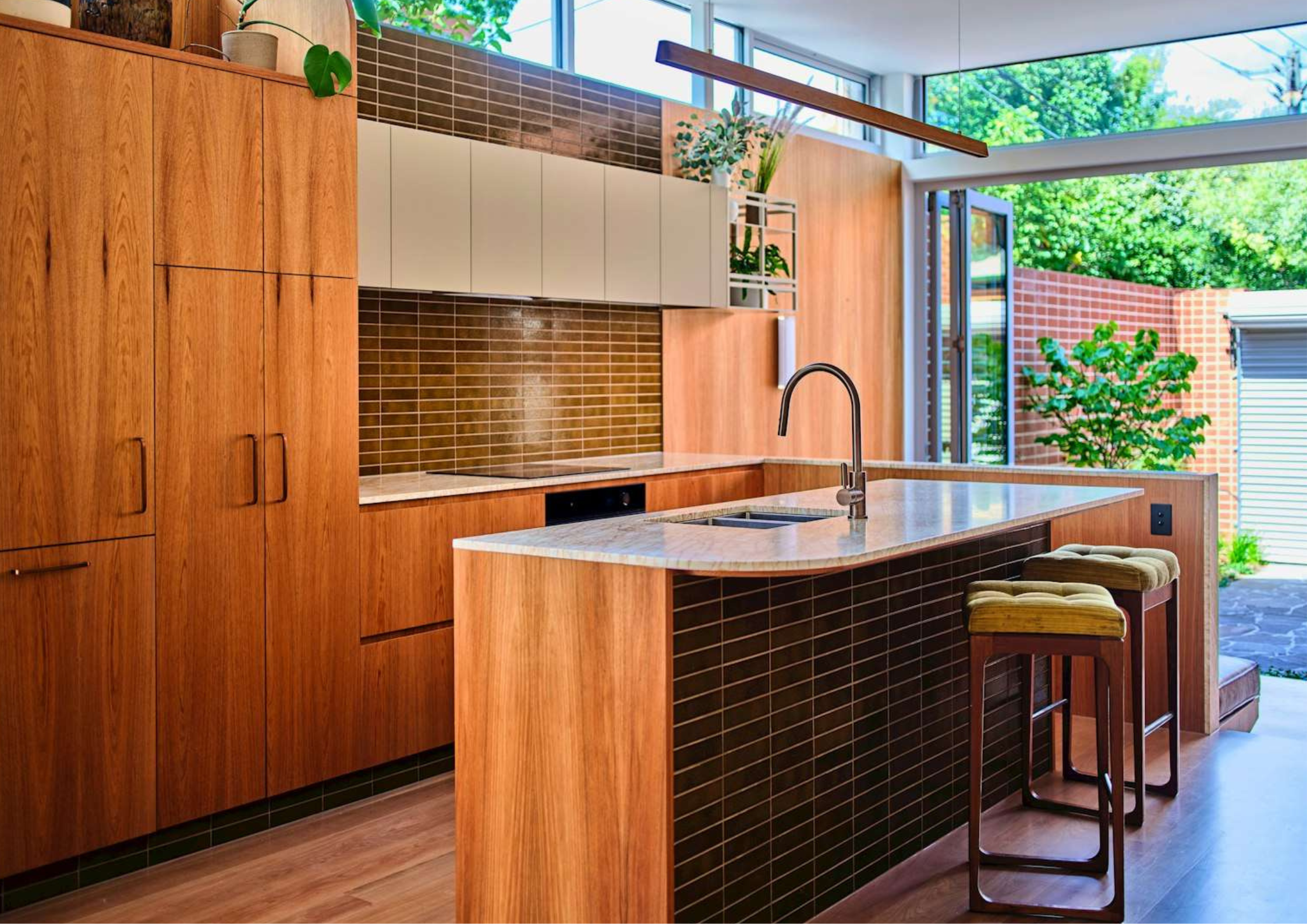
A full renovation brings semi-custom or fully custom cabinetry, structural changes such as removing a wall to open the kitchen to a living area, and a higher-quality benchtop. Cabinetry suppliers at this level include Kinsman Kitchens custom range, Freedom Kitchens premium range, Polytec and Laminex through a custom joiner, or a local bespoke cabinet-maker. Benchtop options extend to Neolith, Dekton, porcelain slabs from Tile Cloud or similar, Carrara marble, or reconstituted stone alternatives. Appliances move into Miele, Smeg, and Fisher and Paykel integrated ranges.
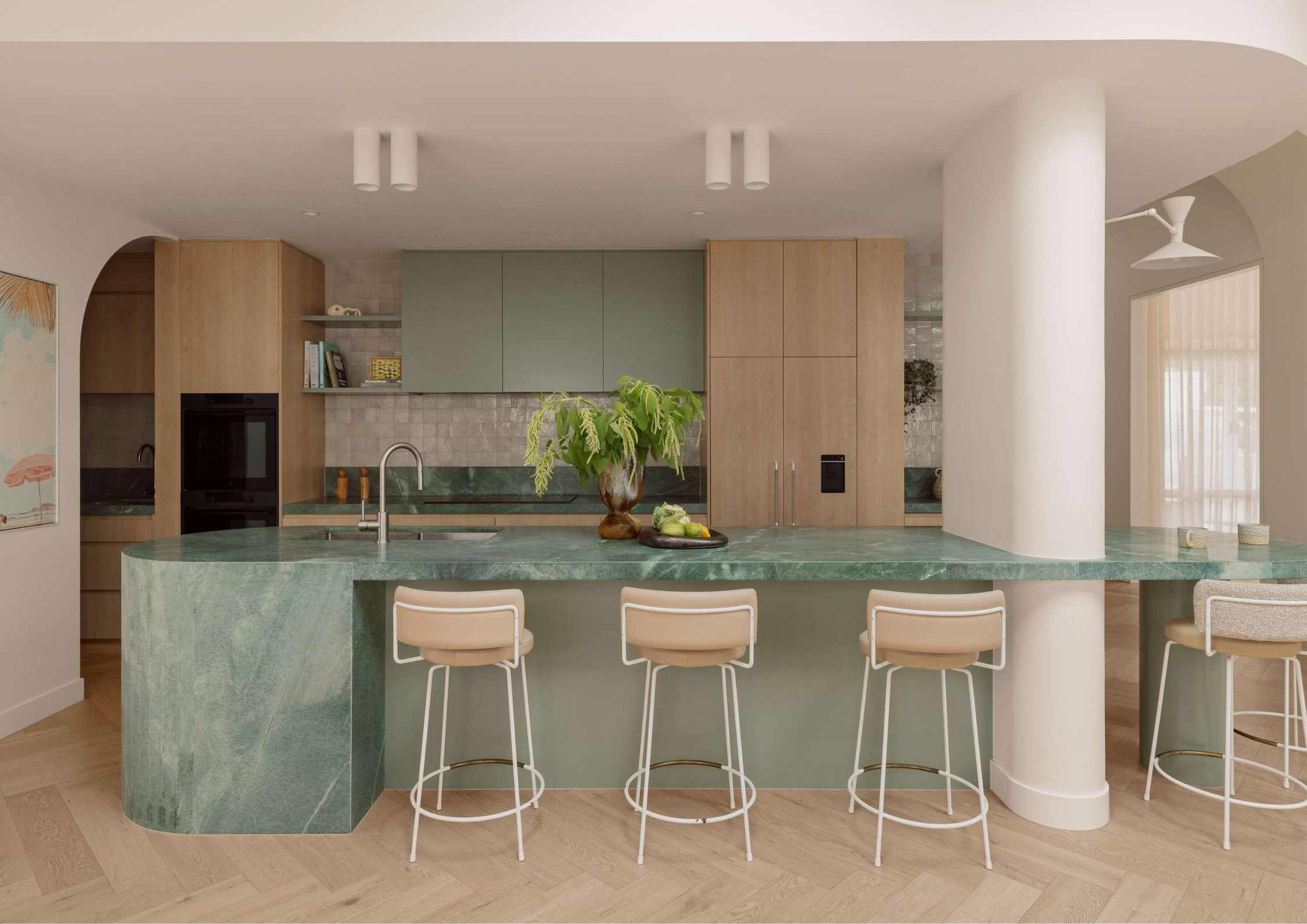
Premium Renovation: $80,000 to $130,000
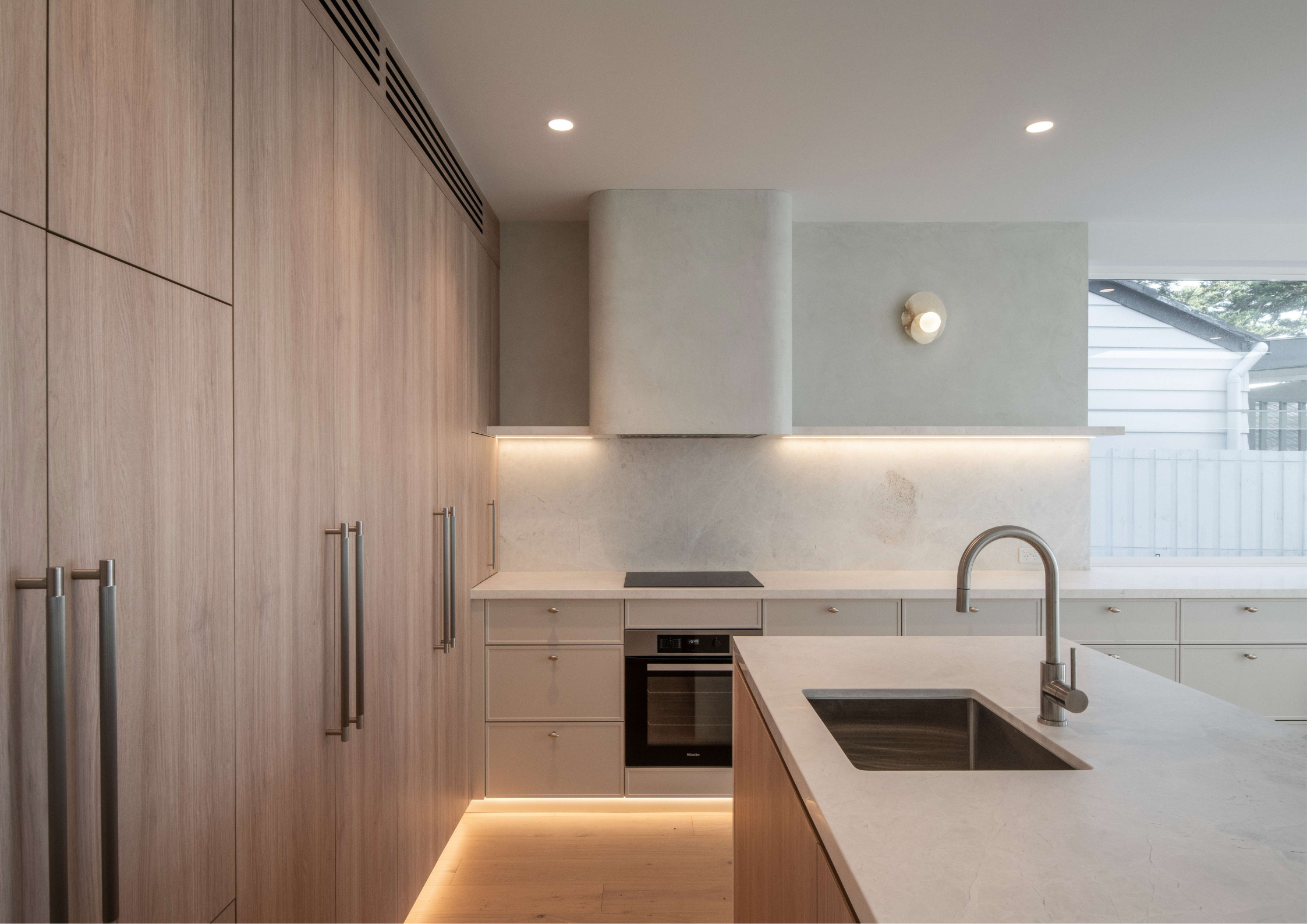
At this level a custom joiner fabricates cabinetry to architect or interior designer specifications. Benchtops are typically book-matched natural stone, Dekton, or Neolith. Appliances are fully integrated from Miele, Gaggenau, or V-Zug. Tapware moves to Brodware or Astra Walker. Lighting design, integrated rubbish systems, butler's pantries, and concealed rangehood enclosures are standard inclusions.
Full Custom: $130,000 and Above
At the full custom level, an architect or interior designer leads the project from concept to contract administration. Cabinet-makers are bespoke trades with extended lead times. Materials include imported stones, custom paint-finish cabinetry with soft-close and internal LED systems, and commercial-grade appliances such as a La Cornue range or a full Gaggenau suite. This scope can reach $250,000 to $300,000 in high-end Sydney and Melbourne projects.
If you are considering a premium or full custom kitchen, architect involvement will add cost but almost always returns value through better spatial planning, specification control, and procurement oversight.
Component Cost Breakdown
Cabinetry: 30 to 40 Percent of the Total Budget
Cabinetry is the single largest cost in a kitchen renovation and typically consumes 30 to 40 percent of the total budget. For a $35,000 renovation, that is $10,500 to $14,000.
The cost range is wide because the market spans flatpack DIY through to bespoke joinery. Flatpack from Kaboodle or IKEA, self-installed, can cost as little as $2,500 to $5,000 in materials for a standard kitchen. The same flatpack range installed by a professional kitchen fitter adds $2,000 to $5,000 in labour. Semi-custom units installed by a joiner typically cost $8,000 to $18,000 for a standard kitchen. Fully bespoke joinery starts at $20,000 and has no upper limit.
Cabinetry costs are driven by linear metres, cabinet height, the number of drawers versus doors (drawers cost more), the choice of hinge and drawer runner hardware (Blum Legrabox and Hettich at the premium end; generic hardware at the budget end), and internal fittings such as pull-out bins and magic corners.
Benchtops: $1,500 to $15,000 and Above
Benchtop costs vary enormously by material. The following ranges apply to a standard 5 to 7 linear metre benchtop including fabrication and installation.
- Laminate (Laminex, Formica)$1,500 to $3,500
- Reconstituted or compressed stone (Smartstone, Essa Stone)$3,000 to $7,000
- Natural granite$3,500 to $8,000
- Porcelain slab (Tile Cloud, Beaumont Tiles)$4,000 to $9,000
- Dekton ultra-compact surface$5,000 to $12,000
- Neolith sintered stone$5,000 to $12,000
- Marble (Carrara, Calacatta)$6,000 to $15,000+
Engineered Stone Ban
From 1 July 2024, the manufacture, supply, and installation of engineered stone in Australia is banned under Safe Work Australia regulations adopted across all states and territories. The ban was introduced to address the silica dust crisis affecting kitchen tradespeople. From 1 January 2025, the importation of engineered stone was also prohibited. Products previously known as Caesarstone, Essastone, Silestone, and Quantum Quartz are no longer legal to install in any Australian renovation or build. If you have quotes that include engineered stone, they are either out of date or non-compliant.
The practical alternatives are porcelain slabs, Dekton, Neolith, and natural stone. Porcelain and sintered stone products have improved significantly in quality and aesthetics in the two years since the ban took effect, and most cabinet-makers and stone fabricators are now experienced in cutting and installing them. Costs are broadly comparable to what engineered stone was selling for in 2023.
Appliances: $2,000 to $25,000
A mid-range appliance package includes an oven or cooker, cooktop, rangehood, and dishwasher. A Westinghouse or Bosch Series 4 package costs $2,000 to $4,000. Bosch Series 8 or Fisher and Paykel mid-range sits at $5,000 to $8,000. A Miele premium package runs $10,000 to $18,000. A full Gaggenau suite exceeds $25,000.
Labour: 25 to 35 Percent of Total
Labour costs include the cabinet installer, a licensed plumber (required for any plumbing changes), a licensed electrician (required for new circuits and hardwired appliances), and potentially a tiler, plasterer, and building contractor for structural works. In Sydney and Melbourne, licensed trade rates run $100 to $180 per hour. Regional areas are generally 10 to 20 percent lower. A full kitchen renovation typically involves 3 to 5 trade visits each with a minimum callout charge. Budget 25 to 35 percent of total cost for labour.
Splashback: $500 to $5,000
A standard ceramic or porcelain tile splashback costs $500 to $1,500 installed for an average kitchen. Glass splashback: $800 to $2,500. Stone or porcelain slab extending from benchtop to overhead cabinets: $1,500 to $5,000. Mirrored or metallic panels: $600 to $2,000.
Flooring: $1,500 to $8,000
Many kitchen renovations include new flooring, particularly when walls are moved and the existing floor needs to be extended or replaced. Porcelain or ceramic tile: $50 to $120 per square metre installed. Luxury vinyl plank (Karndean, Amtico): $60 to $100 per square metre installed. Timber or engineered timber: $80 to $150 per square metre installed.
Kitchen Renovation Costs by State
Material, labour, and trade rates vary meaningfully across Australia. The table below shows approximate median renovation costs for a mid-range kitchen update by state.
| State | Median Mid-Range Cost | Notes |
|---|---|---|
| New South Wales | $38,000 to $45,000 | Sydney metro pushes costs above national median; HBCF insurance required for jobs over $20,000 |
| Victoria | $35,000 to $42,000 | Melbourne metro on par with Sydney; regional Victoria 10 to 15 percent lower |
| Queensland | $30,000 to $38,000 | Labour rates lower than southern states; strong supply market |
| Western Australia | $32,000 to $40,000 | Perth metro has tightened; strong construction demand since 2022 |
| South Australia | $28,000 to $35,000 | Generally the lowest cost mainland state |
| Australian Capital Territory | $36,000 to $44,000 | Government and licensed trade requirements add compliance costs |
| Tasmania | $27,000 to $34,000 | Lowest median cost state; limited supply of premium trades |
| Northern Territory | $38,000 to $50,000 | Freight and trade availability add premium; Darwin-specific challenges |
The Six Key Cost Drivers
1. Kitchen Size
The most obvious driver. Costs scale with linear metres of cabinetry, benchtop area, and square metres of flooring and tiling. A galley kitchen at 8 linear metres costs significantly less than an L-shaped kitchen at 14 linear metres with the same materials. Measure your kitchen accurately before seeking quotes.
2. Layout Changes
Moving the sink, relocating the cooktop, or shifting walls are the fastest ways to increase cost. Each plumbing move can add $1,500 to $5,000. Relocating a gas connection adds $800 to $3,000. Removing a wall can add $3,000 to $15,000 depending on whether it is load-bearing and whether it contains services.
3. Material Selection
The range between laminate benchtops and Carrara marble is approximately $10,000 on a standard kitchen. Flatpack cabinetry versus bespoke joinery can represent a $15,000 to $30,000 difference on the same footprint. Material selection is where most budgets expand beyond initial expectations.
4. Appliance Specification
Moving from a basic appliance package to a premium integrated package adds $8,000 to $18,000 to a renovation. If you want high-end appliances in a mid-range kitchen, allocate a separate budget line for appliances before pricing the rest of the job.
5. Trade Availability and Location
In 2025 and 2026, trade shortages in New South Wales, Victoria, and Western Australia continue to push timelines and costs up. Premium builders and joiners in tight markets are booking 3 to 6 months in advance without discounting. Planning lead time is as important as planning budget.
6. Architect or Designer Involvement
Architect and interior designer fees add 10 to 20 percent to a renovation budget, or $5,000 to $10,000 on a $50,000 kitchen. However, good design reduces waste, prevents costly mid-build changes, and consistently produces better outcomes. For renovations above $60,000 or any project involving structural work, professional documentation is strongly recommended.
Hidden Costs: What Most Quotes Do Not Include
Structural Surprises
Once walls come down, what is behind them is unknown until demolition. Old plumbing needing upgrading, asbestos in pre-1990 homes, subfloor damage, and out-of-square structure all add cost. Budget 10 to 15 percent of your renovation cost as a contingency.
Asbestos Removal
Any home built before 1990 should be assessed for asbestos before renovation work begins. Licensed removal costs $1,500 to $5,000 for a typical kitchen scope and must be completed before other trades can proceed.
Plumbing and Electrical Upgrades
Older kitchens may have plumbing requiring an upgrade to current standards before a plumber will connect new fixtures. Pre-2000 homes may also lack adequate circuits for modern appliances, requiring a switchboard upgrade ($1,500 to $4,500) before the renovation can proceed.
The Engineered Stone Ban and Existing Benchtops
If you are purchasing a property with an engineered stone kitchen installed before July 2024, be aware that any future renovation or repair will require full replacement with a compliant material. You cannot recut, repolish, or add to an existing engineered stone benchtop without violating the ban. This is an emerging issue in property transactions, particularly for kitchens installed between 2015 and 2024.
HBCF Insurance in New South Wales
In New South Wales, any residential building work with a contract value over $20,000 (including GST) requires the builder to hold Home Building Compensation Fund (HBCF) insurance in the homeowner's name before work commences. This is a legal requirement under the Home Building Act 1989. The cost of HBCF insurance is typically passed through to the homeowner in the builder's contract price. If a builder quotes you a kitchen renovation over $20,000 in NSW and does not mention HBCF insurance, ask for it specifically. Operating without HBCF insurance exposes you to significant risk if the builder becomes insolvent or abandons the project.
Temporary Kitchen Setup
For full renovations lasting four to eight weeks, many homeowners set up a temporary kitchen. Budget $300 to $800 for a portable induction cooktop, a small bar fridge, a temporary sink connection, and dining solutions during the build.
Waste Disposal
Skip bin hire for a full kitchen demolition typically costs between $300 and $600 per bin, depending on bin size and your location in Australia. Most kitchen renovations require one to two bins to handle the volume of waste generated, including old cabinetry, benchtops, flooring, plasterboard, and appliances. If your home was built before 1990, note that asbestos cannot go into a standard skip bin and must be disposed of by a licensed contractor, which will add to your overall cost.
Bathrooms carry a similar cost profile to kitchens and the same hidden cost risks. See our bathroom renovation cost guide for a full breakdown.
Return on Investment: Is a Kitchen Renovation Worth It?
Kitchen renovations consistently rank among the highest-returning renovation categories in Australia. Real estate agents estimate a quality kitchen renovation recovers 60 to 80 percent of its cost at resale. A $40,000 kitchen renovation may add $24,000 to $32,000 to property value.
The 2 to 3 Percent Rule
A widely used rule of thumb among property advisers is to spend no more than 2 to 3 percent of your home's total value on a kitchen renovation to achieve a positive return. On a $900,000 property, that is $18,000 to $27,000. Exceeding this threshold does not guarantee no added value, but proportional return tends to diminish above it. In high-value properties, the ceiling scales: a $2.5 million home can support a $75,000 kitchen renovation and still expect a strong return.
Owner-Occupier vs Investment Property
If you are renovating to live in the home, the return is broader than resale value. Daily-use quality, reduced maintenance, improved energy efficiency, and liveability are all real returns. For investment properties, a cosmetic refresh typically produces stronger rental yield uplift per dollar spent than a full renovation. Consult a property valuer before undertaking a full renovation on a tenanted property.
For a comprehensive view of how renovation spending compares to building new, see our build or renovate guide.
Kitchen Renovation Timeline
Understanding the timeline helps you manage expectations and plan around your household. The table below is a guide for each scope.
| Scope | Planning & Design | Expected Timeline |
|---|---|---|
| Cosmetic refresh | 2–4 weeks | 5–10 weeks |
| Mid-range update | 4–6 weeks | 10–18 weeks |
| Full renovation | 6–10 weeks | 15–28 weeks |
| Premium renovation | 8–16 weeks | 22–44 weeks |
| Full custom | 12–24 weeks | 34–68 weeks |
Cabinetry lead times are the most common scheduling constraint in 2026. Custom and semi-custom joinery from Sydney and Melbourne fabricators is regularly running 10 to 16 weeks. Benchtop fabrication after template takes 1 to 3 weeks. Plan backwards from your required completion date to determine when cabinetry orders must be placed.
Council Approvals and Permits
Most standard kitchen renovations in Australia do not require council development approval (DA). Under complying development codes in most states, interior renovations that do not affect the structural system, change the building footprint, or affect heritage values are exempt. However, several situations require formal approval.
When You May Need a Council DA or CDC
Removing a load-bearing wall requires a structural engineer's certificate and in most states a CDC or DA. Heritage-listed properties or properties in heritage conservation areas may need consent for internal works affecting character elements. Dual occupancy or commercial kitchens attract additional rules.
Building Permits (Victoria)
In Victoria, a building permit is required for structural alterations regardless of value. Even a wall removal in a kitchen renovation requires a permit through a registered building surveyor.
Owner-Builder Rules
Owner-builder rules vary by state. In NSW, work over $20,000 requires an owner-builder permit. In Victoria, the threshold is $16,000. Check your state's rules before proceeding without a licensed builder.
As a general rule, any kitchen renovation involving structural changes, plumbing rerouting, or a project value above $20,000 benefits from a licensed builder managing the works.
For kitchen renovation costs in specific Australian cities, see our guides for Melbourne, Brisbane, Perth, and Sydney.
Frequently Asked Questions
1.How much does a kitchen renovation cost per square metre in Australia?
Kitchen renovations are not typically priced per square metre because the cost is driven primarily by linear metres of cabinetry and the number of appliances rather than floor area. That said, a useful benchmark is $2,000 to $5,000 per square metre for a mid-range renovation and $5,000 to $10,000 per square metre for a premium renovation. These figures include all materials and labour but not structural work.
2.What is the cheapest way to renovate a kitchen in Australia?
The most cost-effective approach is a cosmetic refresh: replace cabinet doors without touching the carcasses, repaint, update handles and tapware, and install new appliances. Using flatpack doors from Kaboodle or IKEA and doing the painting yourself can bring a cosmetic refresh in at $8,000 to $12,000. Keeping the layout identical and avoiding plumbing or electrical changes is the single most effective cost control measure.
3.How long does a kitchen renovation take in Australia in 2026?
A mid-range kitchen renovation realistically takes 10 to 18 weeks from the day you engage a builder to the day the kitchen is operational. This includes 4 to 6 weeks of planning and specification, 4 to 8 weeks of lead time for cabinetry, and 2 to 4 weeks of on-site construction. Rushing the planning phase to save time typically costs more in changes and mistakes during construction.
4.Do I need council approval for a kitchen renovation in Australia?
Most kitchen renovations that do not involve structural changes, plumbing moved to new locations, or heritage property requirements are exempt development in all states and do not require council DA. You will still need your licensed plumber and electrician to certify their work as required by each state's building code. If you are removing walls or altering structure, check with a registered building surveyor in your state before starting.
Can I still get an engineered stone benchtop in Australia in 2026?
No. The manufacture, supply, and installation of engineered stone has been banned in Australia since 1 July 2024 under regulations adopted by all states and territories following a SafeWork Australia determination. The importation of engineered stone was also banned from 1 January 2025. Any supplier offering engineered stone in 2026 is operating illegally. The practical alternatives are porcelain slab, Dekton, Neolith, or natural stone such as granite or marble.
Should I renovate my kitchen before selling my house?
It depends on the condition of the existing kitchen and the property price point. A cosmetic refresh typically returns more per dollar than a full renovation at point of sale. Real estate agents consistently advise that a clean, fresh kitchen sells better than a partially renovated one. If the kitchen is genuinely dysfunctional, a full mid-range renovation supports the asking price, but the return is rarely dollar-for-dollar.
What does HBCF insurance mean for my kitchen renovation in NSW?
In New South Wales, any residential building contract over $20,000 (including GST) requires the builder to take out Home Building Compensation Fund (HBCF) insurance naming you as the insured homeowner before taking any deposit. This protects you if the builder becomes insolvent, dies, or abandons the project. If a builder quoting a kitchen renovation over $20,000 in NSW cannot provide evidence of HBCF cover, they are not legally entitled to take your money.
How much should I budget as a contingency on a kitchen renovation?
Budget 10 to 15 percent of the contracted value for a standard mid-range renovation, and 15 to 20 percent if the home is older than 30 years or if structural work is involved. A $40,000 contracted renovation should have $4,000 to $6,000 in accessible savings before you sign anything. This is standard industry advice, not pessimism.
What is the difference between a kitchen renovation and a kitchen remodel?
In Australian usage the terms are often interchangeable, but a useful distinction applies. A renovation updates a kitchen within its existing footprint and layout. A remodel changes the layout, moves walls, or reconfigures the space. A remodel is more complex, more expensive, and more likely to require permits.
Renovation budgets go further with the right expertise from the start. At CO-architecture, we work with homeowners at every budget level to develop designs that are buildable, approvable, and built to last. Whether you need a feasibility review, full architectural documentation, or advice on where to spend and where to save, we can help.