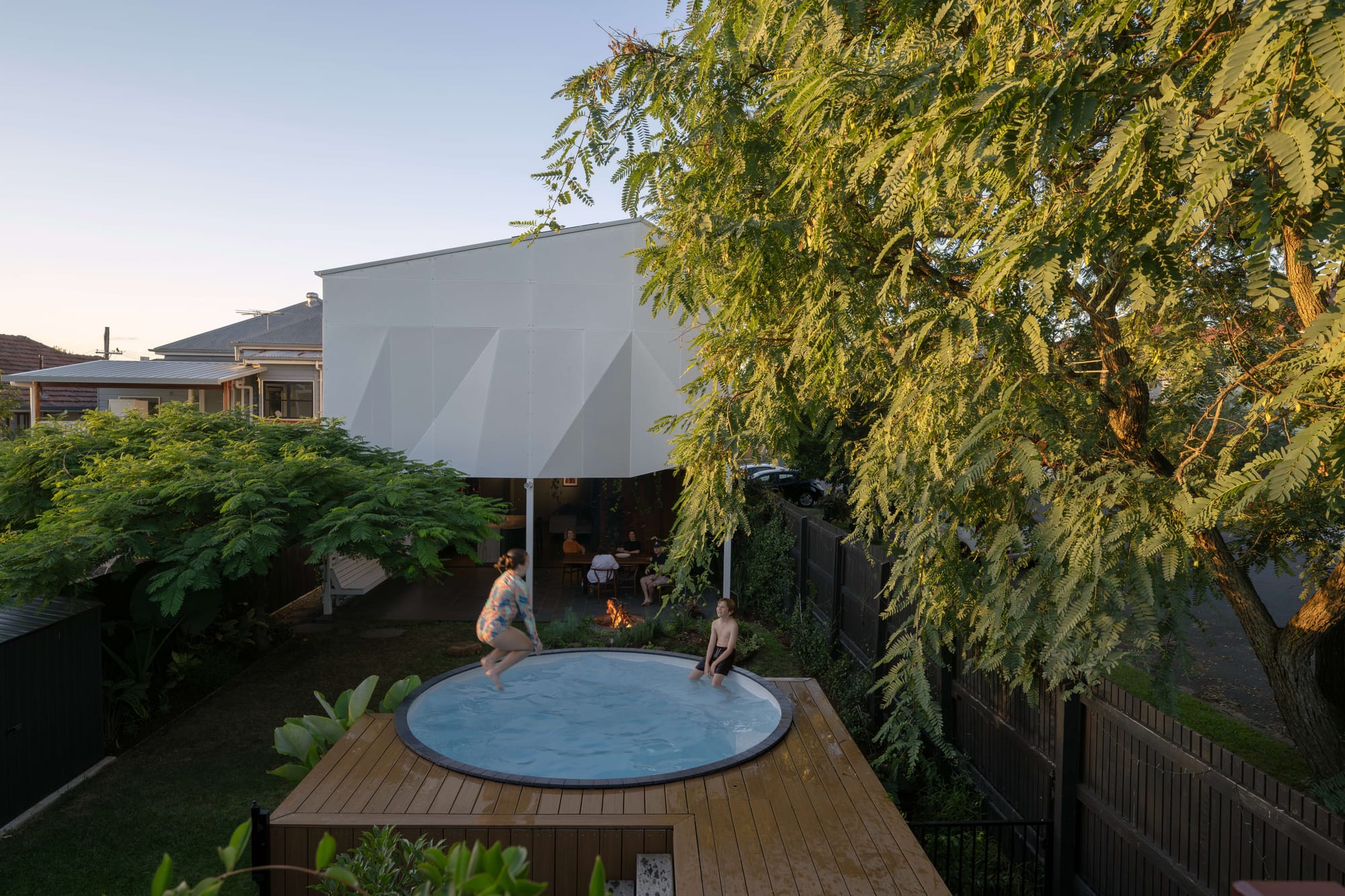
Across Australia, a new wave of residential design is redefining what it means to live well as a family. These aren't homes built around trends or Instagram moments - they're built around the way people actually inhabit space: the morning chaos, the need for quiet, the desire to gather, and the slow accumulation of memory. From coastal terraces to modular island retreats, these seven projects each tell a different story about what thoughtful architecture can do for the families who live inside it.
Queen Street, Mosman by McNally Architects
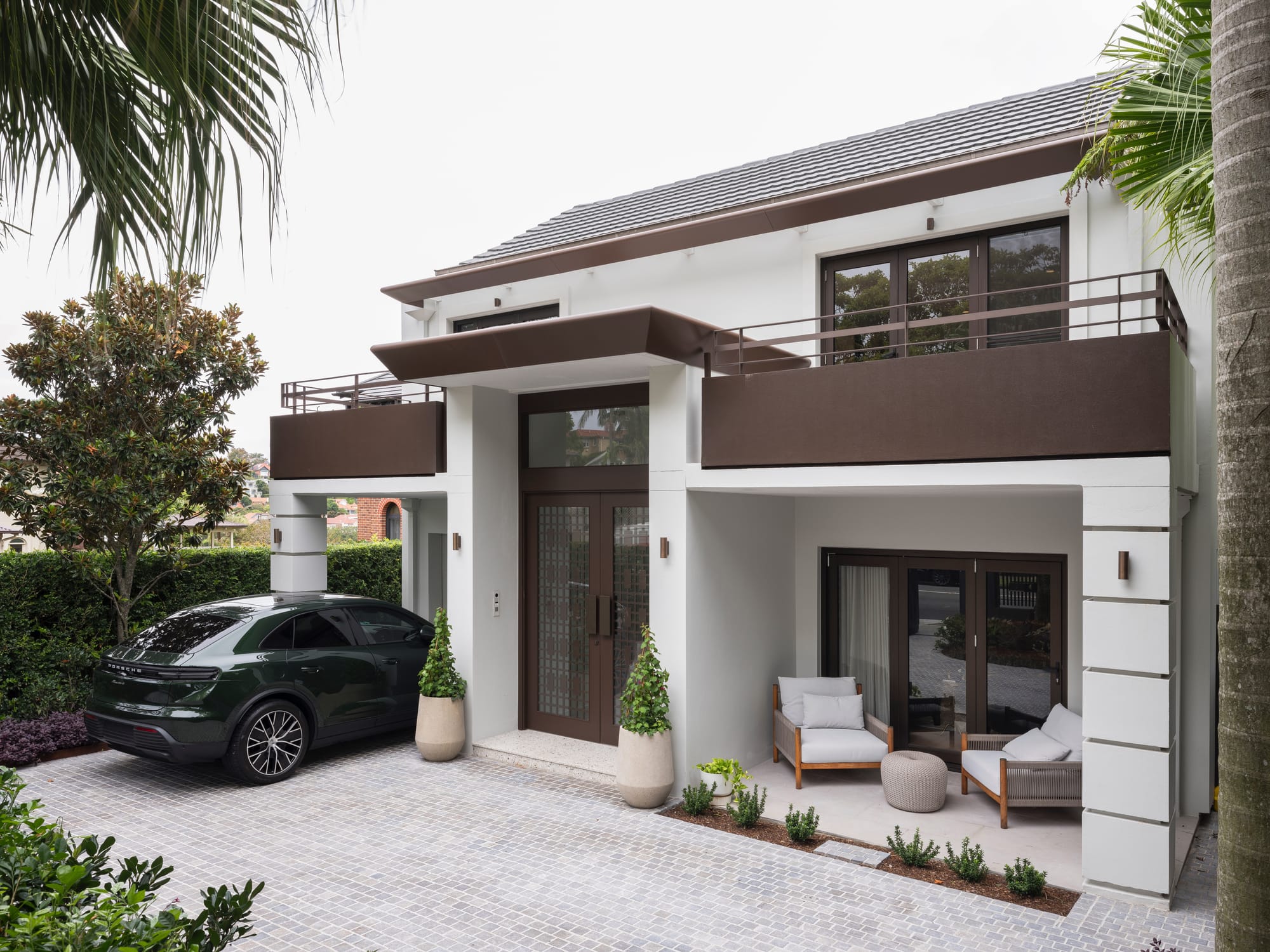
Rather than start from scratch, McNally Architects found the opportunity in what was already there. The Queen Street, Mosman project retains the original footprint of an existing residence but entirely reimagines how it looks and how it lives. A new zinc-clad facade and a custom entry sequence redefine the home's street presence, introducing a material language that harmonises with what was kept rather than competing with it.
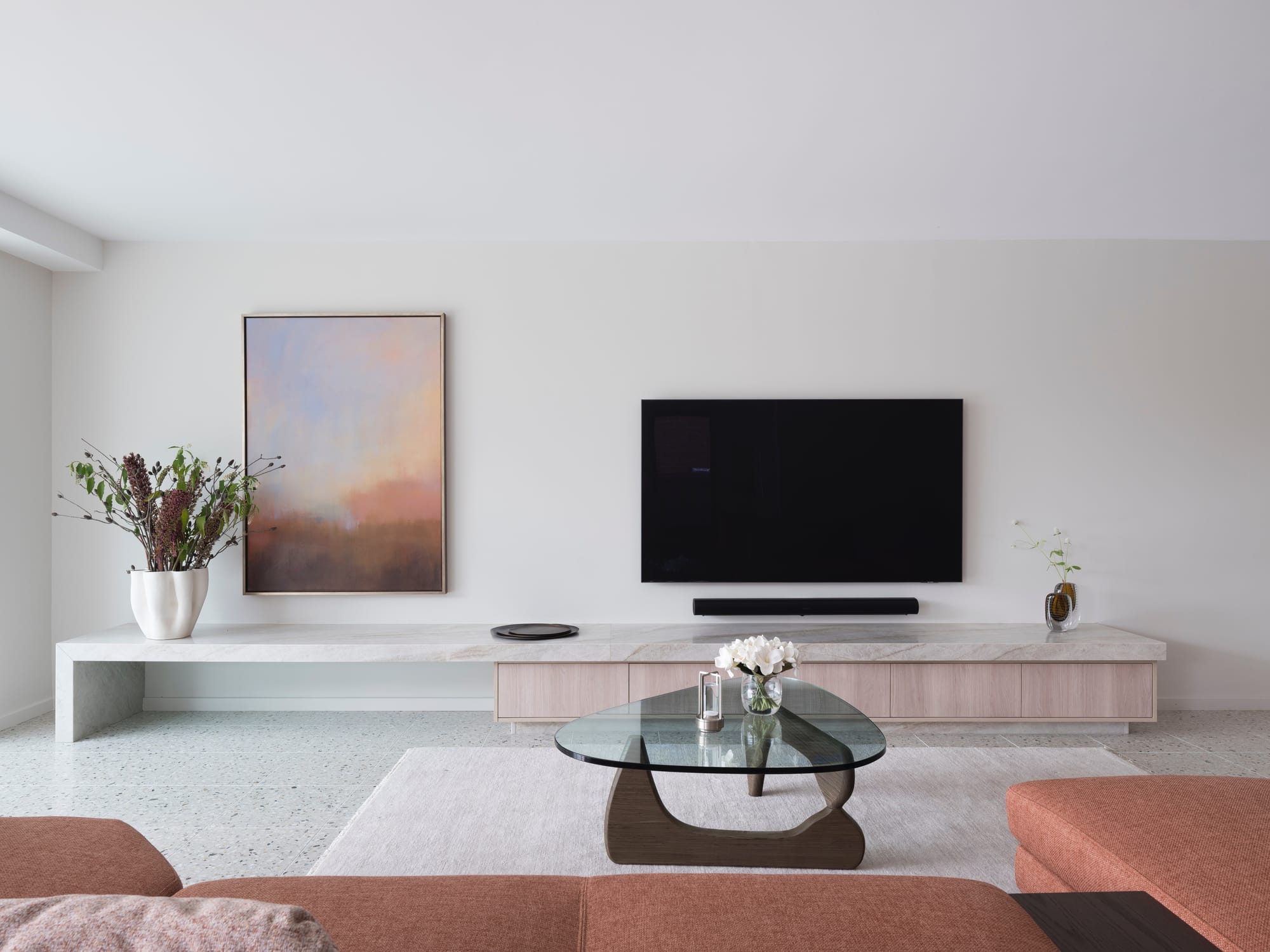
Inside, the layout was reconfigured to open the kitchen and living areas to the backyard through Vitrocsa sliding doors, with terrazzo flooring extending continuously out to the rear balcony to dissolve the boundary between inside and out. Intimate zones were threaded throughout the plan - a home office, a kids' media room, a parents' retreat, and a gym and dance studio that speaks directly to the family's lifestyle.
The existing staircase and sauna were retained and updated rather than removed, maintaining a quiet continuity with the home's history. All bedrooms received custom joinery, and the bathrooms were reimagined with marble feature walls. The result is a calm, joyful home that carries its past lightly while living generously in the present.
North Bondi House by Studio Arkive
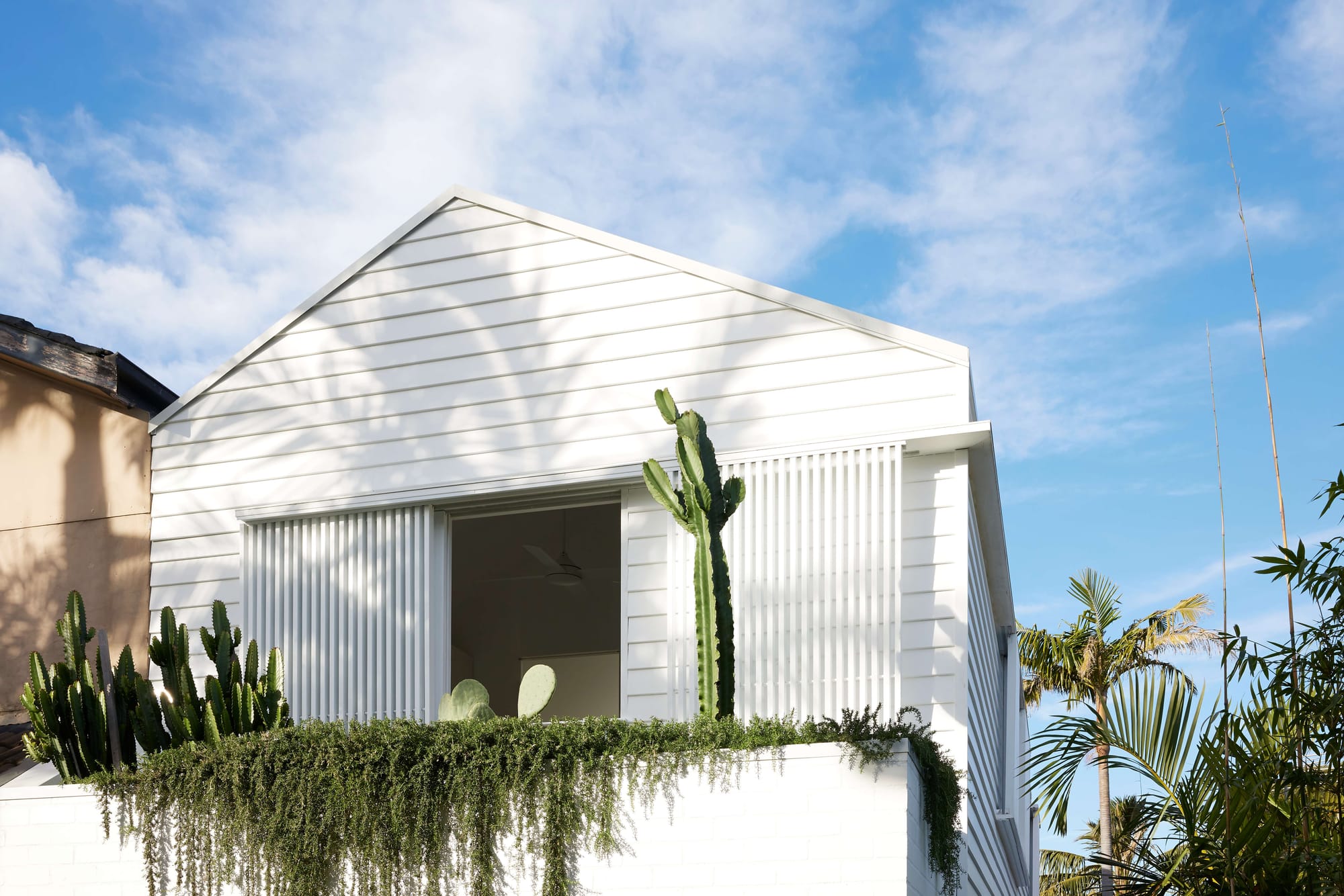
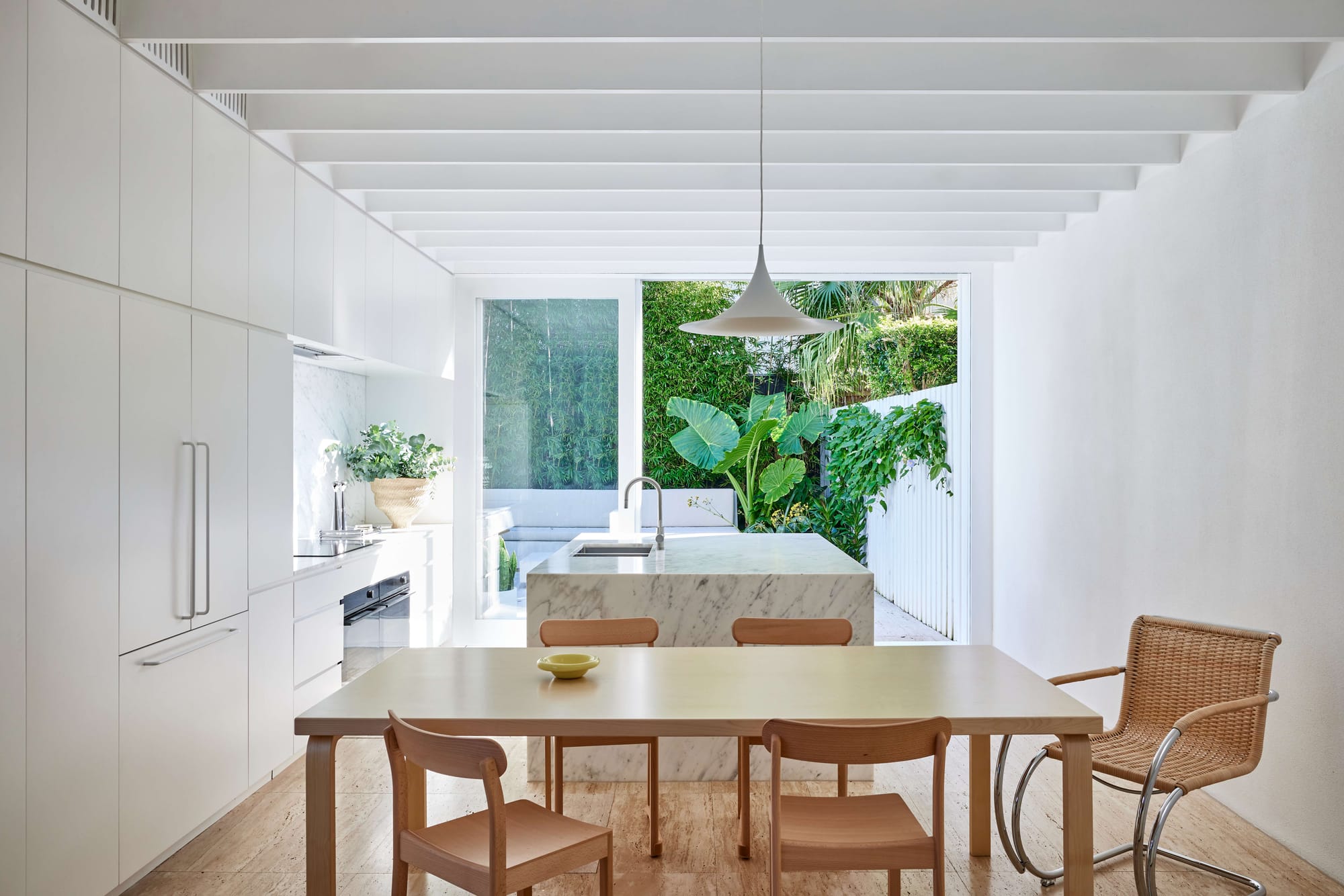
The brief for Studio Arkive was straightforward: more light, more space, and a stronger connection to the garden. The existing single-storey semi in Sydney's eastern beachside suburbs had turned its back on all three. North Bondi House is the answer - a considered transformation that adds a second storey while fundamentally rethinking how the whole dwelling is experienced.
The new upper level houses two bedrooms, a bathroom, and a master bedroom with ensuite. Its pitched roof form echoes the language of the adjoining semi, while a raked ceiling and a series of skylights create a light-filled volume that filters down through voids into the open-plan living area below. At ground level, the entry hall becomes the hinge between old and new, drawing the eye through the home toward the rear courtyard beyond.
Materials carry the coastal address honestly. Unfilled vein-cut travertine tiles connect the open-plan living area and rear courtyard in a continuous warm surface, while a fresh palette of painted brickwork and finely textured rendered walls brings richness without noise. Calacatta Delicato marble throughout the kitchen and living areas adds warmth, and an oversized island anchors the social heart of the home.
At the front, a dry garden of cactus defines the existing character of the house. At the rear, lush tropical greenery lines the courtyard perimeter, wrapped in a concrete bench seat. A sunroom that previously faced the street has been reimagined as a lounge bar - a secondary living space finished in warm American oak and Paonazzo marble - giving the family a room that works as hard at dusk as it does at noon.
Koto House by Cynosure Architecture
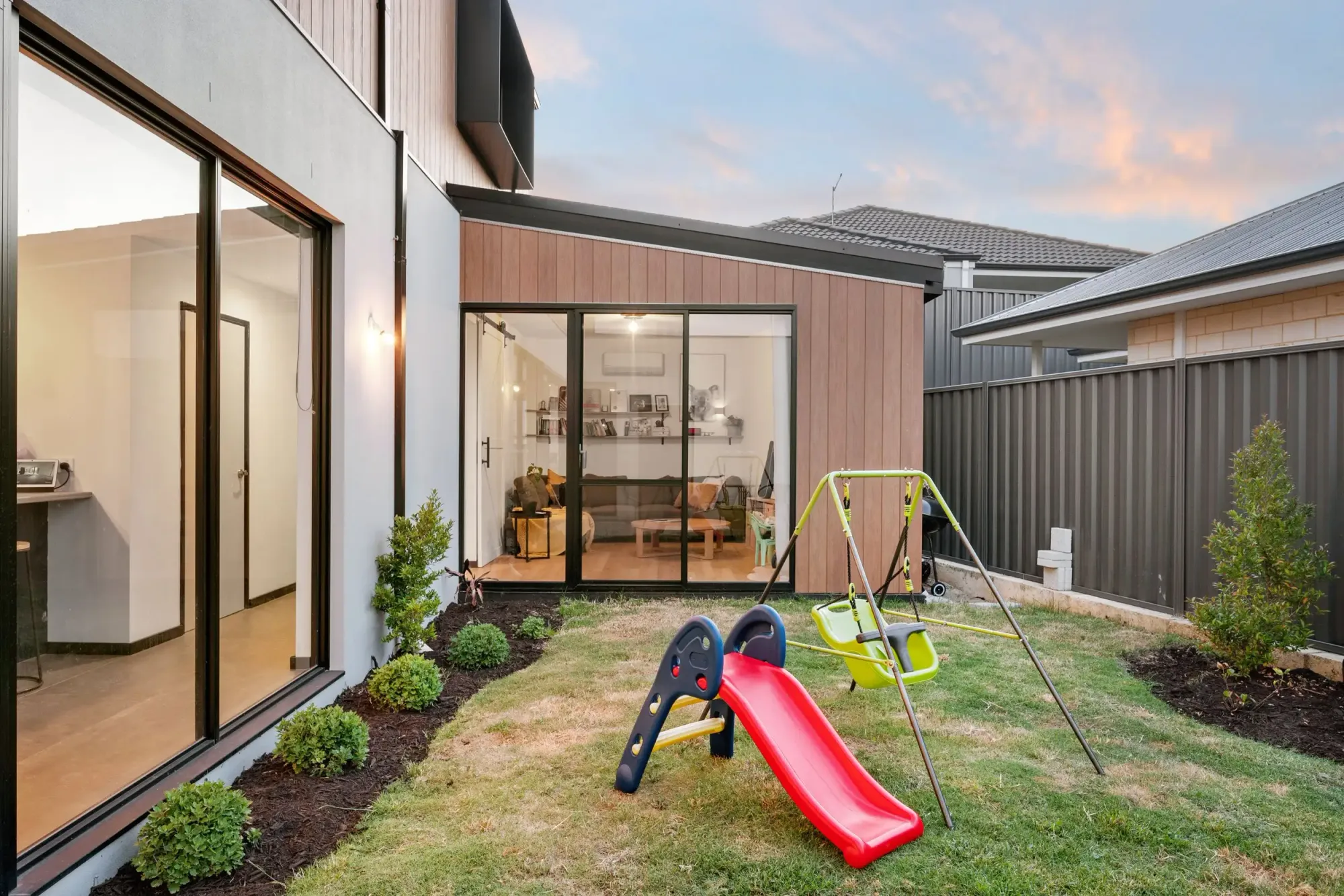
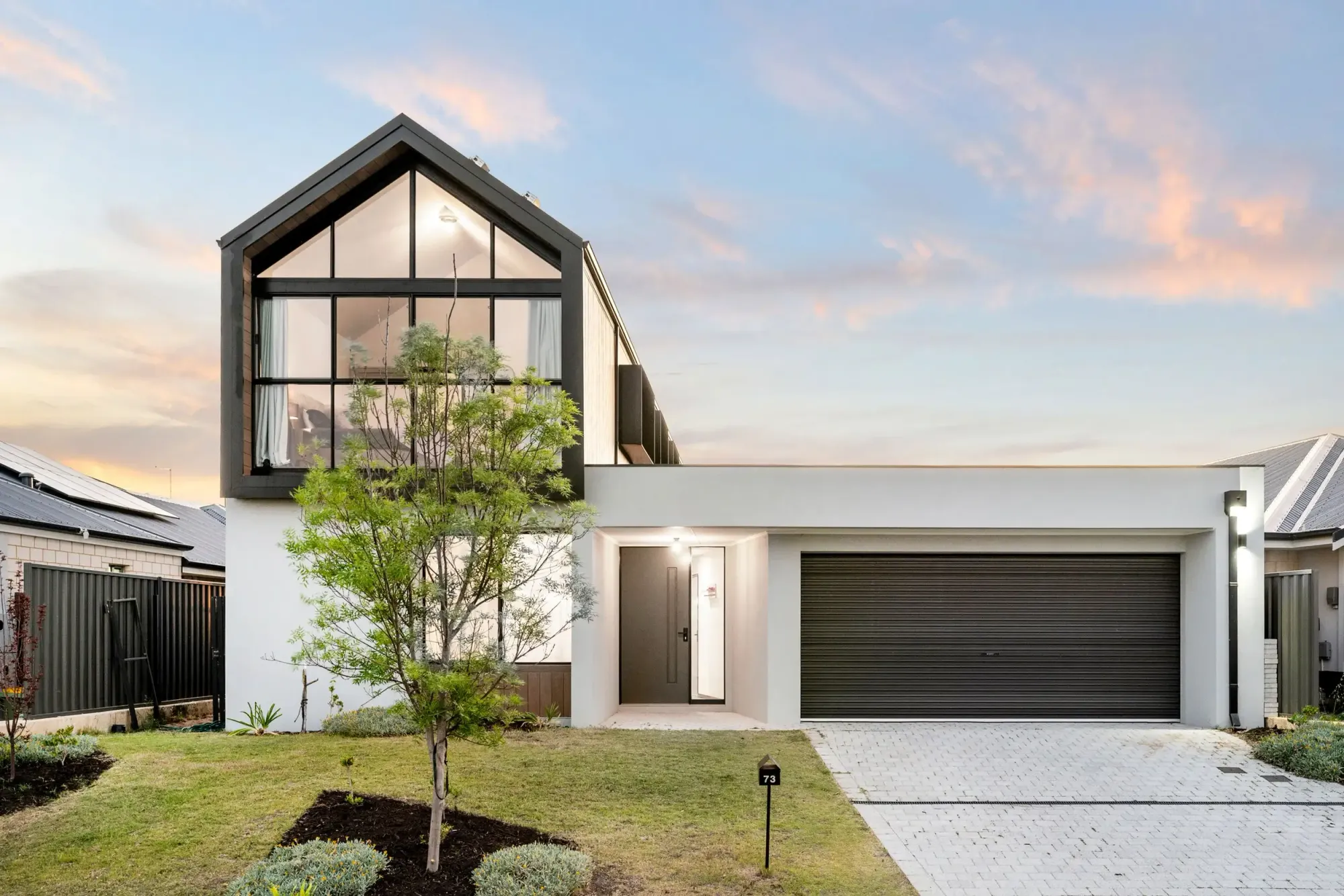
Cynosure Architecture director Matt Burleigh designed Koto House in Treeby as a home for his own young family - which gives the project an honesty and intentionality that shows in every decision. Inspired by Scandinavian barn forms and biophilic design principles, the house sits comfortably within its Perth streetscape, adopting familiar local render tones while making a quiet statement through its barn-inspired upper level.
A central courtyard anchors the plan, drawing natural light and greenery into the heart of the home and giving the family a genuine connection to the outdoors from multiple rooms. The interiors combine calm minimalism with warmth and tactility - an atmosphere that invites both rest and play.
What makes Koto House particularly notable is how it was built as much as how it was designed. Many of the interior finishes - including tiling, skirting, painting, and select cabinetry - were carried out by Matt himself, blending professional design with hands-on craft in a deliberate effort to make quality architecture more financially achievable. It's a home that carries the marks of its maker in the most literal sense.
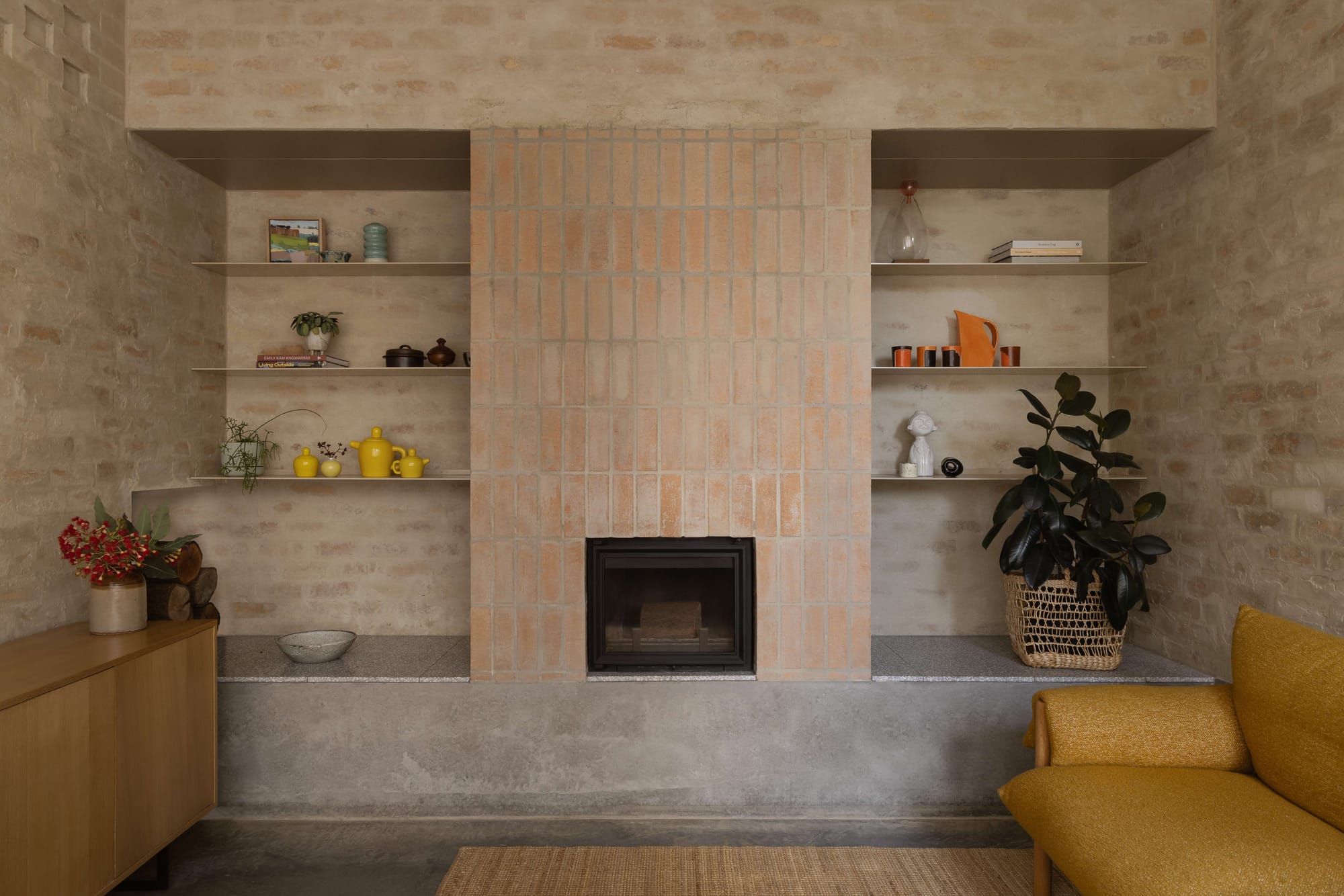
Oval House by Topology Studio
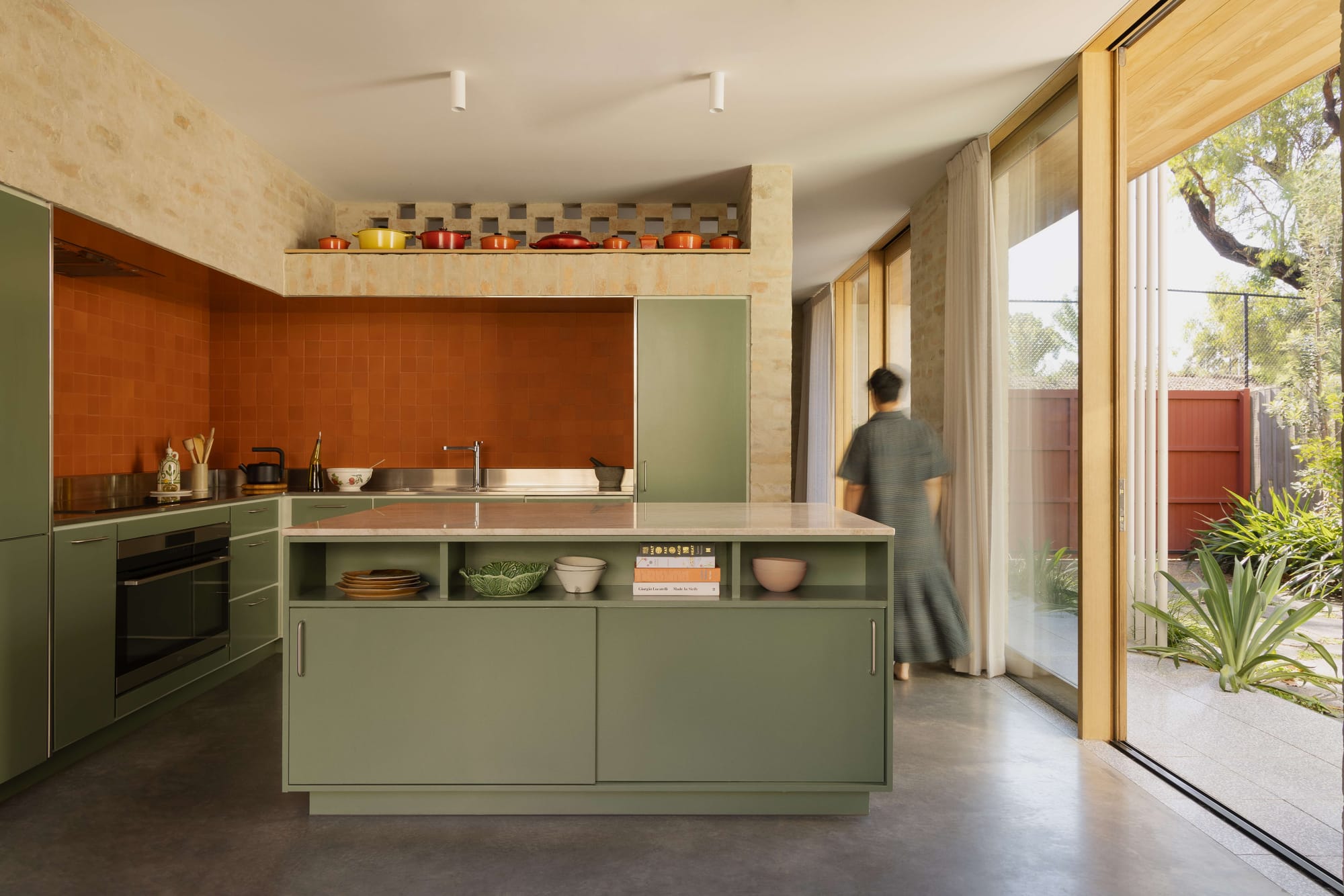
Some homes are designed around a single idea. Oval House by Topology Studio is built around many - each one rooted in a careful reading of place across the natural landscape, the built environment, history, and the life of the family who would live there.
The home sits on a suburban street in Coburg, not far from the former Pentridge Prison - an imposing piece of local history whose robust geometries and strong material character left a mark on the design. That same street runs alongside the local footy oval, a detail that mattered to the clients: an engaged family with deep ties to their community and local culture. Those connections surface throughout the home in deliberate elements of memory and playful nostalgia, making Oval House feel genuinely of its place rather than simply in it.
The project also sits at a particular moment in the history of residential design - one where homes are increasingly expected to meet raised environmental standards. That responsibility has been absorbed into the architecture rather than applied as an afterthought, with the home's performance considered as part of its character.
Materially, the palette draws from the natural landscape immediately surrounding it. Tones and textures reflect the native flora of the site, particularly the shimmering silvers and rich blossoms of the flowering gum that drapes across the entrance - a living threshold that shifts with the seasons and roots the house quietly but unmistakably in its environment.
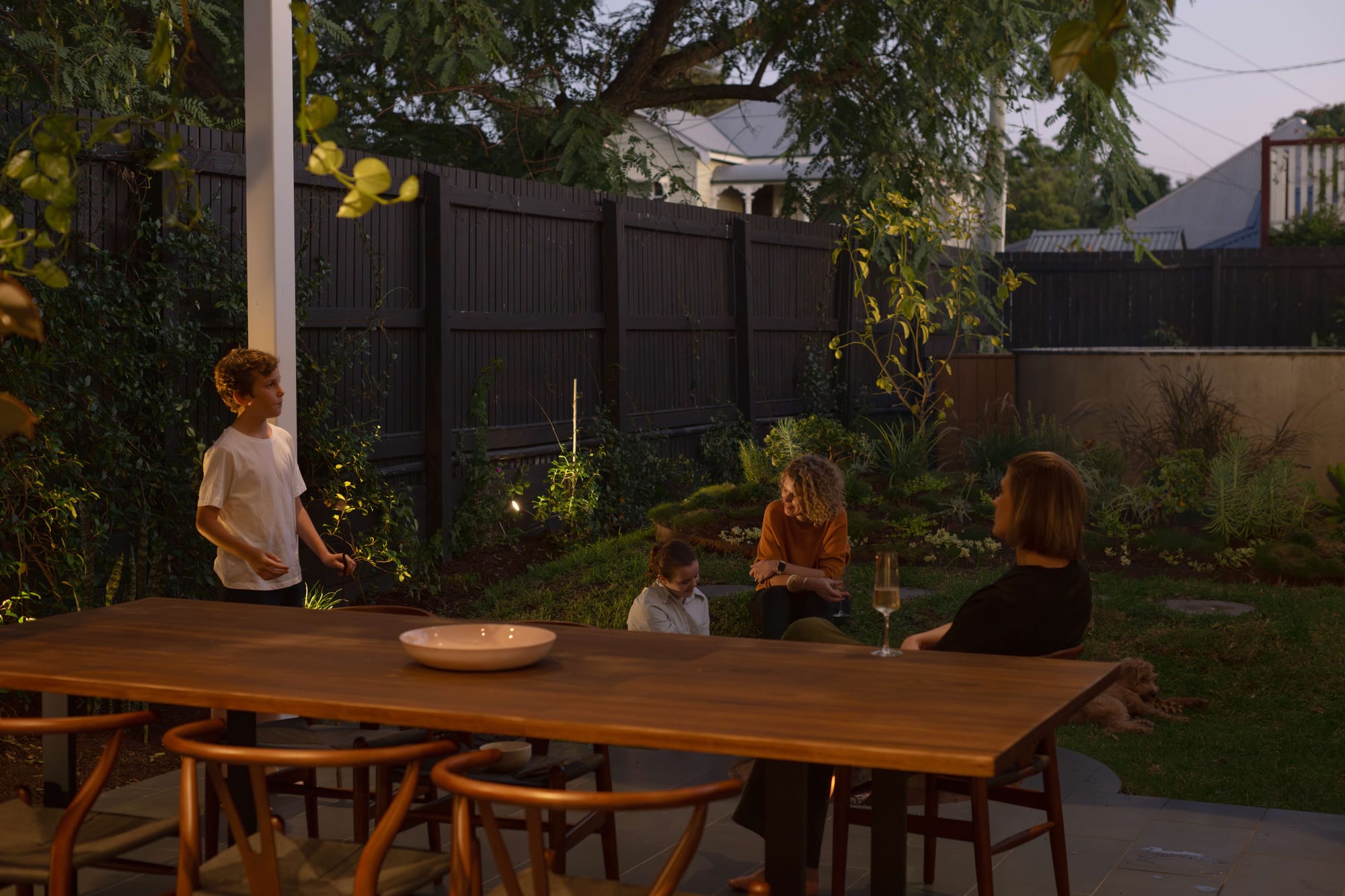
Cornerstone by Loupe Architecture
The brief given to Loupe Architecture was about finding the hidden gem within. The original character cottage had been obscured over the years by a multitude of renovations, its identity buried beneath layers of well-meaning but incremental change. Cornerstone, designed by Sam Butler in collaboration with Sarah Neale, set out to recover it.
The brief was two-fold: expand the living space for a family of four with a strong connection to landscaping, and at the same time rejuvenate the original cottage to provide three bedrooms and a home office. It's the kind of brief that asks a lot of a design - to add without overwhelming, to modernise without erasing, and to make integrated landscaping feel like the heart of the home rather than an afterthought.
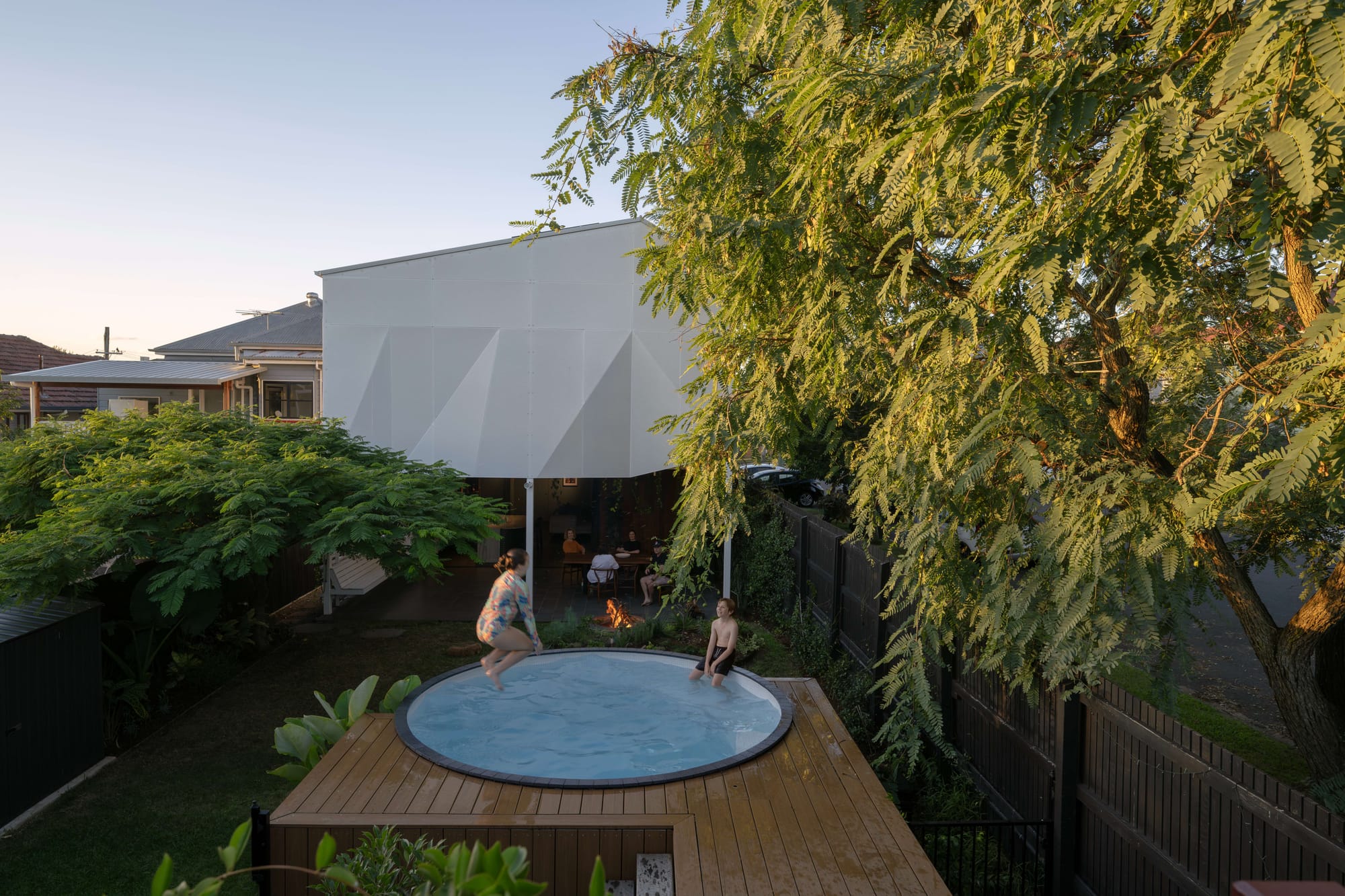
The defining move is a playful perforated aluminium screen to the rear that acts as a curtain, wrapping a double-height void to create a new outdoor room. It's a device that does several things at once - providing filtered views and privacy to the space within, while allowing light and air to move through freely. The screen shifts and changes with the time of day, giving the rear of the home a quality that feels alive rather than fixed.
New elements are introduced with confidence, but the character of the original cottage is treated as an asset rather than an obstacle. The result is a home that feels like it has grown naturally over time - expanded for a family of four, reconnected to its garden, and given new spaces for both play and rest - while still carrying the warmth and familiarity of the house it always was.
Blok Three Sisters by Blok Modular
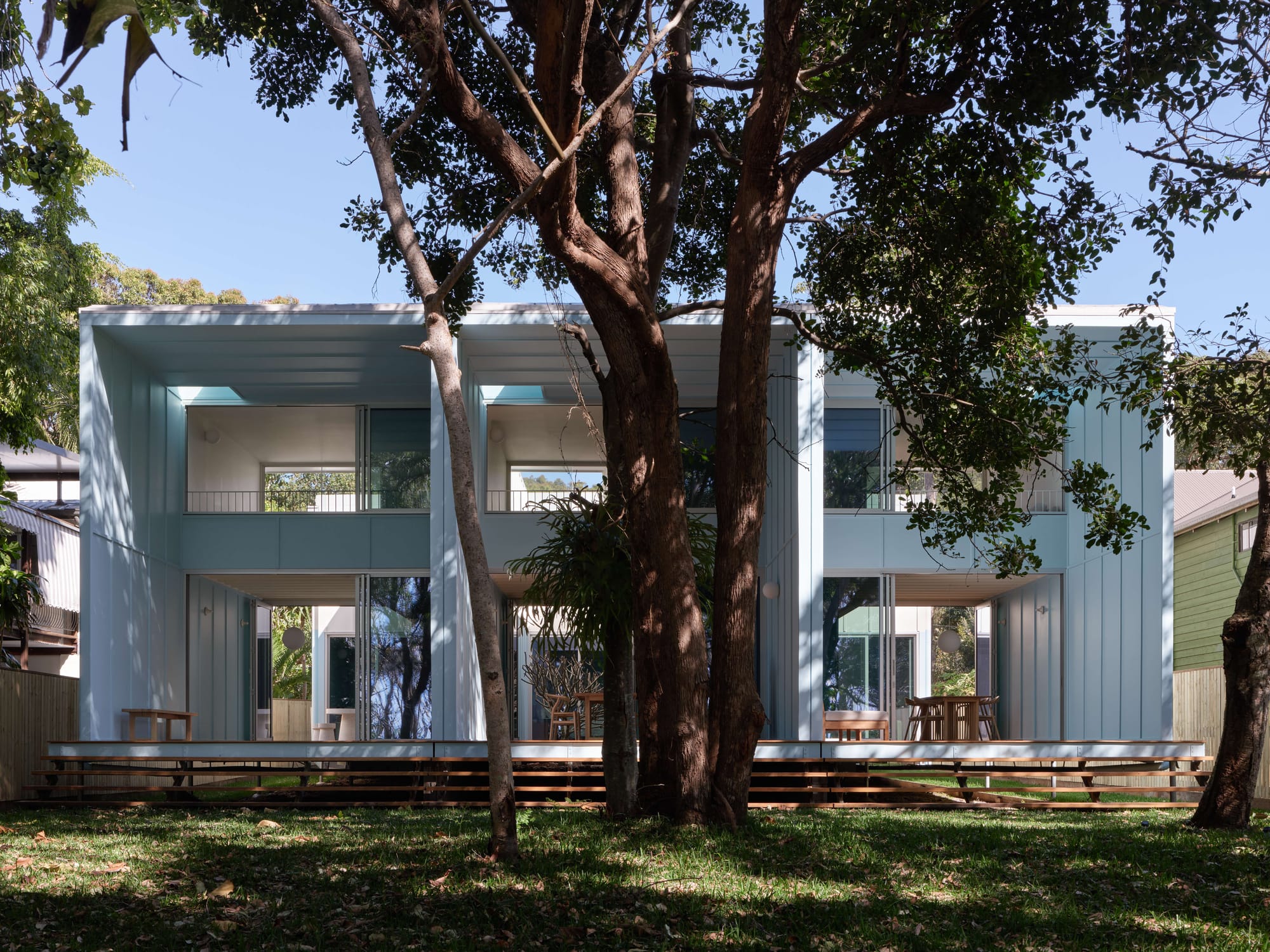
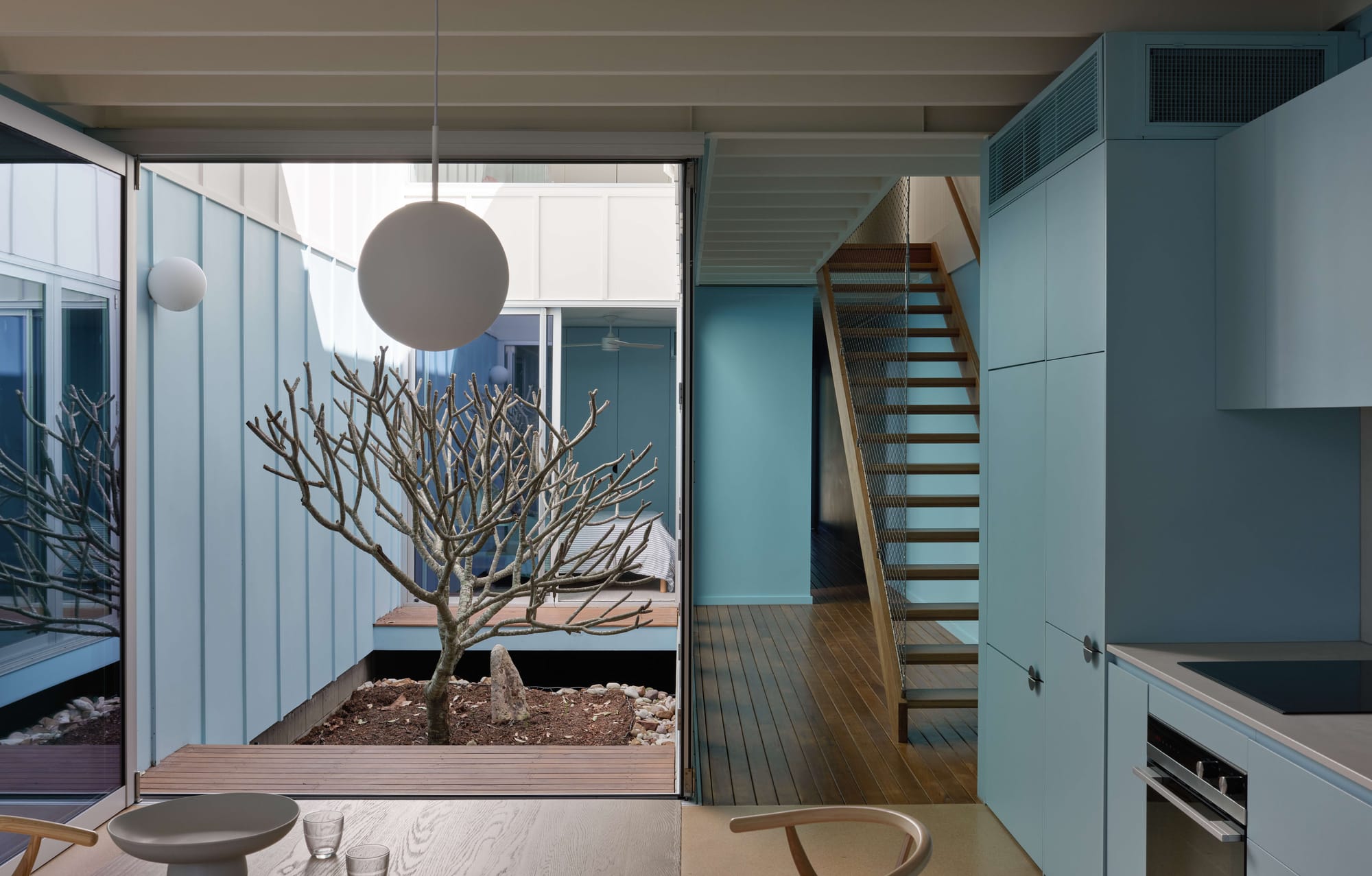
Some projects begin with a site. This one began with a relationship - three sisters who had spent childhood holidays in a house on Minjerribah (Stradbroke Island), and who wanted their own children to be able to do the same. Blok Modular designed and built Blok Three Sisters as three individual coastal terrace houses, constructed in their Brisbane factory and assembled on site by the same team.
Each terrace is designed for agility and flexibility, anticipating the way family dynamics shift over time. On the entry level, a house can function as a self-contained one-bedroom apartment arranged across a single storey, with a central garden separating social and private rooms. A generous double-height portico at the rear immerses occupants in the dune vegetation and Pacific Ocean views, overlooked by an elevated living room. At the upper level, two further bedrooms accommodate adult children, friends, or grandchildren - one looking into the garden, one out to a vegetated hillside.
At the heart of each terrace is the central garden - an archetypal spatial device that gathers the sensory life of the setting alongside everyday domestic ritual. The taste of the salty onshore breeze. The clarity of moonlight on fibro. The echo of crashing waves. The scent of native jasmine. In this way, the garden becomes a repository of shared memory, a place where time and family accumulate quietly.
Beyond the design itself, the modular construction method supports the sustainability charter of the local planning authority. Building in a factory minimises disruption to the building site, local community, traffic systems, and natural ecologies - a consideration that carries particular weight on a fragile island site.
Paddington Twin Terraces by Studio Dewar
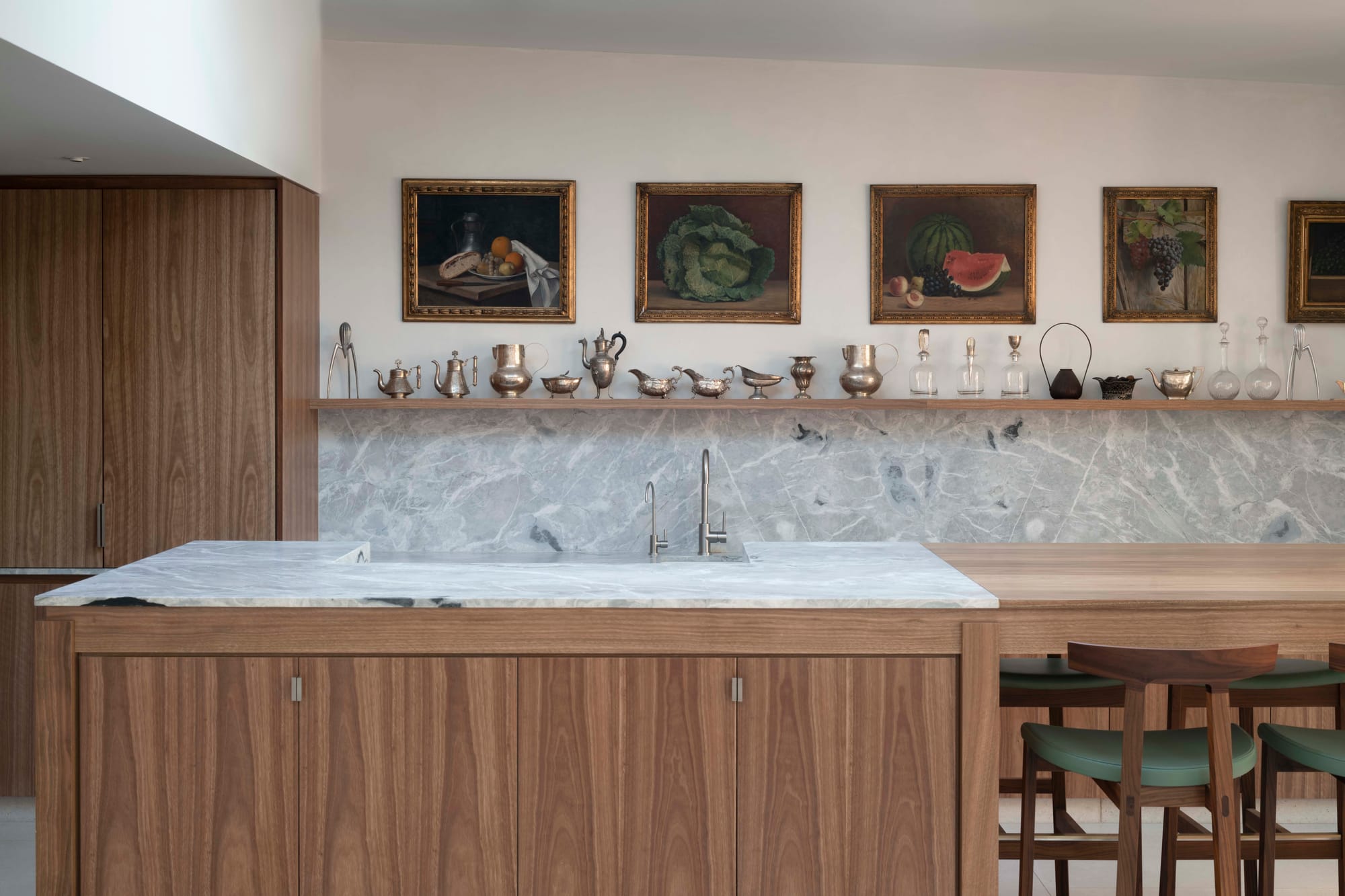
These conjoined terraces in Paddington Twin Terraces arrived with a complicated history - a series of idiosyncratic refurbishments carried out by their previous owner, an Italian architect and silversmith, over many years. Studio Dewar took on the accumulated result: a myriad of connections between the two terraces across three levels that needed to be untangled and simplified into something that could work as a single, coherent family home.
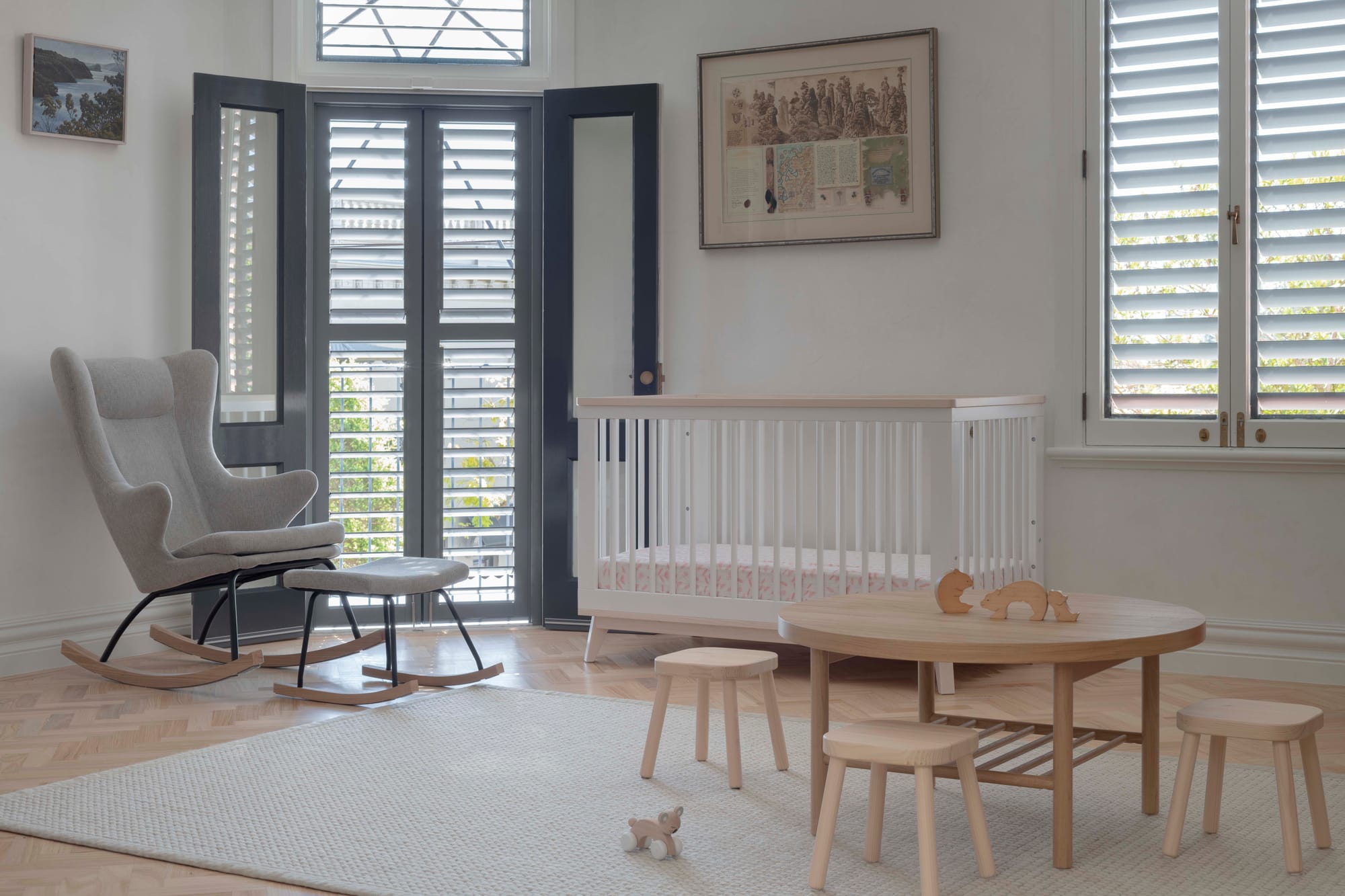
The design response was one of unfurling: smoothing out the multitude of stairs and split levels, refining the finishes, and creating the spatial clarity and elegance the home had always had the bones for. Floors are now in large-format stone tiles or blackbutt parquet; walls are finished in bold stone slabs or suede-textured stucco - materials with enough presence to hold their own against a collection of art, books, heirlooms, and curios.
Sustainability was woven into the design throughout. The distinctive pitched roof was opened up with new skylights and ventilation, with passive and active measures for energy, heating, and cooling integrated discreetly into the fabric of the building. The home is now as efficient as it is beautiful - ready to hold the next chapter of a growing family's life within walls that carry the memory of many chapters before.