
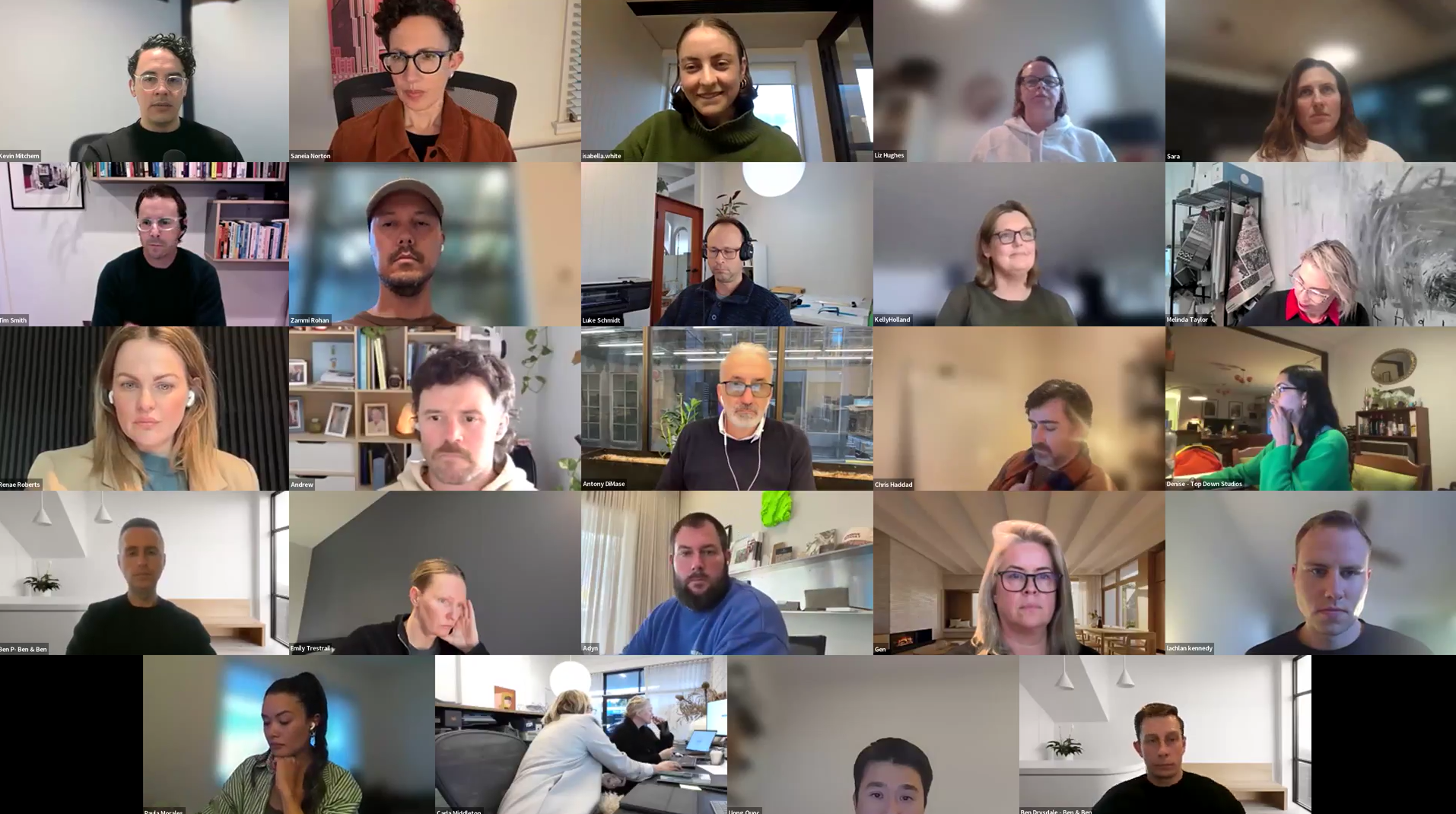
Over four weeks, 40 architecture and design practices came together with founders, industry leaders and specialists to examine what actually sits behind a stronger practice, from positioning and winning work to operations, financial discipline and the decisions required to grow.
What emerged wasn’t a single formula for growth. It was a clearer understanding that stronger practices are built through deliberate choices: knowing what you are building, who it is for, what work to pursue and what systems need to support it.
Week 1: Building the foundations before pursuing growth
A stronger practice needs time set aside to work on the business itself. For many founders, this is difficult precisely because the work is demanding. Client deadlines, design reviews and day-to-day decisions can easily take priority over the longer-term direction of the studio. Making that time a regular part of running a practice gives founders space to decide where it is heading.
That responsibility extends to which projects a practice accepts, how it prices its work, when it hires and how it prepares for change. Kevin Mitchem encouraged founders to recognise these decisions as part of their role as business leaders.
“Your job as a business owner is to create the conditions where good design can ultimately survive, and therefore thrive, within the practice.” - Kevin Mitchem, CEO at CO-architecture
Vision, mission and values become useful when they guide those everyday choices. When they are specific and understood across the team, they can help a studio assess whether an opportunity fits, communicate what it offers and bring its people around a shared direction. A one-page business plan can be more useful than a lengthy document if it is clear enough to return to and act on.
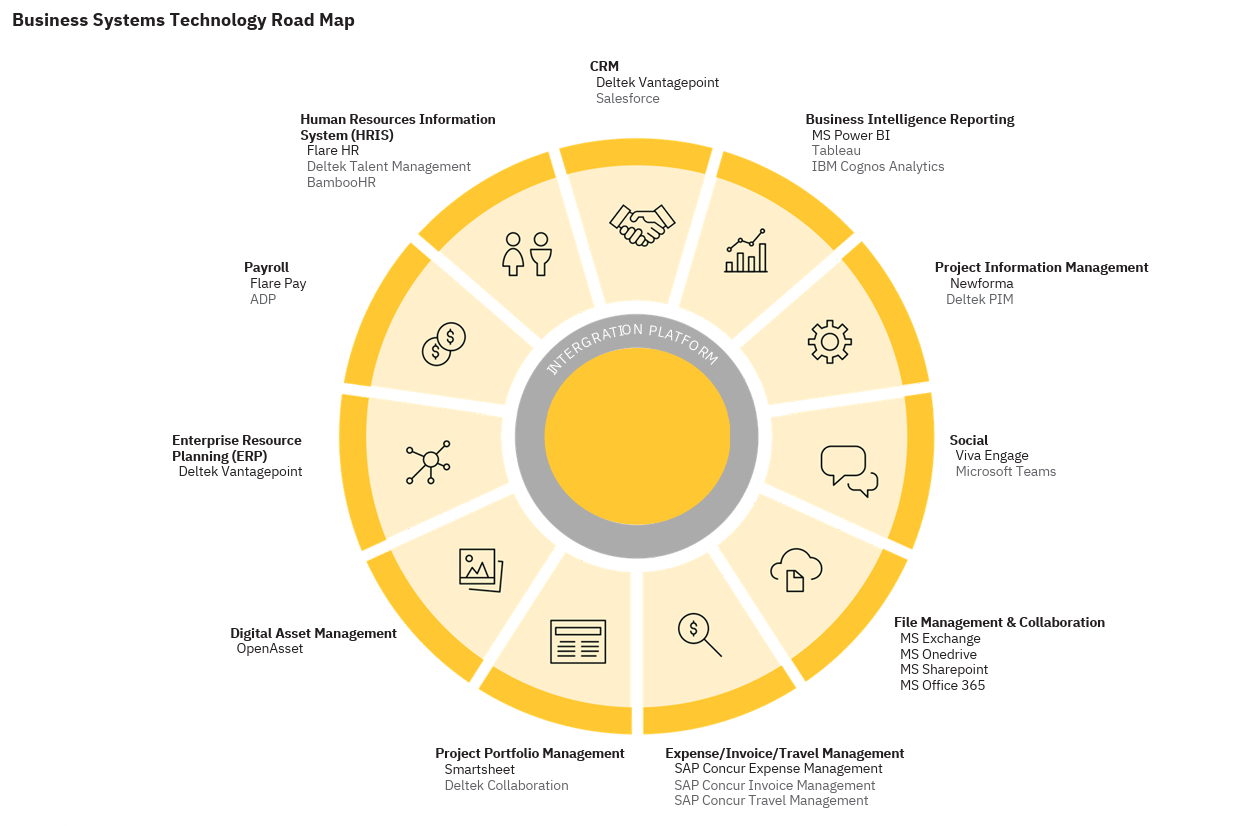
That clarity also needs to extend to the systems behind the work. Kenneth Betts' approach was to map how finance, project management, resourcing, customer relationships, file management and reporting connect before investing in new platforms. A reliable source of information and less duplicated work depend on those connections. Systems also need an internal champion, an implementation budget and regular review as the practice evolves.
Business structure deserves the same forward planning. Asher Melville-Wright and Karen from Jackson McDonald highlighted how decisions about liability, taxation, employment, succession and ownership become more consequential as a studio takes on staff, partners or larger projects. Establishing agreements early gives a practice a clearer basis for navigating changes in relationships and circumstances.

Together, these lessons made a case for clarity before scale. Growth is easier to manage when the practice understands its purpose, numbers, responsibilities and operating structure.
Week 2: Positioning a practice through clarity and communication
A practice's public voice helps people understand what it believes, who it wants to work with and why its expertise matters. Building that understanding takes deliberate communication, even when the quality of the work seems evident to those within the profession.
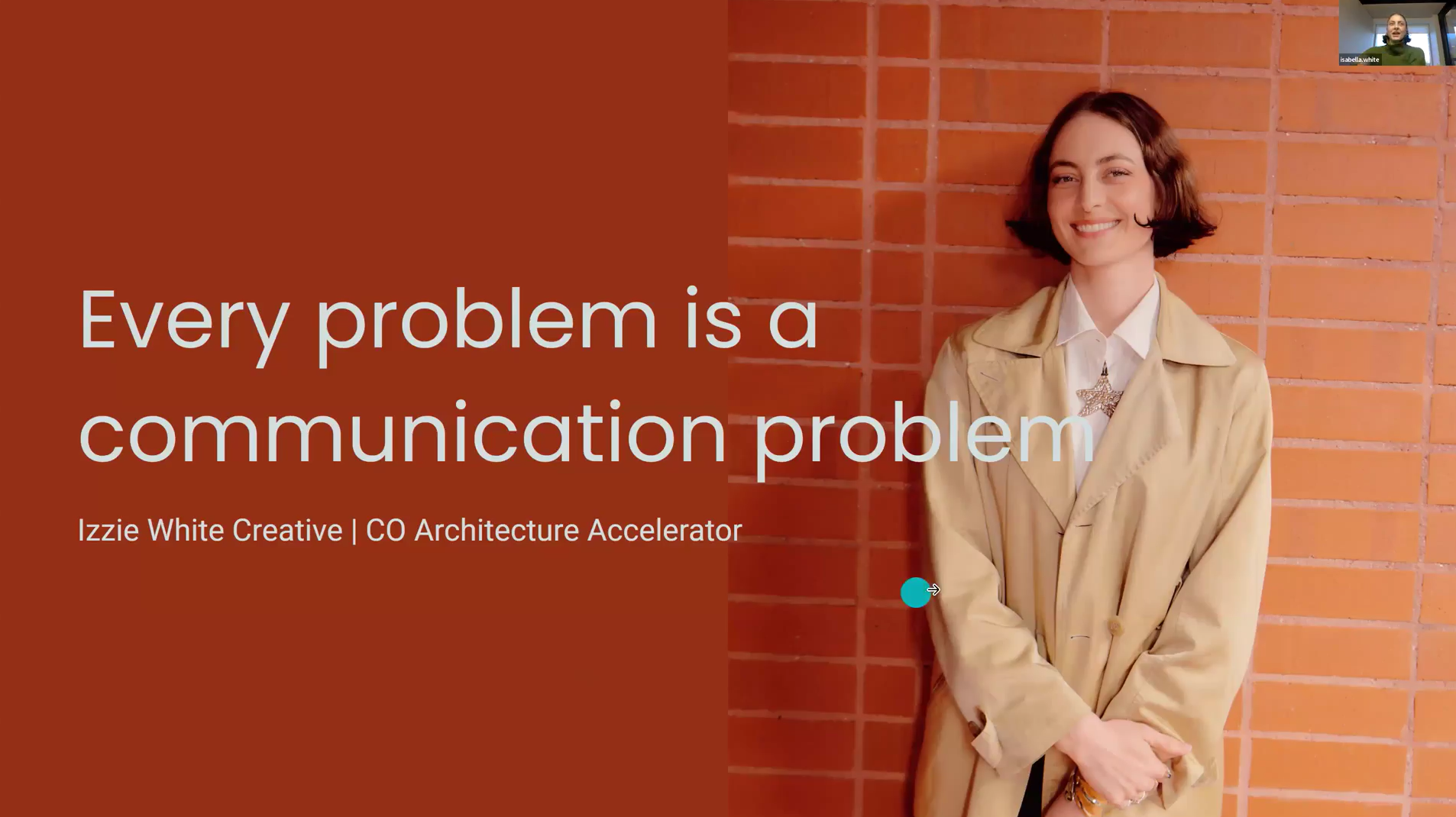
Explaining architectural ideas in plain language and connecting them to places people encounter every day can give audiences a reason to engage. Isabella White's accessible content about Australian architecture and urbanism offered a useful example. Her approach showed how a clear point of view and a willingness to speak beyond the profession can create visibility and open up opportunities.
This raised a larger challenge for architecture. Practices often communicate effectively with one another while leaving the public uncertain about what architects do and the value they contribute. Technical language, highly polished project photography and industry recognition all have a place, but they do not automatically make a practice understandable or relevant to the people it hopes to reach.
“We need public figures in architecture, not through promotion of self, but through public education to drastically improve visibility.” - Isabella White, National Communications Manager at Architectus
Reaching those people also requires choices about where and how to communicate. Understanding the intended audience and giving them a clear reason to pay attention were central to Saneia Norton and Tim Smith's advice. Social media may build awareness, while a website, referral, consultation or in-person conversation helps move someone towards a decision. Each channel has a different role, and a practice needs to choose a mix it can use consistently.
Understanding where enquiries originate makes those choices more informed. Referrals remain valuable, particularly for young practices, but a studio also needs to know which activities lead to suitable work. Asking every prospective client how they found the practice creates a simple feedback loop that can guide future investment.
The promise made through marketing must also be supported by the people and capabilities within the studio. Sal from Cavfield Consulting's advice was to identify what the work actually requires before deciding to hire. A studio might first stop low-value work, redesign a workflow, develop someone internally, use specialist support, partner with another practice or apply technology to a defined task.
Planning across three horizons can make these decisions more deliberate. The next three months show immediate delivery pressures, three to six months reveal capabilities that may need to be built or borrowed, and six to 12 months help shape the longer-term studio. The promise a practice makes to prospective employees must also match their day-to-day experience once they join. Brand, culture and retention cannot be separated.
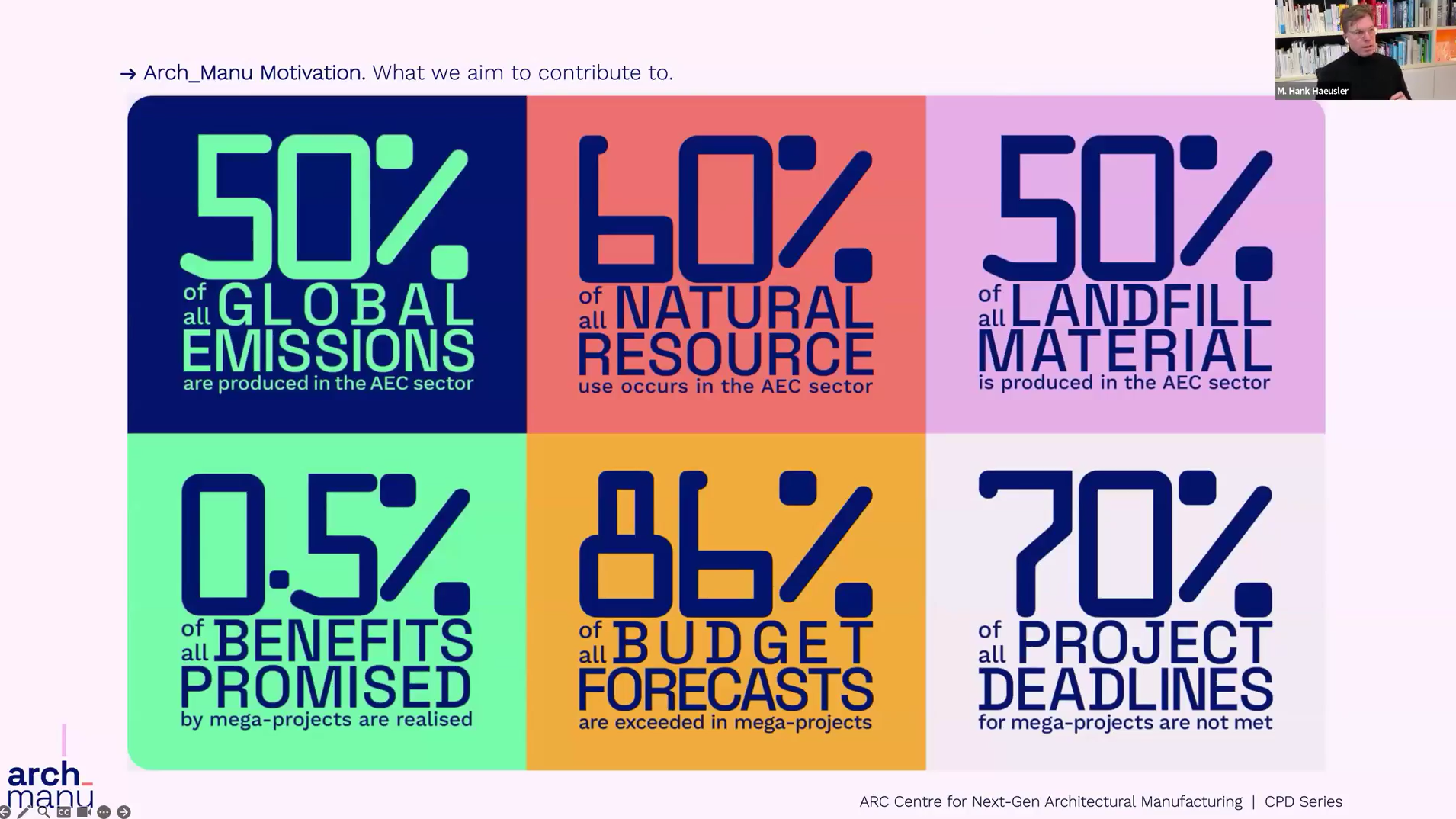
The same attention to purpose applies to artificial intelligence. Professor M. Hank Haeusler's advice pointed towards choosing tools for specific tasks and understanding the responsibilities that come with them. Data, contracts, privacy and governance all need attention. For a practice, the useful starting point is to identify which work could change, where human judgement remains essential and how any productivity gained will be used.
“I think everybody talks about productivity in the context of AI. Have you ever asked yourself who will benefit from the productivity?” - Professor M. Hank Haeusler, Director at Arch_Manu
Week 3: Winning the right work and delivering it sustainably
Winning work is only valuable when the scope, fee, risk and capacity are properly understood. A healthy pipeline depends on decisions made throughout a project's life, from the first enquiry to the final invoice.
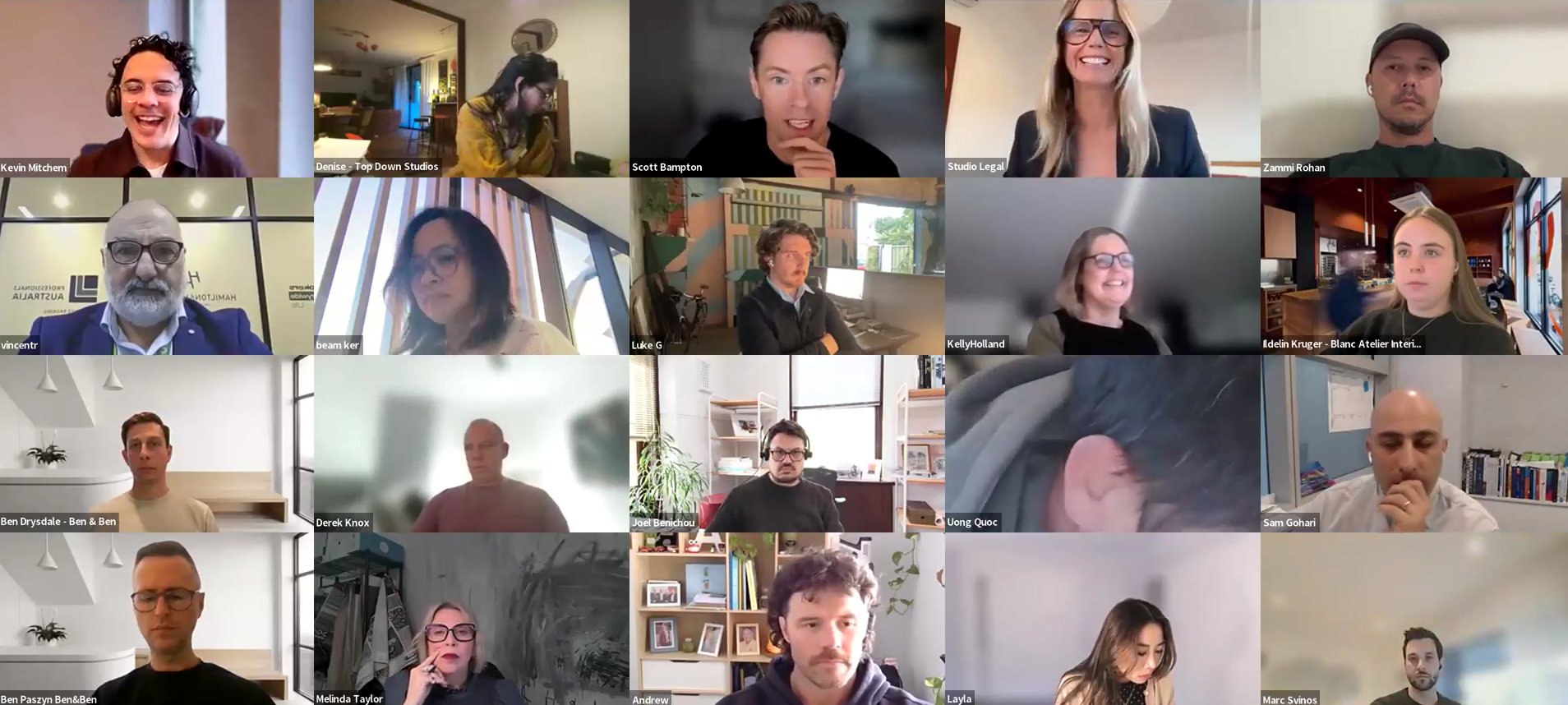
Clear agreements and appropriate protections help establish that foundation. Jennifer Tutty of Studio Legal and Vincent Rizzuto highlighted the importance of employment arrangements, insurance, well-defined scopes and carefully written client contracts. Their advice reinforced the value of documenting recommendations, variations, intellectual property and responsibilities between consultants before uncertainty becomes a dispute.
Those safeguards need to carry through into everyday operations. An enquiry needs to be qualified, a proposal needs a clear owner, and an accepted project needs a deliberate handover. These were practical priorities in Scott Bampton's guidance on operations. Time, scope, invoicing and project performance must then be tracked closely enough to inform the next fee. A busy pipeline can still produce cash pressure if work is not invoiced promptly or if the practice does not understand where time is being lost.
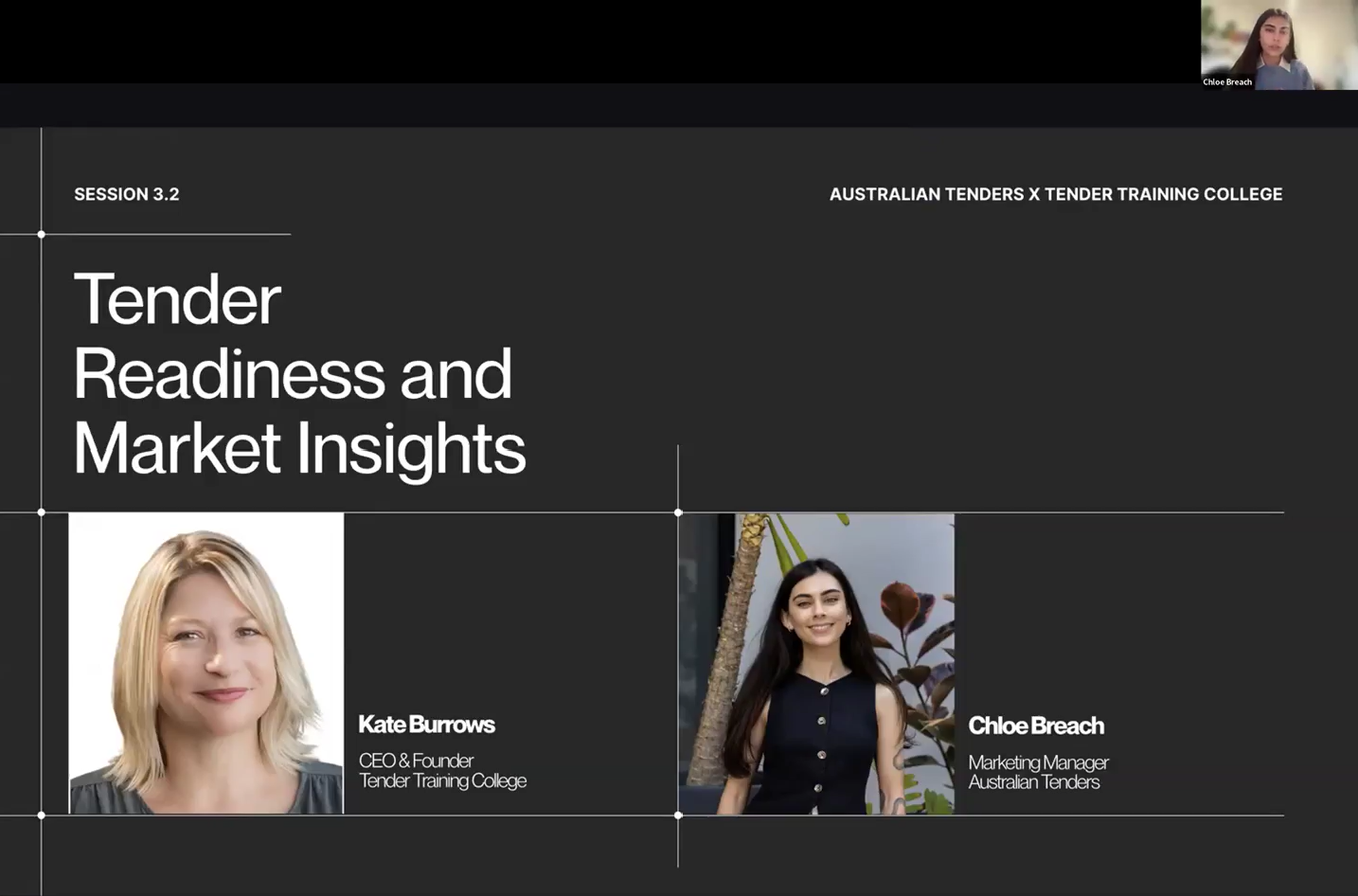
The same selectivity applies to tenders. Assessing an opportunity before committing the time to respond was a practical starting point in Chloe Breach and Kate Burrows' advice. A clear go or no-go process should test the fit, eligibility, experience, resources, timeframe and likelihood of success. Local government opportunities, panels and partnerships can provide an entry point, while feedback on unsuccessful submissions can make the next response stronger.
This makes client acquisition a connected process. A practice may receive leads through referrals, content, partnerships, tenders or platforms such as CO-architecture, but each enquiry still needs to be assessed against the studio's positioning, expertise and capacity. A healthier pipeline is one the practice is equipped to deliver. Helping prospective clients understand the service is part of that process, particularly when they have never worked with an architect or designer before.
“They understand that there's a fee, but not always what they're getting for that fee. So there's real value in translating the process into something that a client can clearly understand.” - Bree Willison, Client Manager at CO-architecture
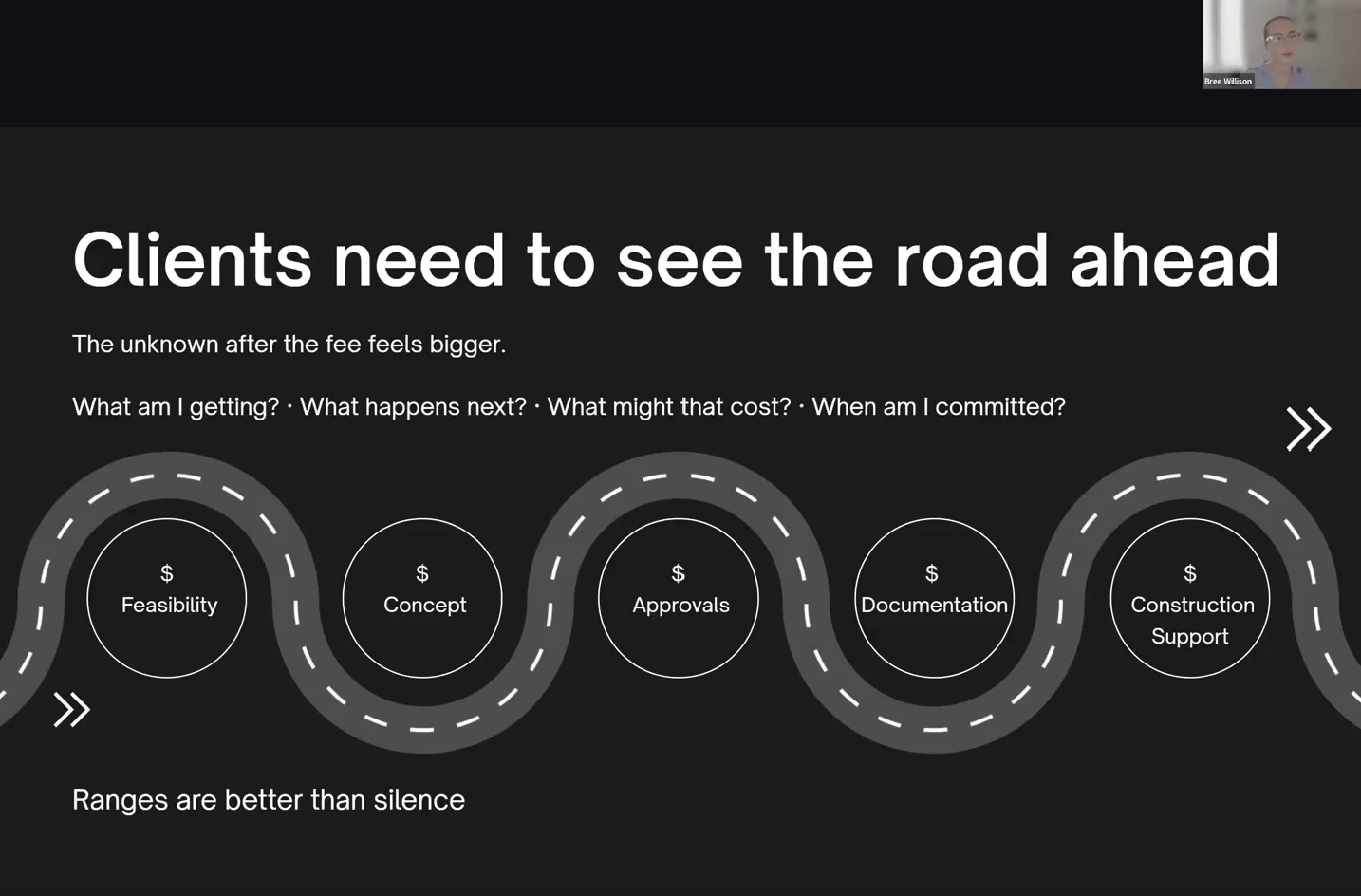
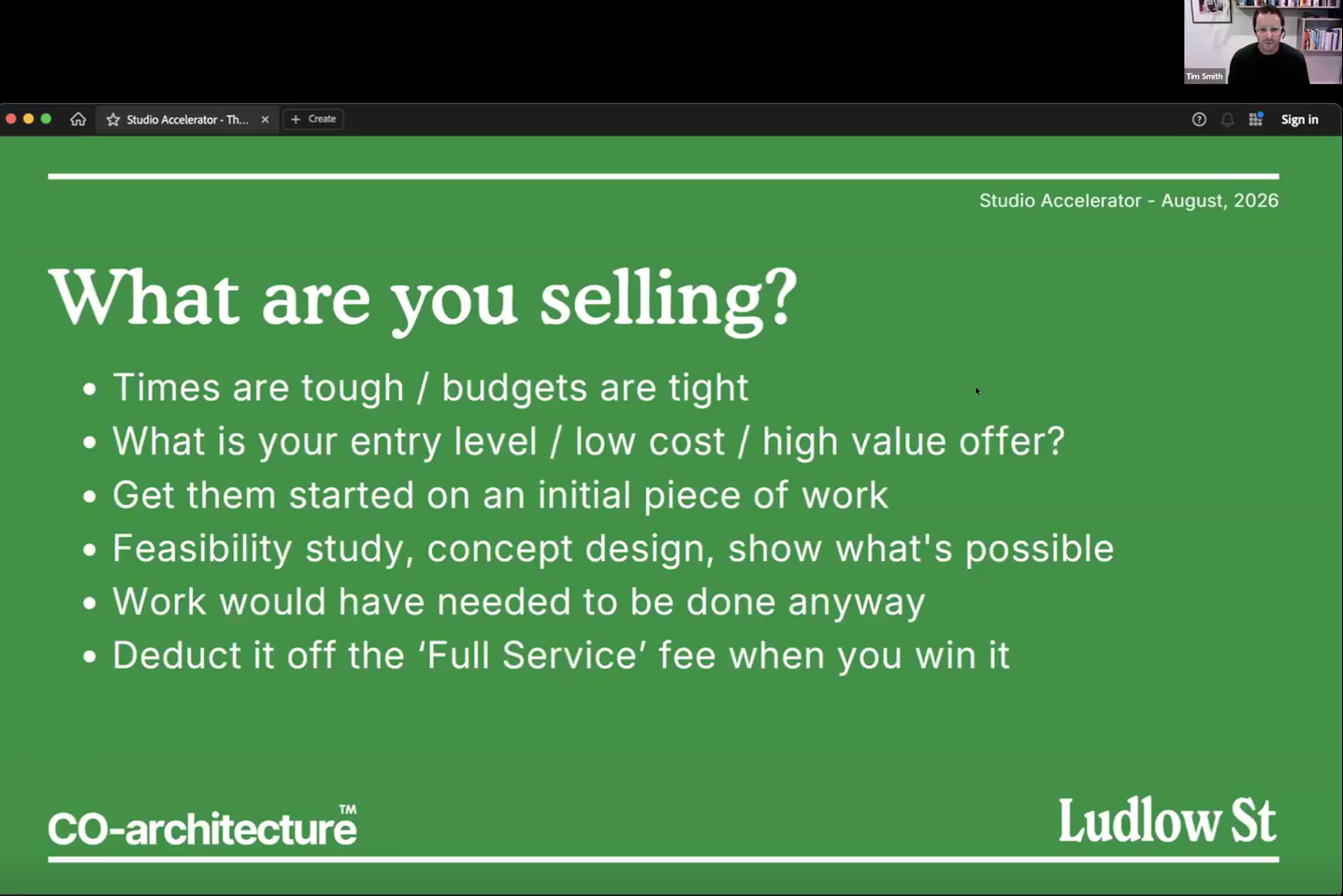
Pricing then needs to reflect what that delivery will involve. Percentage-based, fixed, value-based and hourly fees each carry different advantages and risks, as Tim Smith explained. Whatever the model, practices need to understand the cost of delivering the work and protect an appropriate margin. Early conversations about budget and scope help establish expectations before a detailed proposal is prepared.
The proposal itself can also shift the conversation away from price alone. Presenting the project, process, team and scope clearly helps a prospective client understand what they are choosing. Tiered service options can make differences in scope visible without defaulting to a discount, while clear variation clauses help manage additional requests later.
Once work enters the studio, several numbers become essential. Tim recommended tracking the value of contracted work still to be invoiced to understand how the workload is changing. Break-even identifies the minimum revenue required to cover costs, while capacity indicates how much work the current team can realistically deliver. Together, these measures support more informed decisions about recruitment, project timing and cash flow.
Week 4: Learning from the judgement behind the decisions
The right practice size, pricing model and expansion strategy depend on what the founders want to build. A decision that works for one studio may create pressures another is neither equipped nor interested to take on.
Fireside Chat: What founders want vs what the market needs
Scale should follow the work a practice wants to do and the people and systems needed to support it. Kylee Schoonens, Domenic Cerantonio and Tom Robertson brought different perspectives on that relationship through their experiences of leading practices. Growth can create opportunity, but it also adds management, cultural and financial demands. If the right support is not available, declining or delaying work may be the more responsible decision.
“There is absolutely no point growing any business if you can't harness the right human capital to support that growth.” - Dr Robert Sobyra, General Manager at Build Skills
Diversification needs the same discipline. Entering a new sector or city requires a clear reason, a realistic investment horizon and credibility with clients. That credibility may be built through an experienced hire, a joint venture, a partnership, sector research or existing consultant relationships. Often, several of these moves need to happen together. A quieter pipeline may prompt the decision, but the practice still needs a sound basis for entering that market.
Fireside Chat 2: A Window Into Scale, Market, & Context
Understanding the wider property and construction market can help founders make these choices earlier. Vanessa Rader, Dua Green, Mark Young and Peter Lee's perspectives reinforced the value of looking beyond current enquiries. Interest rates, inflation, transaction activity, population movement, construction costs and workforce availability can offer clues about the conditions shaping future work. Paying attention to those signals gives a practice more context for deciding when and where to invest.
The question of value also becomes more pressing as technology accelerates production. The opportunity may be to spend more time understanding clients, forming the right team, improving design outcomes and providing the judgement that a tool cannot replace. Relationships, sector knowledge and the ability to frame the right problem remain central to why a client chooses one practice over another. Any decision about efficiency and fees needs to account for that contribution.
A stronger practice begins with deliberate choices
The four weeks made clear how closely these decisions connect. Positioning shapes the enquiries a practice receives. Those enquiries need to suit its capabilities, while fees and systems need to support the people delivering the work. Improving one area becomes more valuable when the others support it.
For the 2026 cohort, putting this into practice can begin with a specific change: reviewing how enquiries are qualified, checking whether fees reflect the time spent on delivery, or identifying the capability needed before making the next hire. Each creates a concrete starting point for building a stronger practice.
Studio Accelerator will return in 2027.
Register your interest to be notified when applications open.