Published May 2026 · CO-architecture Platform Data · January – March 2026
Over the past 60 days, the CO-architecture platform recorded 394 homeowner project submissions, with 240+ projects currently active and seeking architectural or design support.
These projects represent an estimated $75.8M–$153M in residential project intent, reflecting strong homeowner engagement with architects, building designers and interior designers across Australia.The majority of homeowner demand continues to centre around renovations, additions and bespoke residential projects, with strong activity emerging from NSW, VIC and WA.
Importantly, most clients continue to engage at the concept and feasibility stage, highlighting a growing demand for early design guidance before committing to full architectural services.
Market Snapshot — April 2026
| Metric | Value |
|---|---|
| Projects Submitted | 394 |
| Active Projects | 240+ |
| Estimated Construction Pipeline | $75.8M – $153M |
| Active Pipeline Value | $54.2M – $108.7M |
| Most Active Budget Range | $250k – $500k |
| Dominant Project Type | Renovations & Extensions |
| Report Period | January – March 2026 |
01 — Market Overview
Australia's residential design and renovation sector remains one of the most stable segments of the construction industry heading into mid-2026, supported by strong property values, constrained housing supply, and continued household investment in improving existing homes.
While new housing construction has moderated in response to higher borrowing costs and construction capacity constraints, renovation, retrofit and extension projects remain active as homeowners adapt their properties to changing lifestyle and investment priorities.
Interest Rates and Borrowing Conditions
As of May 2026, the Reserve Bank of Australia's official cash rate sits at 4.35%, following a third consecutive 25-basis-point hike on 5 May 2026. The decision was an 8–1 majority, driven by persistent inflationary pressures, capacity constraints in the economy, and rising energy costs linked to the ongoing Middle East conflict and disruption in the Strait of Hormuz. Headline inflation reached 4.6% in the year to March, with the RBA revising its near-term inflation forecasts upward.
The latest hike fully unwinds the three rate cuts delivered in 2025, returning the cash rate to its peak from the previous tightening cycle. Major banks including Westpac are now forecasting further increases through 2026. These conditions have cooled some borrowing activity. However, owner-occupiers continue to invest in improving their homes, sustaining demand for renovation and extension projects.
Source: Reserve Bank of Australia. Key cash rate change dates from January 1990 to May 2026.
Housing Prices and Household Behaviour
Australia's housing market has maintained strong momentum. According to NAB's Housing Monitor for April 2026, combined capital city dwelling prices rose 9.3% over the past year, with Perth and Brisbane continuing to outperform at approximately 30% and 20% annualised respectively. Sydney and Melbourne recorded monthly softening, falling 0.8% and 2.5% on a three-month annualised basis.
As property values continue to rise and transaction costs increase, with Australia's price-to-income ratio now sitting at approximately 9–10 times average income compared to 3–4 times historically, many homeowners are choosing to upgrade existing homes rather than compete in the property market.
Rental Market Pressure
National rental vacancy rates remain near record lows at 1.6%, with advertised rent growth running at 5.9% on a six-month annualised basis. Tight rental conditions continue to reinforce the value of homeownership and incentivise owner-occupiers to invest in their existing properties rather than relocate.
Housing Supply Constraints
Australia's housing supply pipeline continues to face structural challenges. New housing delivery remains below the level required to meet the Federal Government's long-term housing targets, with labour shortages, construction costs and financing conditions continuing to affect development activity. Approximately 235,000 dwellings remain under construction nationally, around 35% above the pre-pandemic average, though completions continue to lag starts.
02 — Platform Activity
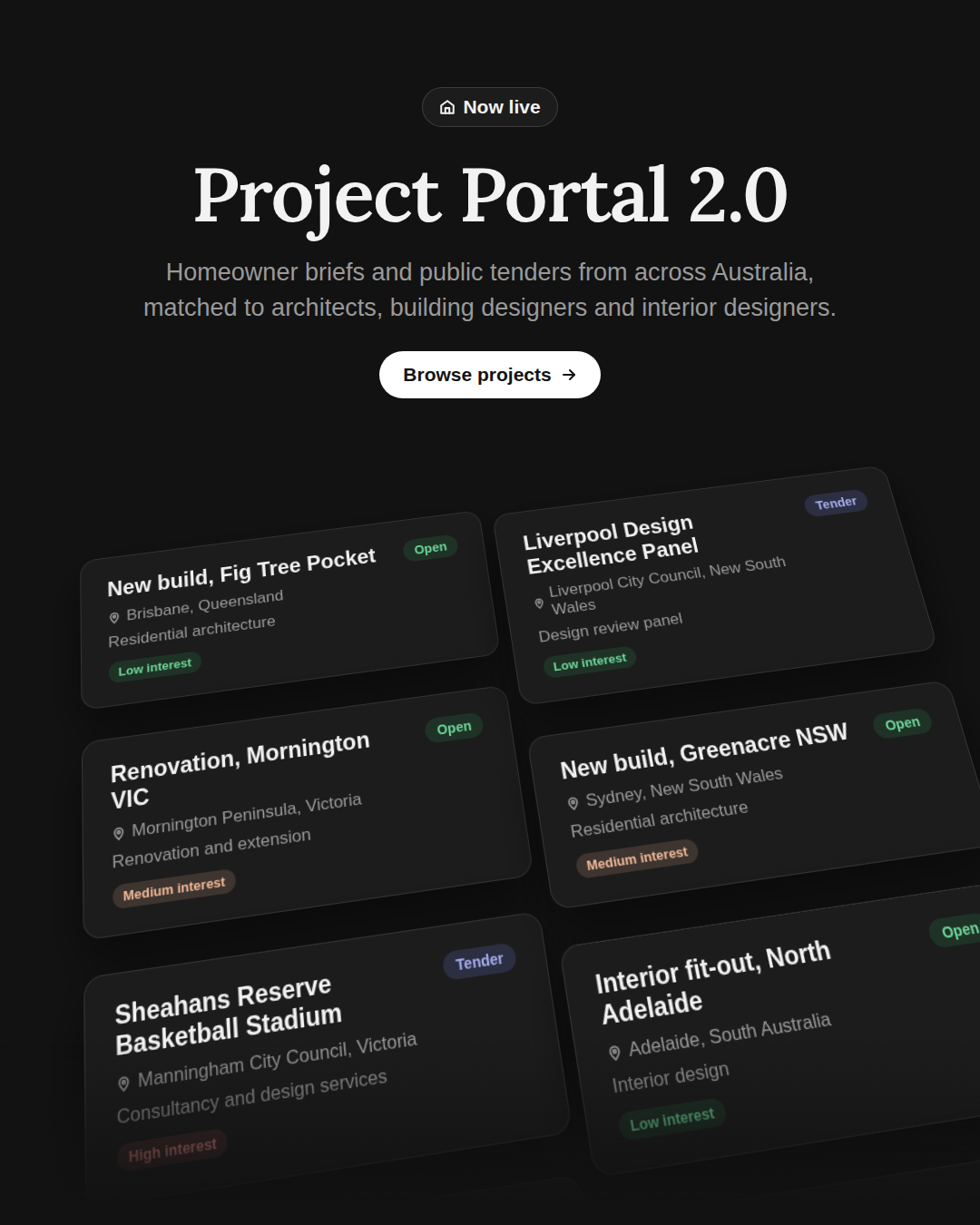
Between February and April 2026, a total of 394 homeowner projects were submitted through the CO-architecture Project Portal and circulated to professionals across the network.
At the time of analysis, 240+ projects remain active, with homeowners actively seeking architectural or design support. Together these projects represent an estimated $75.8M–$153M in residential construction value, indicating a substantial pipeline of residential work entering the network.
| Metric | Value | Notes |
|---|---|---|
| Projects Submitted | 394 | Total homeowner enquiries submitted |
| Active Projects | 240+ | Currently seeking architectural or design support |
| Active Project Value | $54.2M – $108.7M | Estimated construction value of live projects |
| Total Pipeline Value | $75.8M – $153M | All projects submitted during the period |
| Most Active Budget Range | $250k – $500k | Small-Mid scale renovations and extensions |
| Secondary Budget Range | $100k – $250k | Smaller interior upgrades |
| Upper Range Projects | $500k – $1M+ | Larger architectural renovations and extensions |
03 — Budget Distribution
Analysis of homeowner budgets continues to show strong concentration within the mid-to-upper residential market, with the majority of projects sitting between $250k and $1M+ in construction value.
The data reflects increasing demand for substantial renovations, additions and custom residential projects requiring a higher level of design coordination, planning and construction investment.
$100k – $250k Smaller-scale renovations, interior upgrades, kitchen and bathroom projects, and focused spatial reconfigurations.
$250k – $500k Moderate renovations, additions and design-led upgrades, representing an active segment of homeowner demand on the platform.
$500k – $1M Substantial renovations, large additions and architecturally considered residential projects, increasingly becoming standard budgets within metropolitan residential construction.
$1M+ Custom homes, complex residential projects and quality specification renovations requiring detailed design coordination and project delivery.
Projects in the $500k–$1M range sit within the industry's "missing middle." They are too complex for builder-led solutions, too budget-sensitive for high-end architecture firms, and well suited to agile residential studios and design-led practices.
04 — Geographic Distribution
Demand for residential design services continues to spread across Australia, with notable divergence emerging between states.
| State | Activity Trend |
|---|---|
| New South Wales | Highest total project volume nationally |
| Victoria | Strong metropolitan renovation demand |
| Western Australia | Fastest-growing homeowner engagement |
| Queensland | Consistent residential project activity |
| South Australia | Emerging design demand |
State Highlights
NSW renovation investment is expected to outpace Victoria by nearly 50% in 2026, driven by high land costs and the complexity of new builds in the Sydney basin. These pressures are pushing homeowners toward upgrading rather than relocating.
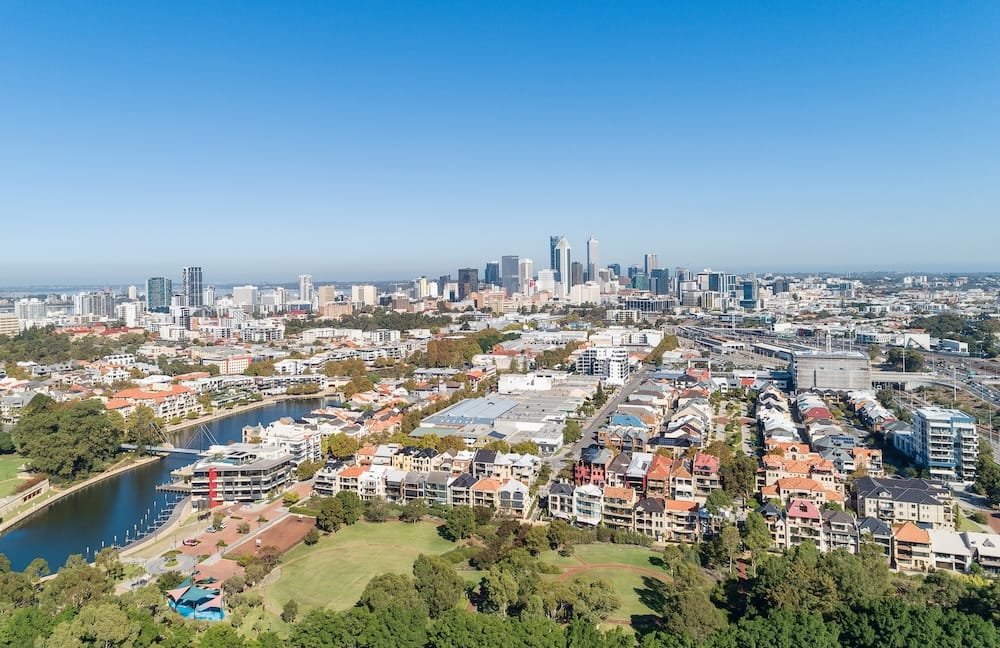
Western Australia has seen the strongest building approvals growth nationally, up 71.3% over the past two years, while Perth's dwelling prices continue to outperform major capitals at approximately 30% annualised growth. This momentum is driving increased engagement with residential design professionals across the state.
Queensland remains a consistent performer, supported by ongoing population growth and lifestyle migration. Brisbane has recorded approximately 20% annualised price growth as demand continues to outpace supply.
South Australia, while a smaller market, is showing emerging design demand as affordability advantages relative to eastern capitals attract both buyers and investment activity.
05 — Market Insights
Australia's home improvement market was valued at AUD $25.52 billion in 2025 and is projected to grow at a compaunded annual growth rate (CAGR) of 7.20% through to 2035, potentially reaching AUD $51.15 billion. This growth is driven by rising property values, government rebates for energy-efficient renovations, and sustained homeowner investment in existing properties.
Recent ABS construction data reinforces an ongoing transition within the residential building sector. New housing construction has moderated while renovation and alteration work remains comparatively steady.
Renovation Resilience Homeowners continue to prioritise upgrading existing homes rather than relocating, particularly in high-value property markets where transaction costs and affordability pressures make moving an increasingly unattractive option.
Early-Stage Design Engagement More homeowners are seeking architectural guidance earlier in the project lifecycle, particularly when exploring feasibility, planning constraints and budget expectations before committing to a build or renovation.
Sustainability Integration Energy efficiency, electrification and passive design principles are increasingly shaping residential project briefs. Upcoming changes to the National Construction Code are expected to place higher emphasis on 7-star energy ratings, making high-performance design the standard of tomorrow rather than a premium option today.
Distributed Demand Residential design activity continues to expand beyond major metropolitan markets into regional and lifestyle-driven locations. Mid-sized capitals and regional centres are increasingly contributing to national design demand as buyers and homeowners follow population and lifestyle migration trends.
Affordability Driving Renovation Over Relocation With Australia's price-to-income ratio now sitting at approximately 9–10 times average income, versus the historical norm of 3–4 times, the calculus for many homeowners strongly favours improving an existing home over competing in the purchase market.
06 — Outlook
CO-architecture's platform data suggests residential design demand will remain steady through mid-2026, particularly across renovation, extension and interior design categories.
The path of the RBA cash rate will be the key variable from here. With the cash rate now at 4.35% following the May hike, attention turns to whether further increases will be needed to bring inflation back to target, with Westpac currently forecasting two additional rises through the second half of 2026. These conditions are likely to add further pressure to household borrowing capacity and buyer confidence. However, the renovation market has shown consistent resilience through the current rate cycle, and platform data supports continued homeowner engagement with design professionals regardless of near-term monetary conditions.
Key focus areas moving forward include:
- Expanding geographic reach across underrepresented states and regional markets, particularly South Australia, Tasmania and the ACT
- Introducing regular reporting and data-led analysis to provide greater transparency into residential design activity across Australia
- Helping homeowners clarify scope, budgets and expectations before connecting with design professionals
- Supporting design professionals to navigate the growing sustainability and energy efficiency requirements shaping project briefs
07 — What This Means
Australia's residential design market is adjusting rather than slowing. While new home construction has softened, renovation, retrofit and interior projects remain active, supported by homeowner confidence in property as a long-term asset and structural affordability pressures that make improving an existing home an increasingly rational choice.
For homeowners, this means:
- Strong access to architects and designers across Australia through CO-architecture's national network
- Increasing value in engaging design professionals early, before scope is set and budgets are locked
- A clear opportunity to improve, extend and future-proof existing homes rather than navigate a competitive and expensive purchase market
For design professionals, the trends suggest:
- A resilient and growing pipeline of renovation, extension and interior design projects
- Increasing demand for sustainability expertise and energy-efficient design solutions
- Growing value in clear, well-structured project briefs and early client engagement
- Expanding opportunity in Western Australia, Queensland and regional markets as demand diversifies geographically
As Australia's housing market continues to evolve under the dual pressures of affordability and constrained supply, the connection between informed homeowners and skilled design professionals will remain central to how the nation's housing stock adapts, improves and endures.
Prepared by CO-architecture — Australia's design network. Based on platform activity from February to May 2026.