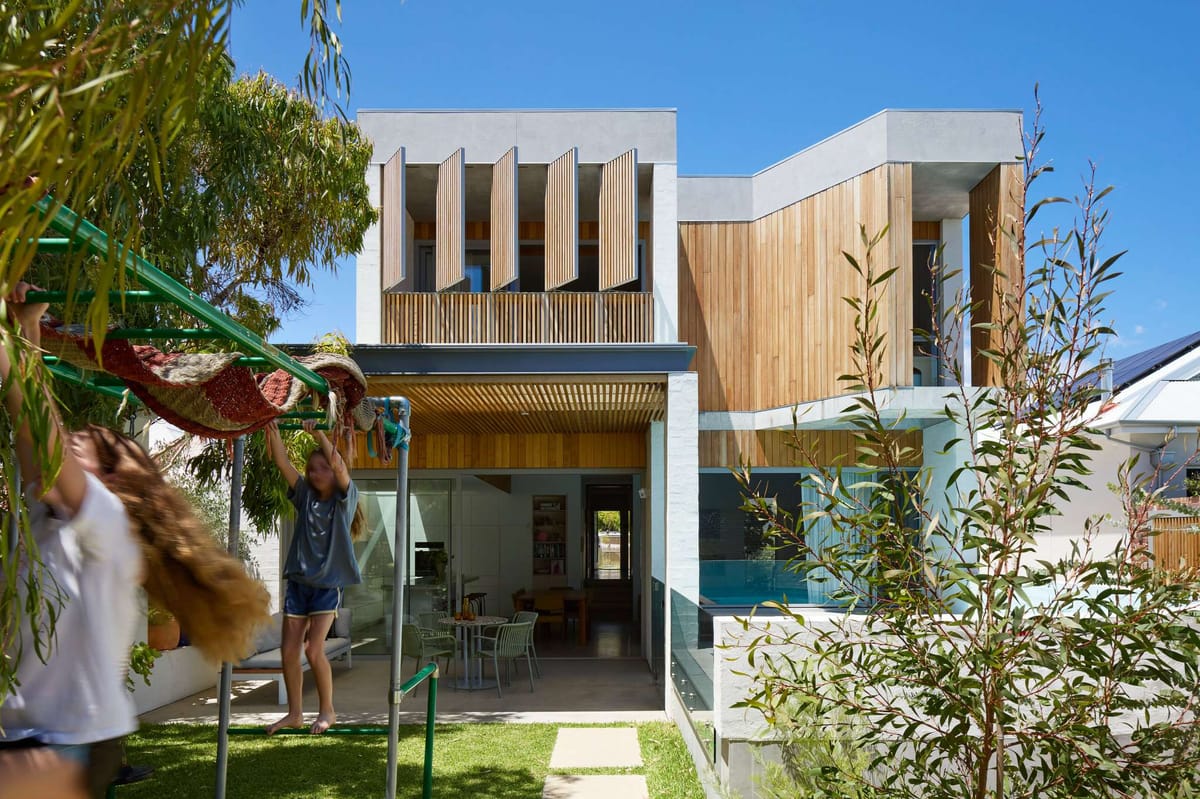
Melbourne is Australia's second most expensive city for home renovation. Labour rates run 8% above the national average, and the Victorian Building Authority's licensing requirements mean that all structural, plumbing, and electrical work must be carried out by registered practitioners. A renovation that costs $35,000 nationally will typically cost $37,000 to $38,000 in Melbourne for the same scope and finish.
Compared to Sydney, Melbourne offers better value. Trade waitlists are generally shorter, access conditions are easier across much of the suburban stock, and the planning environment, while complex in the inner suburbs, is less fragmented than Sydney's 33-council patchwork. The city also has a distinct renovation challenge that Sydney does not: NCC 7-star energy rating compliance, which applies when a renovation touches the building envelope and adds cost and documentation requirements that many homeowners are caught off guard by.
This guide gives you Melbourne-specific costs for every major room, explains what drives prices in this market, and covers the planning and approval context relevant to Victorian homeowners.
For the full national picture including a state-by-state comparison and a free cost calculator, see our home renovation cost guide for Australia.
Melbourne home renovation costs at a glance — 2026
| Renovation type | National range | Melbourne range | What it covers |
|---|---|---|---|
| Cosmetic refresh | $15,000 – $60,000 | $16,000 – $65,000 | Paint, flooring, fixtures, fittings, no structural work |
| Partial renovation | $60,000 – $150,000 | $65,000 – $162,000 | Kitchen or bathrooms plus associated trades |
| Whole-house renovation | $150,000 – $500,000+ | $162,000 – $540,000+ | Full structural and cosmetic overhaul |
| Heritage or complex renovation | $300,000 – $700,000+ | $330,000 – $770,000+ | Heritage compliance, structural work, major services upgrade |
Per m², Melbourne renovation costs run from $2,200 to $3,400/m² for cosmetic work, $3,500 to $5,100/m² for standard quality, and $4,800 to $7,200/m² for high-end finishes.
Let Us Help You Find the Right Professional
Not sure where to start with finding an architect, building designer or interior designer? We've got you covered. Our network includes trusted, experienced professionals who understand the Australian building landscape — and your unique vision.
Get Matched With the Right Professional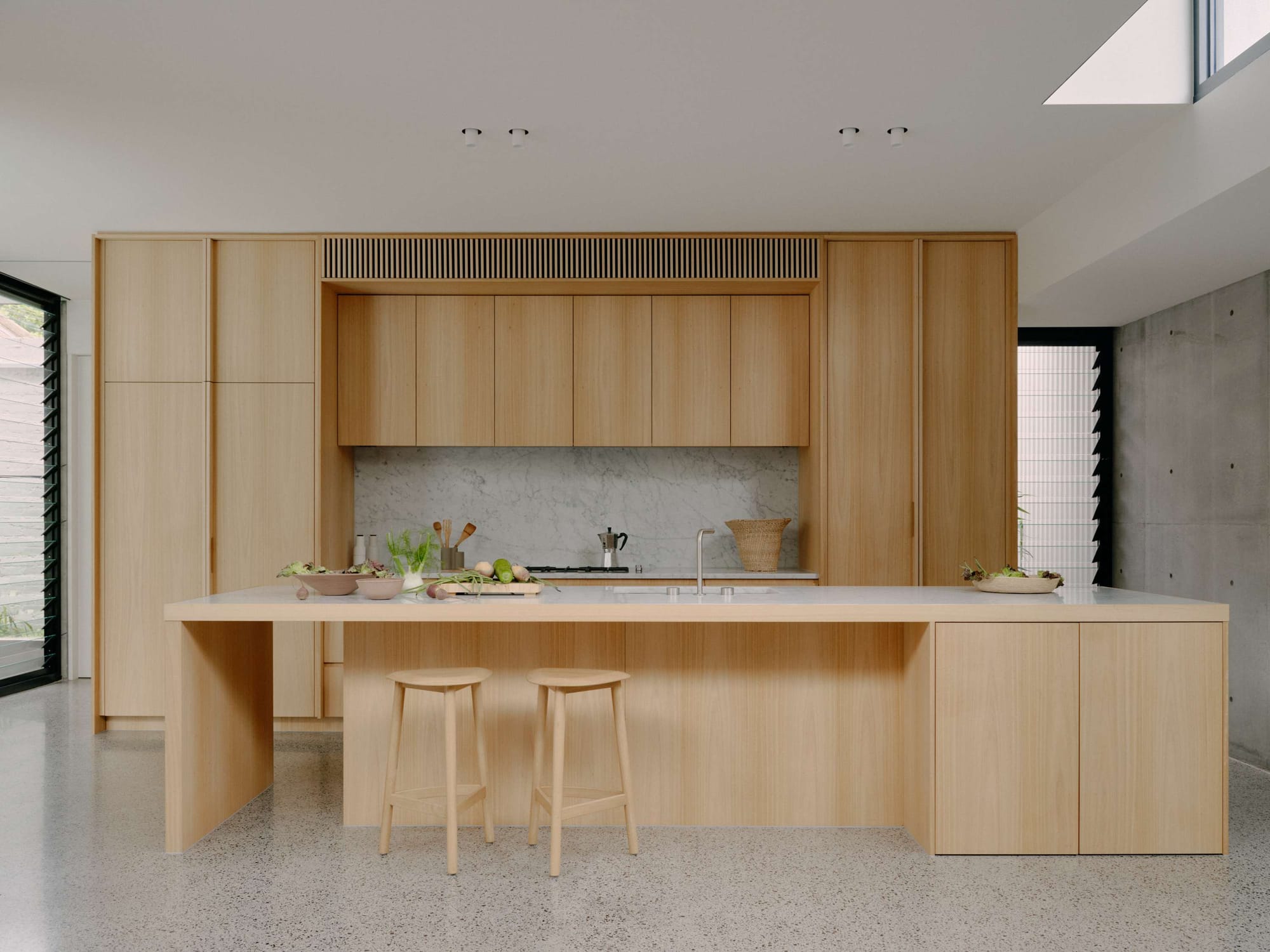
Kitchen renovation costs in Melbourne — 2026
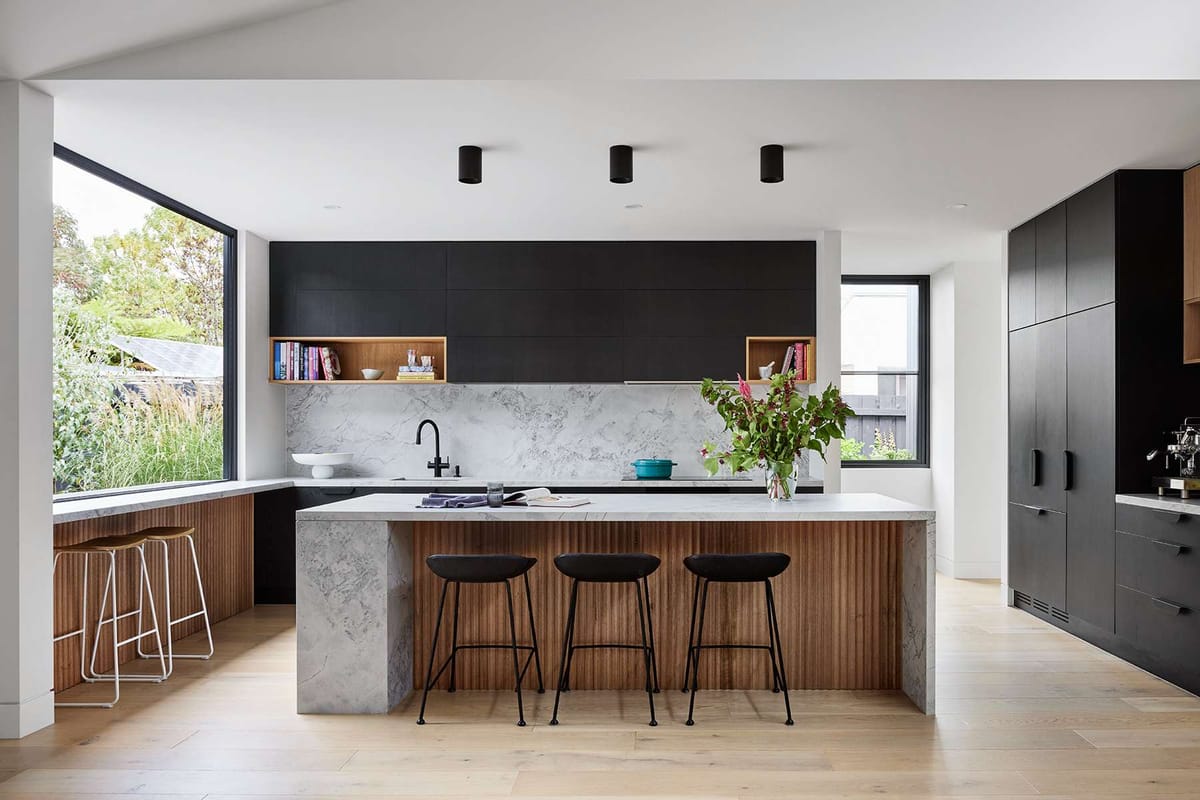
In Melbourne, a mid-range kitchen renovation costs $30,000 to $50,000 in 2026, consistent with the city-specific figure in our national guide. That sits above the national mid-range of $25,000 to $45,000 but meaningfully below Sydney's $35,000 to $60,000, making Melbourne a competitive market for quality kitchen work.
| Scope | National range | Melbourne range |
|---|---|---|
| Cosmetic update | $8,000 – $20,000 | $8,500 – $21,500 |
| Mid-range | $25,000 – $45,000 | $30,000 – $50,000 |
| Premium | $45,000 – $80,000+ | $48,500 – $86,000+ |
Cabinetry accounts for 30 to 40% of the total kitchen budget. The single biggest cost lever remains whether you move the plumbing: keeping the sink, dishwasher, and cooking positions in place is the most effective way to control costs. Moving plumbing on a concrete slab adds $3,500 to $8,000 before any other work begins.
Melbourne's inner suburbs, Carlton, Fitzroy, Richmond, and Collingwood, have a high concentration of Victorian-era terraces where access can be constrained and original plumbing is frequently non-compliant with current standards. In these properties, budget an additional 10% for access and services discovery costs.
The engineered stone ban that took effect nationally on 1 July 2024 applies in Victoria with no transitional period. Victoria was among the states that implemented the ban immediately on 1 July 2024, with no grace period for contracts entered after that date. Porcelain and Dekton are now the standard alternatives in Melbourne kitchen showrooms. Expect to pay $500 to $2,000 more for a comparable benchtop specification than quotes prepared before mid-2024.
Bathroom renovation costs in Melbourne — 2026
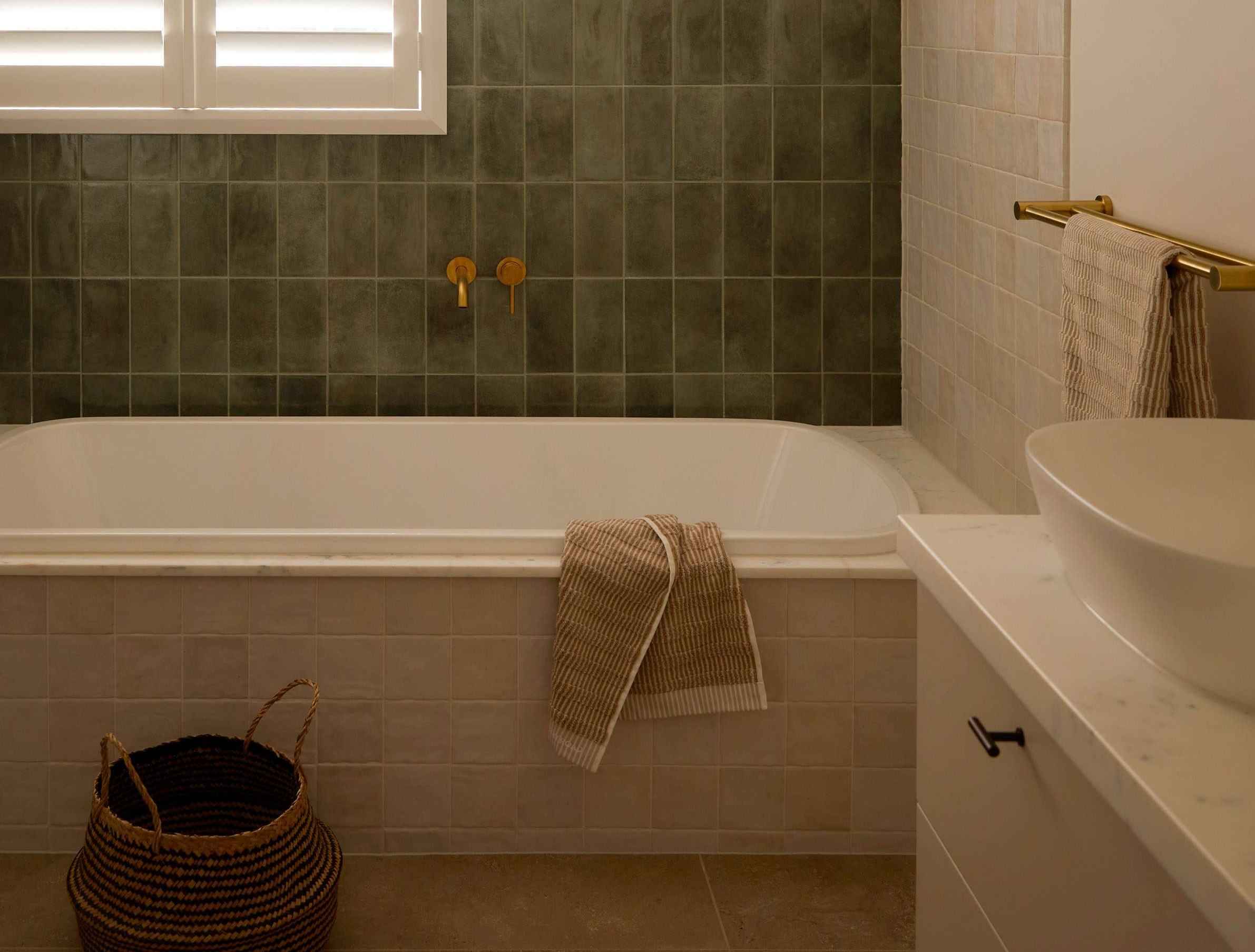
The national mid-range for a bathroom renovation sits at $20,000 to $35,000. Melbourne pricing runs modestly above this across all bathroom types, driven by VBA-registered plumber and waterproofer requirements and the prevalence of older housing stock in the inner and middle-ring suburbs.
| Bathroom type | National mid-range | Melbourne mid-range |
|---|---|---|
| Ensuite (3 to 4m²) | $15,000 – $25,000 | $16,000 – $27,000 |
| Family bathroom (5 to 7m²) | $22,000 – $35,000 | $24,000 – $38,000 |
| Main bathroom with bath (7 to 9m²) | $30,000 – $50,000 | $32,000 – $54,000 |
The most underestimated cost in any bathroom renovation is waterproofing. In Victoria, waterproofing must be carried out by a registered waterproofer and a certificate of compliance is required before tiling can begin. This is not optional and is enforced by the VBA. Homeowners who receive quotes that do not explicitly include a waterproofing compliance certificate should ask why.
Melbourne apartments, particularly the high-density stock in Southbank, Docklands, and the CBD fringe, present strata-specific challenges. Owners corporation approval is required before significant renovation work begins, working hours are restricted, and noise and waste management conditions are strictly enforced. Budget an additional 10% for apartment renovations across inner Melbourne.
Laundry renovation costs in Melbourne — 2026
| Scope | National range | Melbourne range |
|---|---|---|
| Cosmetic refresh | $3,000 – $8,000 | $3,200 – $8,500 |
| Mid-range (new joinery, tiling, tapware) | $8,000 – $18,000 | $8,500 – $19,500 |
| Full rebuild with plumbing changes | $18,000 – $30,000+ | $19,500 – $32,500+ |
Living areas, flooring, and internal spaces — Melbourne 2026
Cosmetic work on living areas, bedrooms, and hallways carries the smallest city premium of any renovation category, since materials are priced nationally and the labour uplift on straightforward painting and flooring is modest.
| Scope | National range | Melbourne range |
|---|---|---|
| Full interior repaint (standard home) | $5,000 – $15,000 | $5,400 – $16,000 |
| New flooring throughout (standard home) | $8,000 – $25,000 | $8,500 – $27,000 |
| Built-in wardrobes (per room) | $2,500 – $8,000 | $2,700 – $8,600 |
| Living area refresh (paint, flooring, lighting) | $10,000 – $30,000 | $10,800 – $32,000 |
Whole-house renovation costs in Melbourne — 2026
A whole-house renovation in Melbourne costs meaningfully more than the national average but remains more accessible than Sydney for the same project scope.
| Home size | Basic finish | Standard finish | High-end finish |
|---|---|---|---|
| 2 bed / 1 bath | $86,000 – $140,000 | $140,000 – $238,000 | $238,000 – $378,000+ |
| 3 bed / 2 bath | $130,000 – $216,000 | $216,000 – $346,000 | $346,000 – $540,000+ |
| 4 bed / 2 to 3 bath | $173,000 – $302,000 | $302,000 – $486,000 | $486,000 – $756,000+ |
Melbourne's Victorian-era and Edwardian housing stock, which dominates the inner suburbs from Brunswick to St Kilda to Hawthorn, carries the same hidden cost risk profile as Sydney's older homes. Asbestos is common in pre-1990 properties and requires licensed removal costing $2,000 for minor work through to $30,000 or more for extensive removal. Lead paint, undersized electrical panels, and clay sewer pipes are routine discoveries in homes built before 1960. Budget a minimum 15% contingency on any whole-house renovation in a pre-1980 Melbourne property.
Let Us Help You Find the Right Professional
Not sure where to start with finding an architect, building designer or interior designer? We've got you covered. Our network includes trusted, experienced professionals who understand the Australian building landscape — and your unique vision.
Get Matched With the Right ProfessionalWhat drives renovation costs higher in Melbourne
VBA registration requirements
All building work, plumbing, and electrical work in Victoria must be carried out by a VBA-registered practitioner. This is a higher bar than some other states and means that unlicensed labour, which can undercut prices in less regulated markets, is not a legal option in Victoria. The benefit is strong consumer protection and clear recourse if work is defective. The cost is that all Victorian renovation pricing reflects a fully licensed workforce.
NCC 7-star energy compliance
Victoria adopted the National Construction Code's 7-star NatHERS energy rating requirement, which came into effect in May 2024. This requirement applies when a renovation touches the building envelope, meaning external walls, windows, the roof, or the floor system. A standard internal kitchen renovation that does not touch these elements does not trigger the requirement. But if your renovation involves adding a room, enlarging windows, or altering external walls, your building surveyor will require a NatHERS compliance assessment. This adds $1,500 to $4,000 in assessment and documentation costs and may require upgraded insulation, glazing specifications, or sealing that was not in the original budget. Confirm with your building surveyor before finalising scope.
Heritage and character overlays
Melbourne's inner suburbs carry extensive heritage protection. The Heritage Overlay in the City of Melbourne, Yarra, Stonnington, Boroondara, and Port Phillip councils covers a high proportion of residential properties. Works affecting the exterior of a heritage property, including changes to windows, doors, fences, front gardens, and rooflines, require council approval regardless of internal scope. Heritage-compliant work typically runs 15 to 20% above standard renovation costs.
Domestic Building Contracts Act
In Victoria, any domestic building work over $10,000 must be covered by a written contract that complies with the Domestic Building Contracts Act. Any work over $16,000 requires the builder to hold Domestic Building Insurance (DBI), equivalent to NSW's HBCF. Confirm your builder holds VBA registration and current DBI cover before signing any contract.
Should you renovate or sell in Melbourne's 2026 market?
Melbourne's property market presents a different calculation to Sydney. Median house prices in the inner suburbs sit between $1.2 million and $1.8 million, which is high but below Sydney's comparable suburbs. Stamp duty on a $1.5 million Melbourne property is around $65,000 to $75,000. Combined with agent fees and moving costs, upgrading by selling is expensive.
The 2 to 3% of home value rule applies in Melbourne as it does nationally. On a $1.4 million Northcote home, 3% is $42,000, which covers a solid mid-range kitchen renovation. On a $1.8 million property in Hawthorn or Armadale, 3% is $54,000, comfortably into premium kitchen territory.
Mid-range kitchen renovations typically return 60 to 80% of cost in added property value in Melbourne. Bathrooms follow a similar profile. Melbourne buyers at the $1.2 million-plus price point have strong expectations for kitchens and bathrooms, and dated versions are consistently used to negotiate price reductions.
Planning and approvals in Melbourne
Most cosmetic renovations do not require planning or building approval in Melbourne. You will need compliance certificates from your VBA-registered plumber and electrician, which are arranged by the tradesperson.
Work requiring a building permit in Victoria includes structural changes such as removing walls, alterations to the building envelope, adding a wet area that did not previously exist, and any work valued over $10,000 in most categories. A building permit is obtained from a registered building surveyor and typically takes 10 to 15 business days to issue.
A planning permit from your local council is required for works affecting a heritage-overlaid property's exterior, significant changes to the building footprint, and some additions in neighbourhood character overlays. Planning permits in Melbourne take 60 to 120 days in most inner suburban councils.
If your renovation involves both a building permit and a planning permit, the planning permit must be obtained first. This is a common source of project delays when homeowners begin the building permit process without checking whether planning approval is also required.
Let Us Help You Find the Right Professional
Not sure where to start with finding an architect, building designer or interior designer? We've got you covered. Our network includes trusted, experienced professionals who understand the Australian building landscape — and your unique vision.
Get Matched With the Right ProfessionalFor renovation costs in other Australian cities, see our guides for Sydney, Brisbane, and Perth.